Zcash Panic: Bug Sparks Rally as ZEC Surges 10% Amid Market Slump
A rumor that Zcash had stopped working sent traders into a frenzy. Hours later, ZEC emerged as the only winner in a sea of red.
The Signal
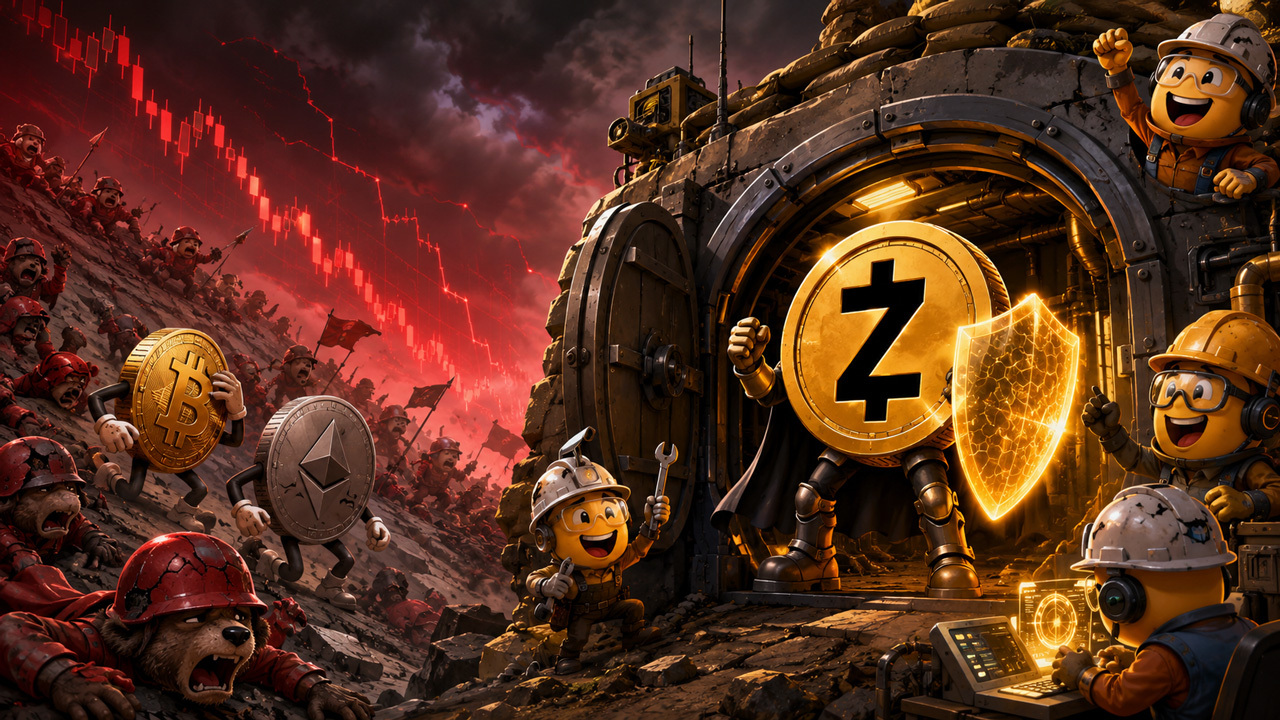

On June 3, block explorers appeared to show Zcash had halted block production for several hours. The crypto community feared the worst: a catastrophic failure of a privacy-focused network. But developers and infrastructure providers quickly pushed back. Zcash was never down. Miners continued producing blocks, and transactions were confirmed normally. The confusion stemmed from explorers running unpatched nodes after an emergency network upgrade.
“The panic over a non-existent Zcash outage turned into a 10% rally for ZEC, while Bitcoin and Ethereum dropped over 4%.”
The incident began when a user noticed that block explorers like Zcash Block Explorer showed the last block over two hours ago. Immediately, rumors of an attack or catastrophic failure spread on Twitter and Discord. However, core Zcash developers, including members of Electric Coin Company and the Zcash Foundation, quickly intervened to clarify that the network was operational. They explained that the explorers had fallen behind because they had not updated their nodes to the latest software version, which included a critical patch for the Orchard protocol.
This misunderstanding highlights the reliance on third-party infrastructure in the crypto ecosystem. Block explorers are essential tools for transparency, but their outdatedness can cause unnecessary panic. The lesson for traders is clear: do not blindly trust a single data source and verify information directly on-chain or through multiple sources.
On-Chain Data

- ZEC Price: $620, up 10% on the session, per CryptoSlate data.
- Bitcoin and Ethereum: Fell over 4% amid renewed geopolitical stress and forced liquidations.
- Activation Block: First phase of the fix activated at block 3,363,426, rejecting Orchard transactions.
- NU6.2 Hard Fork Block: Activated at block 3,364,600, re-enabling Orchard with a corrected circuit.
- Supply Cap: Zcash's 'turnstile' mechanism confirmed the 21 million ZEC supply cap remained intact.
On-chain analysis reveals crucial details. The activation of the patch at block 3,363,426 was an intermediate step to prevent new Orchard transactions from entering the chain while the hard fork was prepared. Then, at block 3,364,600, the NU6.2 hard fork restored Orchard functionality with a corrected zk-SNARK circuit. This two-phase approach minimized downtime for the shielded pool.
Additionally, Zcash's 'turnstile' mechanism, which ensures the total supply does not exceed 21 million, remained intact. This is critical because any deviation would have been catastrophic for confidence in the asset. On-chain data shows no anomalous ZEC creation, ruling out a successful double-spend attack.
Market Impact
ZEC's rally shows how fear can flip into opportunity when technical transparency wins. Traders who interpreted the rumor as a fatal flaw sold, while those who understood the situation bought the dip. The result: ZEC became a safe haven within a broader bearish market.
The Orchard vulnerability was serious — it could have allowed double-spending inside the shielded pool — but it did not affect total supply or user privacy. The coordinated response from developers, miners, and exchanges averted a larger crisis. This episode reinforces the thesis that blockchains with active development teams and robust upgrade processes can handle emergencies without collapsing.
For the privacy ecosystem, the message is mixed: on one hand, Zcash demonstrated rapid response; on the other, the bug reminds that advanced cryptography is not infallible. Investors in privacy assets must closely monitor zk-SNARK circuit security.
The broader market also played a role. Bitcoin and Ethereum fell over 4% due to renewed geopolitical tensions and forced liquidations in the futures market. In this context, ZEC's rally was even more remarkable, as it defied the overall trend. Some analysts suggest investors sought refuge in privacy assets amid macroeconomic uncertainty, while others point to a purely technical move related to the rumor.
Your Alpha

- 1Buy the technical panic: When a rumor of a technical failure hits a fundamentally sound asset, the initial dip can be a buying opportunity. Always verify the source before selling.
- 2Monitor node upgrades: Explorer outages do not imply network outages. Follow core developers on social media for first-hand information.
- 3Diversify into privacy: Zcash, Monero, and other privacy assets can act as hedges in volatile markets, but require deep technical analysis.
Beyond these tips, traders should consider that similar events may occur in the future. Zero-knowledge cryptography is complex and bugs can emerge. Staying informed about security updates and engaging with developer communities can provide an edge.
Next Catalyst
The Zcash Foundation urged node operators to upgrade to Zebra 5.0.0, which implements the new network rules. The success of this upgrade will be key for future confidence. Additionally, the community looks ahead to the next major upgrade, NU7, which may include scalability and privacy improvements.
Markets will also watch exchange reactions: if they relist ZEC with full Orchard support, it could boost liquidity and price. Some exchanges temporarily suspended ZEC deposits and withdrawals during the emergency, but have since restored them. Renewed confidence could attract new investors.
Another potential catalyst is growing institutional interest in financial privacy. With stricter regulations worldwide, assets that offer privacy could gain traction. Zcash, with its focus on selective disclosure, is well-positioned to capture this interest.
The Bottom Line

Zcash survived its toughest test without missing a block. The 10% rally reflects that the market rewards technical resilience. For investors, the lesson is clear: not every panic is a real crisis. Stay informed, verify data, and act with discipline. ZEC could remain an asset to watch in the coming months.
The episode also underscores the importance of decentralization in infrastructure. If more node operators had upgraded in time, the panic might have been avoided. The Zcash community now has an opportunity to strengthen its network and improve communication in future emergencies.
In summary, ZEC not only recovered but emerged stronger. The combination of a rapid technical response and a market that rewards transparency created a unique scenario. Investors who acted on accurate information reaped significant gains. For the rest, the lesson remains: in crypto, information is power.