The CLARITY Act was supposed to kill stablecoin yield. Coinbase just found a loophole.
The Signal
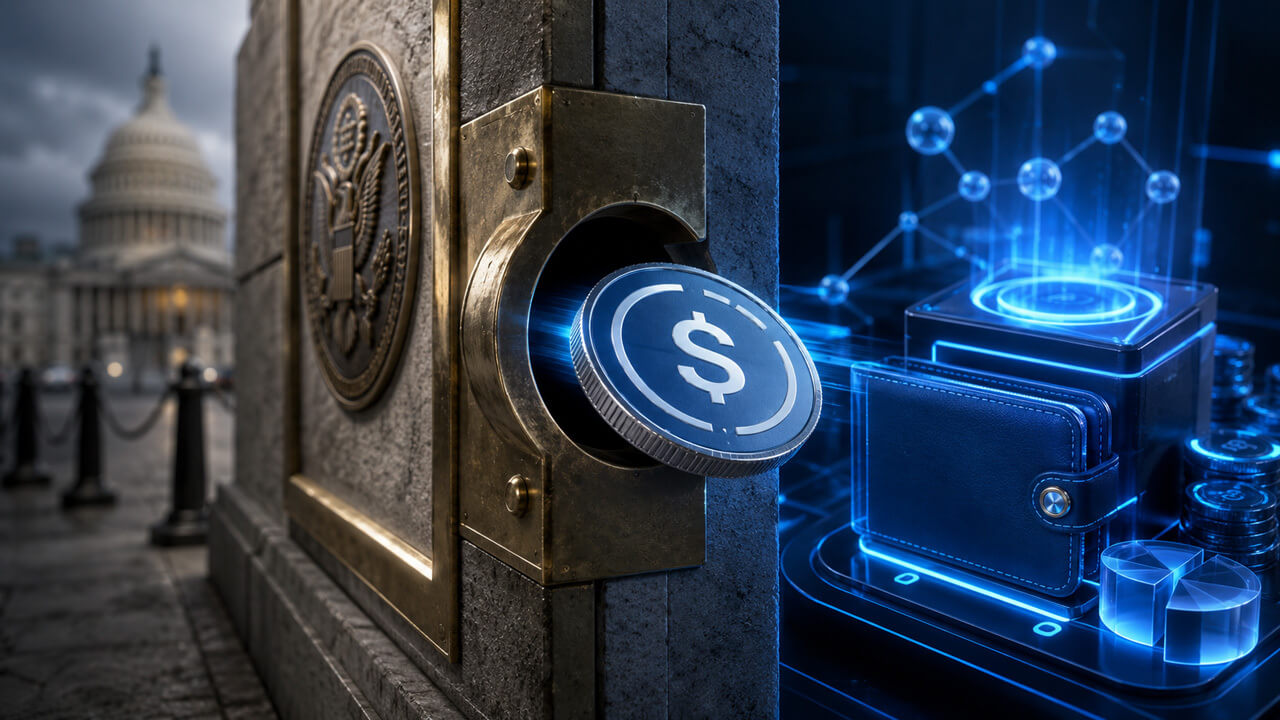
For traditional US banks, the CLARITY Act was intended as a firewall that effectively barred crypto companies from offering “passive” interest on stablecoins. The legislation aimed to prevent a catastrophic deposit flight in which everyday checking account balances drain from the banking system into high-yield crypto exchanges. But as lawmakers prepare to finalize the framework, Coinbase appears to be quietly structuring a loophole that relies on complex financial engineering to keep the lucrative yield flowing.

The key lies in a critical semantic distinction within Section 404 of the proposed legislation. While the CLARITY Act explicitly outlaws savings-account-style interest on stablecoins, it preserves “activity-based” rewards. Enter Ethena, a synthetic dollar protocol that generates returns through an active, delta-neutral basis trade that involves shorting crypto perpetual futures while holding the spot asset. By integrating with Ethena, Coinbase could theoretically route idle USDC into this strategy. If successful, the exchange could pass along the profits of an active trading strategy and potentially offer massive yields on digital dollars right under regulators' noses while deeply frustrating a traditional banking sector stuck offering negligible rates.
“Coinbase turns passive yield into active rewards via a synthetic protocol, skirting the ban without breaking it.”
On-Chain Data

- Stablecoin Revenue (Q1 2026): $305.4 million, making up 52% of Coinbase's subscription and services revenue.
- USDC Holdings: Average of $19 billion in USDC across its products, accounting for over 25% of total USDC in circulation.
- Market Share: Coinbase is the largest custodian of USDC, giving it leverage to redirect liquidity into active strategies.
- Ethena Yield: The protocol generates returns via a delta-neutral basis trade combining short perpetual futures with spot holdings, offering attractive yields without violating the ban on passive interest.

Market Impact
Coinbase's move reshapes the battlefield. If the Ethena integration works, users could earn double-digit yields on stablecoins, far above the 0.01% offered by traditional banks. This not only frustrates the banking sector, which sees its deposit base eroding, but also pressures other exchanges like Binance or Kraken to pursue similar strategies.
Moreover, the maneuver introduces systemic risk: if Ethena's basis trade fails – for example, in a volatile market where futures trade at a discount to spot – yields could evaporate or turn negative. Users who think they are in a “savings account” might get an unpleasant surprise.
Your Alpha

- 1Monitor the Coinbase-Ethena integration. If launched, it could boost demand for USDC and increase Ethena's TVL, benefiting ENA token holders.
- 2Prepare for regulatory volatility. The SEC or Fed could reinterpret the required “activity.” A change in definition could close the loophole.
- 3Diversify stablecoin exposure. If active yield becomes the norm, non-yielding stablecoins (like USDT) could lose appeal. Consider positioning in USDC or active yield protocols.

Next Catalyst
The merger of Senate and House bills is expected in July 2026. During that process, banking lobbies will try to close any loophole allowing active yields. Also watch for the Fed's response: if it considers Ethena's basis trade a disguised “savings product,” it could intervene.
On the other hand, the official launch of the Coinbase-Ethena product – expected by end of 2026 – will be a litmus test for regulatory viability. If successful, expect a wave of imitators.
The Bottom Line
Coinbase has found an elegant solution to sidestep the CLARITY Act, but the regulatory game is far from over. For investors, the key is understanding that active yield is not the same as a bank deposit: it carries market and regulatory risks. Stay flexible and prepared for rule changes.
Deeper Analysis: Implications for the DeFi Ecosystem
Coinbase's strategy doesn't just affect centralized exchanges; it also ripples through the DeFi ecosystem. If users can earn active yields directly through Coinbase without leaving the platform, it could reduce capital flows into DeFi protocols like Aave or Compound, which traditionally offer passive yields. However, it could also boost demand for stablecoins like USDC, which is a primary asset in these protocols.
Moreover, the integration with Ethena could catalyze growth for other active yield protocols, such as those using arbitrage or market-making strategies. This could lead to increased competition and innovation in decentralized financial products, but also to heightened systemic risk if multiple protocols rely on similar strategies.
Historical Context: The Battle for Deposits
The CLARITY Act didn't emerge in a vacuum. For years, traditional banks have watched low-cost deposits flee to crypto exchanges offering attractive yields. In 2025, US bank deposits fell 3% year-over-year, while stablecoin balances grew 40%. Banking lobby pressure, led by the American Bankers Association, was key to including Section 404 in the law.
However, the law's wording left room for interpretation. Lawmakers didn't want to ban rewards outright, fearing it would stifle innovation. Coinbase has exploited this ambiguity to design a solution that, while legal, could be seen as circumventing the law's intent.
Future Scenarios
- 1Optimistic Scenario: The Coinbase-Ethena integration succeeds, and regulators accept it as a legitimate form of active reward. This opens the door for other exchanges to follow suit, and the stablecoin market grows exponentially.
- 2Pessimistic Scenario: The Fed or SEC intervenes, classifying Ethena's basis trade as a disguised savings product. Coinbase is forced to discontinue the product, and the stablecoin market suffers a confidence shock.
- 3Middle Scenario: The law is amended during the merger process in July 2026, closing the loophole but allowing a transition period. Coinbase and other exchanges have time to adjust their strategies.
Conclusion
Coinbase's move is a classic example of financial innovation challenging regulation. For investors, the key is to stay informed and prepared for any changes. Active yield on stablecoins is an opportunity, but it carries risks that should not be underestimated.