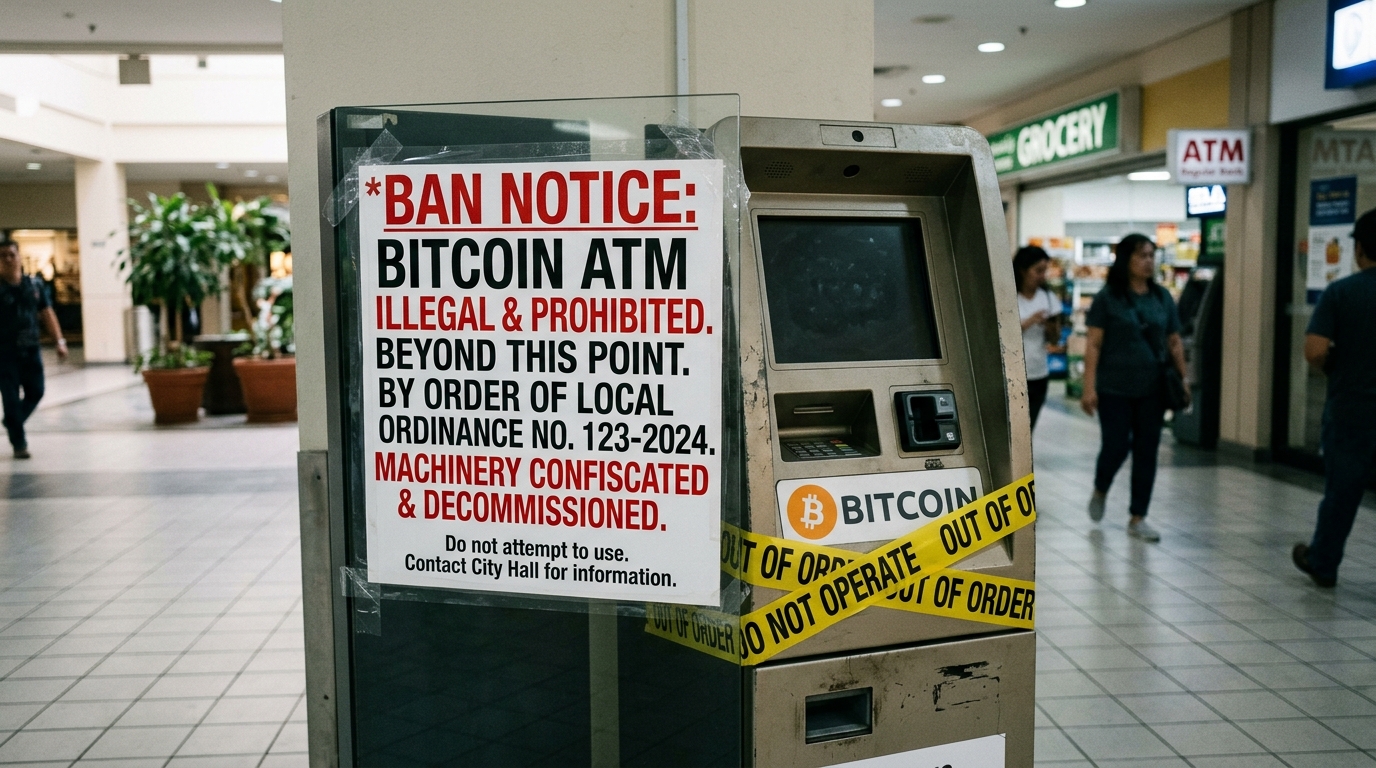
State regulators have been quietly banning Bitcoin ATMs. An entire subsection of the Bitcoin ecosystem is being deemed illegal and shut down. And since there's not much of a cross-section between people who are chronically online and cash bitcoin buyers, it's not getting a lot of attention. But the Bitcoin ATM ecosystem represents $3.63 billion going into bitcoin every year, and that's just in the United States. Beyond the financials, Bitcoin ATMs are vital to maintaining self-sovereignty in the system. A Bitcoin ATM enables something no other service in the financial industry can: it lets you walk up with cash, no bank account, no credit check, no exchange account, and walk away with bitcoin in a wallet only you control. Perhaps it's the self-sovereignty the regulators don't like. Alas, they're blaming the boogeyman, Fraud. Total bans, making Bitcoin ATMs illegal, have already been enacted in Indiana, Tennessee and Minnesota. De facto bans are also in place, creating limits that make it impossible to operate with any net profit in California, South Dakota, Wisconsin, and Virginia. All of the bans and regulations are, of course, done under the guise of "protecting the consumer," but legislation is not stopping fraud. The chain of fraud is easy to track, and Bitcoin ATM operators are doing just that, joining forces to form a coalition and fight back. No other industry is more heavily scrutinized than a fully licensed MSB (money services business) carrying MTLs (money transmission licenses) operating cash businesses subject to FinCEN's AML KYC regulations. The fraud argument is selectively applied to Bitcoin ATMs because it's politically easy. It's also caught in the crosshairs of the AARP's two-billion-dollar operating budget. But the facts don't support the narrative. Across the broader financial industry, the standard rate of fraud is somewhere between 3 – 5%. It's only 1.2% at Bitcoin ATMs. In other words, 98.8% of Bitcoin ATM transactions are legitimate. Why aren't the states banning Western Union or Visa gift cards? Or robocalls, for that matter? The median Bitcoin ATM transaction is $300; 80% of all transactions are under $1,000. The average ATM customer is someone putting $50, $100, or $500 at a time into an appreciating asset, the same way someone DCAs on an exchange. The repeat purchase average is every 24 days, and the average lifetime spend per customer is $12k. Per the Federal Reserve's own research, Bitcoin ATM's primary users are the 24.6 million unbanked and underbanked Americans who are "disproportionately Black, Hispanic, immigrant, rural, low-income." They're moving $20–$100 at a gas station because they don't have a bank account. States aren't banning speculative tools; they're banning legitimate financial access for people who already have the fewest options. The "fraud" is just a Trojan horse. The banning won't stop with ATMs. "A canary in a coal mine" is a metaphor for an early warning sign of impending danger or failure. While the President tries to claim the USA as the "Bitcoin capital of the World" his own justice department has put industry developers in prison. Another trend we cannot allow. In order for Bitcoin to succeed, we need all sections of the Bitcoin ecosystem to thrive. Similarly, in order for the industry to thrive here in the United States, we need the States to maintain their rights. If the banning is allowed to stand, it will not stop with just ATMs. This is a test case for "ban first, ask questions never." Both the current and previous administrations have proposed a litany of bills that would similarly ban other parts of the ecosystem, encroaching on the rights of nearly everyone interacting with the bitcoin network in one way or another. A short list of some of the bills that came close: S.5267 — Digital Asset Anti-Money Laundering Act of 2022: explicitly named wallet providers, miners, validators and others.