Bitcoin just saw a ghost from 2014. Mt. Gox-linked wallets transferred 10,422 BTC worth roughly $739 million on June 2, 2026, reigniting fears that old bankruptcy coins are moving closer to market supply. The market, already jittery from macro uncertainty and lack of bullish catalysts, received a reminder that the 2014 phantom is still alive. But is this move a prelude to a massive sell-off or just internal housekeeping? We break down the on-chain data, the repayment deadline context, and tactical implications for traders.
The Signal
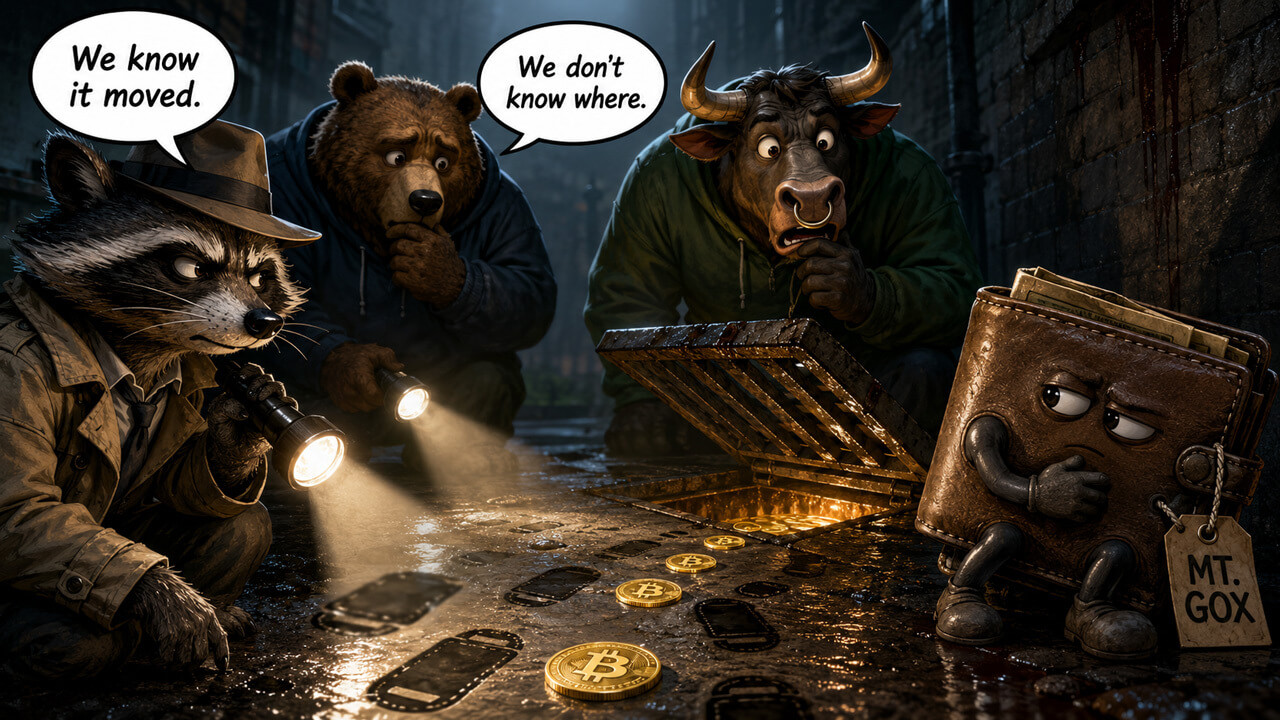
The transfer occurred in Bitcoin block 952,072 at around 04:47 UTC on June 2. Most of the stack—10,306 BTC—went to a fresh address beginning with 14FEEM, while 116 BTC moved to a known Mt. Gox hot wallet. No onward movement to an exchange or custodian was confirmed, but the market took notice. The simple fact that Mt. Gox wallets became active is enough to shift sentiment. Bitcoin's price dropped approximately 2% in the hours following, before partially recovering, suggesting the market is digesting the news but remains cautious.

The repayment deadline was extended to Oct. 31, 2026, per an Oct. 27, 2025 notice from the trustee. That means the process remains active, but June's move could be internal wallet management, repayment preparation, or just a reorganization. The uncertainty itself weighs on price. Historically, Mt. Gox moves have preceded periods of bearish volatility. For instance, in March 2025, a similar move of 5,000 BTC triggered a 4% drop within 24 hours, though the market later recovered as no selling was confirmed. The difference now is the size: 10,422 BTC is the largest move since the repayment process was revived in 2024.
“Mt. Gox's move doesn't confirm selling, but it changes expectations of when supply could hit the market. Market psychology is key: fear of distribution can be more damaging than distribution itself.”
On-Chain Data

- BTC moved: 10,422.65 BTC (approximately $739M at time of transfer, based on BTC price of $70,900).
- Primary destination: 10,306.35 BTC went to a fresh address (14FEEM), which has no prior transaction history.
- Hot wallet: 116.30 BTC moved to a known Mt. Gox hot wallet (1L7gn...), which has been used in previous moves.
- Remaining balance: The estate still controls roughly 34,504 BTC after the move, spread across several cold and hot addresses.
- Exchange-bound flow: Not confirmed. No movement to exchanges, custodians, or liquidity providers was reported. However, address 14FEEM could be an intermediate wallet before an exchange deposit.
- Speed of movement: Transactions occurred within a single hour, suggesting a coordinated operation, not random.

Market Impact
The mere movement of these wallets has a psychological effect. The market remembers that a pool of 34,504 BTC can move at any time. To put that in context, that balance is comparable to weeks of spot Bitcoin ETF inflows. For example, in May 2026, Bitcoin ETFs saw net inflows of approximately 15,000 BTC in total. If the remaining 34,504 BTC hit the market all at once, they could absorb several weeks' worth of liquidity and pressure price significantly lower. Additionally, the derivatives market shows an increase in open interest for put options, indicating traders are hedging against a potential drop.
But the real impact depends on the next step. If BTC moves to an exchange, the sell signal strengthens. If it stays in a cold address or custodian, it's just a reorganization. The distinction is key: an internal transfer can shake sentiment, but it's not the same as a sell order. Historical data shows that of previous Mt. Gox moves since 2024, only 30% ended up on exchanges, and in those cases, price dropped an average of 3.5% in the following days. However, the remaining 70% had no lasting impact.
Your Alpha

- 1Track the next hop: The sell pressure signal is confirmed when BTC leaves address 14FEEM for an exchange or known custodian. Use tools like Arkham or Chainalysis to monitor flow. Set real-time alerts for address 14FEEM. If you see movement to Binance, Coinbase, or Kraken, prepare for a potential sell-off.
- 2Adjust position size: The risk of sudden distribution is real. Consider reducing exposure if the market shows technical weakness (e.g., if BTC loses support at $68,000) and BTC moves to exchanges. A 10-20% reduction in position can mitigate losses without fully exiting a bullish stance.
- 3Buy the dip if distribution happens: If Mt. Gox distributes, the market will likely drop 5-10% in the short term, as seen in similar events. Patient investors may find a buying opportunity in fear. Historically, after Mt. Gox distributions in 2024-2025, price recovered within 2-4 weeks. Set limit buy orders at key support levels, such as $65,000 or $62,000.

Next Catalyst
The Oct. 31, 2026 deadline is the final date for repayments. But the process could be gradual. The trustee noted that many creditors haven't completed required procedures, suggesting distributions could come in waves. Additionally, the trustee has discretion to sell BTC on the market if needed to cover costs, though no such intention has been shown so far. The next move from Mt. Gox wallets will be the real catalyst. If BTC moves to an exchange, the market will react immediately. If not, fear will fade until the next move.
Another factor is the macro context. In June 2026, the Federal Reserve is on a rate pause, and global liquidity is tight. A supply shock of BTC could exacerbate bearish pressure. However, there is also growing institutional demand, with pension funds and corporates accumulating BTC. The interplay between these factors will determine the final impact.
The Bottom Line
Mt. Gox remains a cloud over Bitcoin. 10,422 BTC moved, but no selling evidence yet. The market is on alert, but patience is key. Monitor on-chain flow and adjust your strategy based on the next step. The ghost of 2014 is still alive, but maybe this time it's just changing closets. History suggests that Mt. Gox moves are more noise than signal in the long run, but in the short term they can create opportunities for agile traders. Stay calm, follow the data, and don't let fear dictate your decisions.