ARMA turns the US government into the world's largest Bitcoin hodler, with a minimum 20-year holding period.
Washington just put its crypto arsenal on the table. On Thursday, Representative Nick Begich introduced the American Reserve Modernization A...
The play is clear: if passed, the US would shift from periodically auctioning seized Bitcoin to accumulating it strategically. With 328,372 ...
Washington just put its crypto arsenal on the table. On Thursday, Representative Nick Begich introduced the American Reserve Modernization Act (ARMA), which would turn the US government into a long-term Bitcoin hodler with a minimum 20-year holding period and a separate stockpile for other cryptocurrencies.
The play is clear: if passed, the US would shift from periodically auctioning seized Bitcoin to accumulating it strategically. With 328,372 BTC worth over $25 billion, the country would become the largest sovereign Bitcoin holder, surpassing El Salvador and other nations.
The Signal
This is not an isolated proposal. ARMA follows Trump's executive order on a strategic Bitcoin reserve and Senator Lummis's BITCOIN Act, which aimed to acquire 1 million BTC over five years. However, those initiatives have stalled. Begich takes a more pragmatic approach: consolidate what the government already holds.
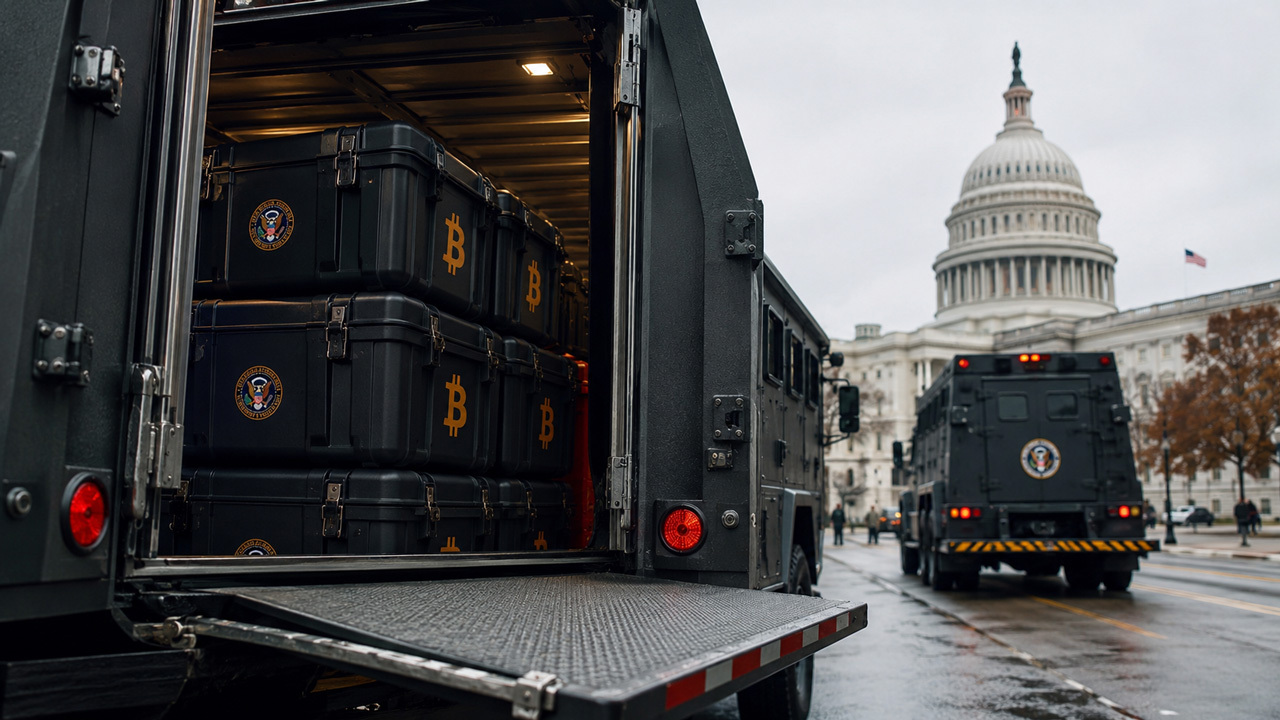
US Capitol with Bitcoin backdrop
Key data: the current US holdings come almost entirely from seizures (Silk Road, Bitfinex hack, etc.). ARMA would force the Treasury to centralize custody and publish quarterly "Proof of Reserve" reports, plus submit to independent audits. This addresses a long-standing industry demand for transparency.
“ARMA turns the US government into the world's largest Bitcoin hodler, with a minimum 20-year holding period.”
On-Chain Data
On-Chain Data
Government BTC holdings: 328,372 BTC per Bitcoin Treasuries, valued at over $25 billion.
Minimum hold period: 20 years, eliminating the selling pressure from future auctions.
Legislative co-sponsors: 17 original House co-sponsors, including Republicans from Ohio, Georgia, New York, and other key states.
Non-Bitcoin stockpile: A separate reserve for other seized cryptocurrencies, without the long-term hold requirement.
Self-custody protection: The bill explicitly guarantees Americans' right to own and transfer digital assets without federal interference.
On-chain data dashboard with government holdings
Market Impact
If ARMA becomes law, the most immediate impact is the removal of the government sales overhang. Historically, US Marshals Service auctions (like the 30,000 BTC sold in 2014-2015) created bearish pressure. With a 20-year minimum hold, that risk vanishes.
Medium-term, the bill could trigger a domino effect: other countries (Japan, UK, Germany) also hold seized BTC. If the US leads with a hold strategy, they might follow, reducing available supply. Moreover, the study on "budget-neutral" acquisitions opens the door for the government to buy more BTC without issuing debt, perhaps by revaluing its gold holdings.
However, risks exist. Concentrating 328,372 BTC in a single government entity could be seen as excessive centralization. Also, any future political shift (an anti-crypto administration) could try to liquidate the reserve, though the law would make it difficult.
Your Alpha
Your Alpha
For traders and investors, this news has clear implications:
1Reduces mass-selling risk: The end of periodic auctions removes a structural bearish factor. Consider increasing BTC exposure if you expected a drop from government liquidations.
2Monitor congressional hearings: The bill needs to advance through committees. Follow co-sponsors' statements and potential amendments. Any sign of delay could create short-term volatility.
3Prepare for copycat effect: If ARMA advances, countries with large BTC holdings (like China, estimated 194,000 BTC) might announce similar strategies. This would be bullish for price.
Trader analyzing charts with Capitol backdrop
Next Catalyst
The next milestone is a hearing in the House Financial Services Committee, date TBD. Begich will need bipartisan support, tough in an election year. However, industry backing (Matt Cole, CEO of Strive, called it "the single most important crypto legislation") and 17 initial co-sponsors give it momentum.
Additionally, the Clarity Act already passed the Senate Banking Committee. If ARMA combines with that bill, a comprehensive legislative package could emerge before year-end. The market should watch for any Senate movement.
The Bottom Line
The Bottom Line
ARMA is not just a holding law; it's a paradigm shift. By making the government a forced hodler, the US signals to the world that Bitcoin is a strategic reserve asset. For investors, this reduces regulatory uncertainty and removes a major seller from the market. The question now is whether other countries will follow. If they do, Bitcoin's price could find a much higher floor.
Position for an environment where government is no longer the enemy, but Bitcoin's biggest ally.
Additional On-Chain Analysis
To understand the real impact of ARMA, it's crucial to examine on-chain movements of government-labeled addresses. According to Glassnode, wallets tagged as "US Government" have been mostly dormant since 2023, with only small transfers to exchanges for auctions. If ARMA passes, we would expect these addresses to remain static, eliminating any sell-side flow.
Furthermore, the exchange supply ratio has dropped to 11.2%, the lowest in five years. The combination of exchange withdrawals and the removal of government sales could create a significant supply shock. Investors should monitor the flow of BTC from government addresses to centralized custodians as a sign of implementation.
Geopolitical Context
Geopolitical Context
ARMA does not happen in a vacuum. In recent weeks, El Salvador has increased its holdings to 5,748 BTC, and Bhutan has revealed 621 BTC from mining operations. However, the US proposal dwarfs them all. If materialized, it could trigger a race among nations to accumulate Bitcoin as a reserve asset, akin to the 19th-century gold rush.
China, estimated to hold 194,000 BTC from seizures, might feel pressured to formalize its strategy. Similarly, Ukraine, which has received crypto donations, could consider a strategic reserve. The domino effect is real and could redefine the geopolitical landscape of cryptocurrencies.
Risks and Considerations
Despite the optimism, there are risks investors should not ignore. Centralizing 328,372 BTC in government hands could be a double-edged sword. If a future administration decides to liquidate, the market could face massive selling pressure, though the 20-year law makes it difficult. Moreover, the proposal still needs to pass a divided Congress, and any amendments could dilute its impact.
Another risk is the possibility of the government using the reserve to manipulate the market, something the bill tries to prevent with independent audits. However, trust in institutions remains low among crypto investors. Transparency will be key for ARMA to be well-received.
Conclusion
Conclusion
ARMA represents a turning point for Bitcoin as a sovereign reserve asset. With 328,372 BTC locked for 20 years, the US government becomes the world's largest hodler, removing a major seller from the market and potentially triggering a wave of sovereign adoption. For investors, the implications are clear: lower mass-selling risk, greater legitimacy, and a potential bullish catalyst. However, caution is warranted until the bill becomes law. Monitor hearings, prepare for volatility, and position your portfolio for an environment where Bitcoin is backed by the world's most powerful government.