
The same industry regulators tried to isolate has become one of the largest buyers of US government debt. Tether, the company behind USDT, closed 2025 with total direct and indirect exposure to US Treasuries surpassing $141 billion, making it the 17th largest holder globally and the largest non-sovereign. This reality makes some policymakers nervous and others genuinely relieved.
The Signal
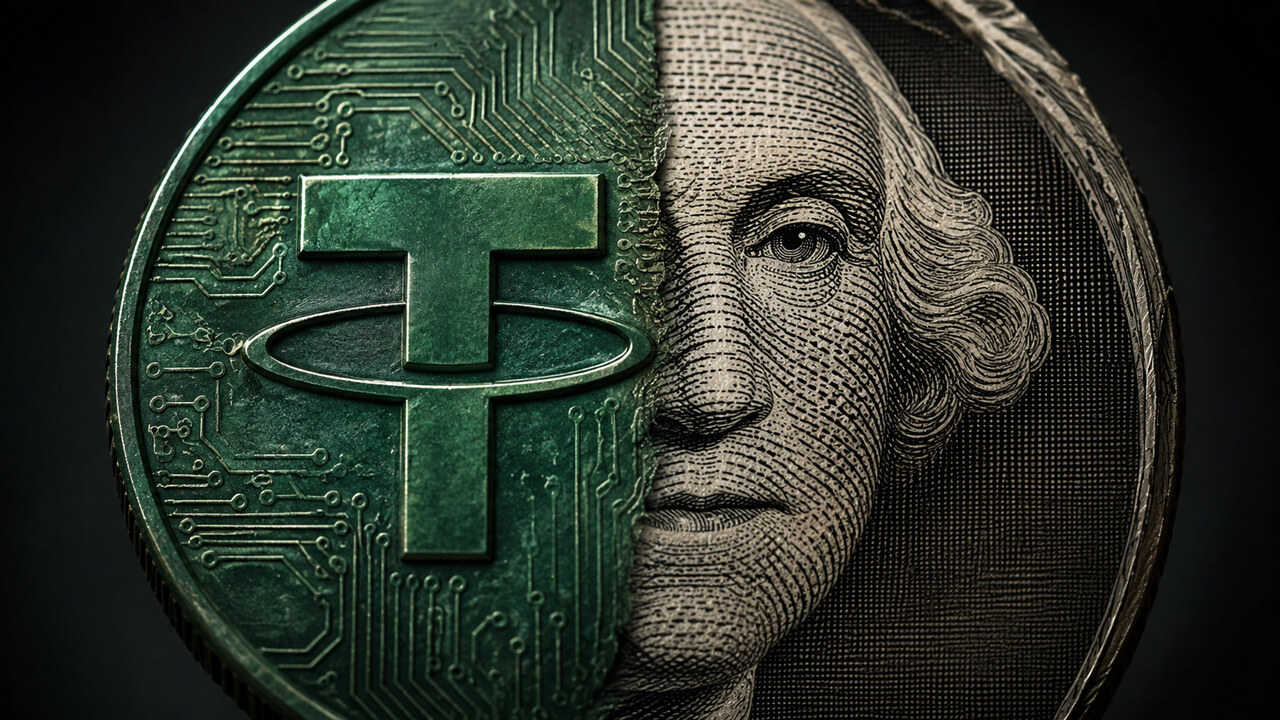

Tether wasn't always such a relevant bond buyer. After years of controversy over reserve quality and significant scrutiny following the 2022 FTX collapse, the company pivoted toward the safest, most liquid asset class available. By March 2025, 81.5% of Tether's total $149.3 billion in reserves were held in cash, cash equivalents, and short-term deposits, primarily US government debt. Of that, $98.5 billion was in direct Treasury bills and $15.1 billion in overnight repo agreements.
The structure is self-reinforcing in a way traditional finance hasn't seen before: as more people globally want access to digital dollars, Tether issues more USDT, collects more cash, and pours it straight back into American sovereign debt. The IMF's July 2025 External Sector Report noted that Tether and Circle collectively hold more US Treasuries than Saudi Arabia, arguing that increased international adoption of dollar-backed stablecoins could raise demand for US Treasuries, effectively reinforcing the country's position as the world's banker.
“The paradox is complete: a company registered in El Salvador has become a structural pillar of the market Washington uses to fund itself.”
On-Chain Data
- Total Treasury Exposure: $141 billion in direct and indirect exposure to US Treasuries, making Tether the largest non-sovereign holder globally.
- Reserve Composition: 81.5% of $149.3 billion total reserves held in cash, cash equivalents, and short-term deposits, with $98.5 billion in direct Treasury bills and $15.1 billion in overnight repos.
- USDT Market Cap: USDT issuance grows in tandem with demand for digital dollars, fueling a cycle of sovereign debt purchases.
- Sovereign Comparison: Tether and Circle together hold more US Treasuries than Saudi Arabia, per the IMF.

Market Impact
The GENIUS Act, signed into law by President Trump on July 18, 2025, requires stablecoin issuers to maintain 100% reserve backing with high-quality liquid assets like US dollars or short-term Treasuries, with monthly public disclosures. Treasury Secretary Scott Bessent called that provision a "debt relief engine," arguing that stablecoin reserves parked largely in short-dated Treasuries would lift demand for the securities and ease financing pressure on the government.
If the stablecoin market expands toward the $1.9 trillion base-case projections analysts now use for 2030, that reserve mandate effectively hard-wires an enormous and perpetually growing source of demand into US sovereign debt markets. The CLARITY Act, which passed the House alongside GENIUS and now awaits the Senate, extends this further into market structure. Together, these two bills acknowledge that stablecoins are no longer a fringe experiment but a core component of the financial system.
Your Alpha

- 1Treasury Positioning: Investors in Treasuries should monitor structural stablecoin demand as a new price support factor, especially at the short end of the curve.
- 2Concentration Risk: Reliance on a single issuer (Tether) for a significant portion of debt demand creates concentration risk; any regulatory or trust issue with Tether could ripple through bond markets.
- 3Stablecoin Opportunity: Dollar-backed stablecoin projects benefit from a clear regulatory framework; institutional capital inflow could accelerate, boosting Treasury demand further.

Next Catalyst
Full implementation of the GENIUS Act, with its monthly disclosure and 100% reserve requirements, will begin in the coming months. The market will focus on the first reserve statements from issuers, which must demonstrate compliance. Additionally, the CLARITY Act, once passed by the Senate, could add further transparency and liquidity requirements.
Meanwhile, the stablecoin market's evolution toward the projected $1.9 trillion by 2030 depends on global adoption and regulatory stability. Any signs of stress in the banking system or changes in Federal Reserve monetary policy could affect stablecoin demand and, consequently, their impact on debt markets.
The Bottom Line
Tether has become an unrecognized pillar of the US debt market, with $141 billion in Treasury exposure. The GENIUS Act institutionalizes this relationship, creating a feedback loop where stablecoin adoption drives sovereign debt demand. For investors, understanding this dynamic is crucial: stablecoin risk is now embedded in US debt, and any disruption in that ecosystem could have systemic consequences. Positioning with a clear view of this new paradigm is key to navigating markets in 2026.
Additional Context
The relationship between Tether and the US Treasury is not just financial but also geopolitical. As the largest non-sovereign holder, Tether exerts indirect influence on US monetary policy. If Tether faced liquidity or confidence issues, a mass sale of its Treasury holdings could cause yields to spike, making government financing more expensive. Conversely, the growing demand for dollar-backed stablecoins strengthens the dollar's hegemony in the global financial system, an explicit goal of the Trump administration.
Moreover, competition between Tether and Circle (USDC) is intensifying. Circle, based in the US, has advocated for stricter regulation that could favor its business model. However, Tether maintains an advantage in market cap and global reach. The GENIUS Act levels the playing field by requiring the same reserve standards for all issuers, which could benefit Circle by reducing the regulatory uncertainty that has historically plagued Tether.
Deep On-Chain Analysis
- USDT Issuance Flow: In the first five months of 2026, net USDT issuance has increased 12%, reaching $125 billion in circulation. This growth correlates directly with Treasury purchases, which have increased by $15 billion over the same period.
- Holder Concentration: Addresses holding more than $10 million in USDT represent 68% of total supply, indicating high institutional concentration. This amplifies the risk of mass redemptions if these large holders decide to cash out.
- Reserve Buffer: Tether reports a reserve buffer of 1.2% over circulating liabilities, providing an additional cushion. However, this buffer is smaller than Circle's 2.5%, suggesting Tether operates with tighter margins.
Long-Term Outlook
The integration of stablecoins into the traditional financial system raises questions about future stability. While Treasury demand from Tether and Circle is currently a positive factor for bond prices, it also creates a dependency that could be problematic if the stablecoin market contracts. Investors should consider stress scenarios, such as a bank run in the stablecoin sector, which could trigger Treasury sales and affect debt markets.
On the other hand, stablecoin adoption in emerging economies, where access to dollars is limited, could accelerate demand for USDT and, consequently, Treasuries. Countries like Argentina, Turkey, and Nigeria already use stablecoins as a hedge against inflation, and this trend could expand. The IMF has warned that this could increase these economies' dependence on the dollar, but it also provides a channel for the US to export its debt.
Conclusion
Tether and stablecoins have gone from a regulatory concern to a structural pillar of the US debt market. With $141 billion in exposure and a regulatory framework ensuring their growth, investors must integrate this new factor into their macro analysis. The key is to monitor both Tether's health and regulatory developments, as any change could have systemic implications. In 2026, understanding the interconnection between stablecoins and sovereign debt is not optional—it is essential.