Charles Hoskinson raised the possibility of splitting Cardano after the collapse of one of its best-known ecosystem tools exposed a deeper fight over money, governance, and who has the power to keep builders alive on the network. This week, the Cardano founder floated what he called a "nuclear option," saying a new Cardano could be launched through proof of burn if the existing ecosystem cannot change how it funds and commercializes projects.
The Signal
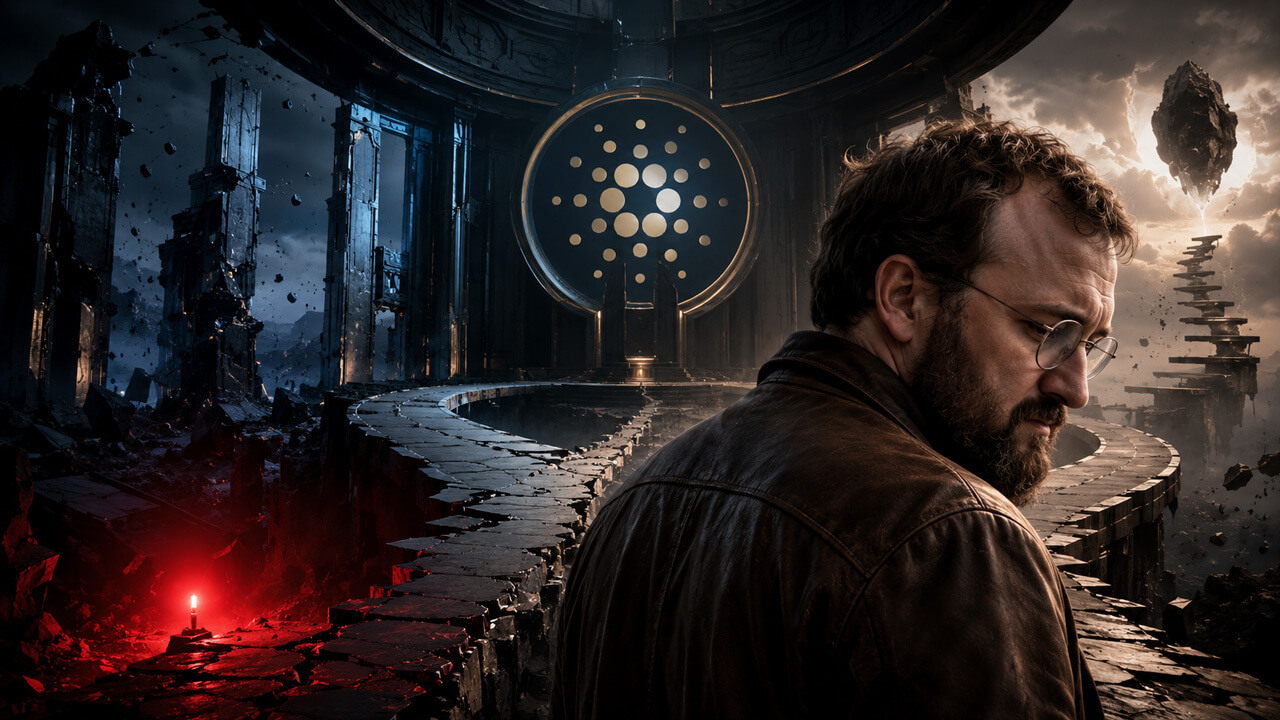

The statement came after TapTools, one of Cardano's most widely used analytics and infrastructure platforms, said it would begin winding down operations over the next two weeks following leadership departures, mounting costs, and the loss of key technical capacity. Hoskinson responded with a long, emotional address that turned a project closure into a broader indictment of Cardano's governance and commercial strategy. Hours later, he posted on X: "I'm taking a break. TTYL."
Hoskinson warned that TapTools' closure was unlikely to be an isolated failure, saying: "This year is going to be very hard, especially the second half of the year for Cardano. We are probably going to see more dApps in DeFi die and a consolidation happen." The warning landed as Cardano's DeFi economy remained small by broader crypto standards and under renewed strain. DeFiLlama data showed about $115 million in total value locked on Cardano, with the network's DeFi TVL down more than 5% over 24 hours. Cardano's 24-hour DEX volume stood near $6.3 million, while its stablecoin market was roughly $55 million.
“"This year is going to be very hard, especially the second half of the year for Cardano. We are probably going to see more dApps in DeFi die and a consolidation happen." — Charles Hoskinson”
On-Chain Data
- Cardano TVL: $115 million, down over 5% in 24 hours, per DeFiLlama. This level is a fraction of the network's historical peak above $400 million in 2024. The decline reflects not only capital outflow but also a lack of new incentives to attract liquidity.
- 24h DEX Volume: Approximately $6.3 million, reflecting limited trading activity. For context, competing networks like Solana or BNB Chain handle daily volumes exceeding $1 billion. This indicates Cardano remains a niche ecosystem for traders.
- Stablecoin Market: Roughly $55 million, insufficient to sustain infrastructure. The lack of stablecoins limits projects' ability to offer lending, trading, and payment products, which in turn reduces the network's utility.
- TapTools Reach: Served over 1 million users, supported hundreds of projects via API, published hundreds of articles, and generated hundreds of millions of social impressions. The loss of this infrastructure leaves a significant gap in the ecosystem.

Market Impact
Those figures point to the commercial problem behind Hoskinson's remarks. Cardano still has a large brand and a committed community, but the financial activity available to sustain infrastructure providers, exchanges, lending apps, and analytics platforms remains limited. For teams that rely on subscriptions, API revenue, token activity, treasury funding, or outside investment, a thin market can quickly become an operating crisis.
TapTools framed its closure as the result of that pressure rather than a loss of belief in Cardano. The platform said the departure of co-founders, including its CTO and COO, had created a gap it could not quickly repair. A backend developer had stepped into the CTO role, but that replacement also decided to leave. The company said it had tried to lower infrastructure costs, improve efficiency, and develop new products, but concluded that it could not responsibly commit to the future without a credible acquisition path or fresh resources.
For Hoskinson, the announcement confirmed a problem he said had been visible for months. He pointed to JPEG Store as another sign that older Cardano projects were struggling to survive the current cycle. "I would suspect others are coming very soon. There's going to be a wave of failures in the ecosystem," he added. This wave could include projects like Minswap, SundaeSwap, or VyFinance, which have already seen significant drops in volume and TVL.
Your Alpha

- 1Monitor Cardano governance closely: Hoskinson's "nuclear option" is a signal of extreme tension. If a proof-of-burn fork materializes, it could split the community and value. Follow governance forums and DRep votes. A successful fork would require at least 51% support from stake pools, which is uncertain given the current community's entrenchment.
- 2Assess exposure to Cardano DeFi projects: The warning of more closures suggests high counterparty risk. Review treasuries, run rates, and dependence on API or subscription revenue for projects in your portfolio. Projects with treasuries covering more than 6 months of operating expenses are better positioned to survive.
- 3Prepare for ADA volatility: Uncertainty over the network's future and Hoskinson's retreat from public discussion could fuel selling pressure. Consider hedges or reduce position size if your thesis relies on ecosystem stability. Key support at $0.25 could break if panic spreads.

Next Catalyst
The near-term catalyst is the outcome of Hoskinson's break and whether he returns with a concrete fork proposal. The community and ADA holders will watch for any signal of movement toward a new Cardano based on proof-of-burn. Additionally, the potential wave of dApp closures Hoskinson forecasted for H2 2026 could accelerate consolidation and force governance decisions.
Another key factor is how the market reacts to the current decentralized governance. If DReps and the community fail to address the funding crisis, pressure for radical change will mount. The date of the next hard fork or major upgrade will also be a moment of truth for whether the ecosystem can pivot. The upcoming "Chang" hard fork is expected to bring scalability improvements but does not directly address project funding.
The Bottom Line

Cardano faces an existential crisis disguised as a project shutdown. The founder has put a nuclear option on the table that could redefine the network—but also split it. For investors, the signal is clear: the ecosystem needs a sustainable funding solution or will face a painful consolidation. Stay neutral until a clear direction emerges, but don't ignore the warning signs. History of other blockchains shows that forks over fundamental disagreements rarely benefit token holders in the short term.