The Signal
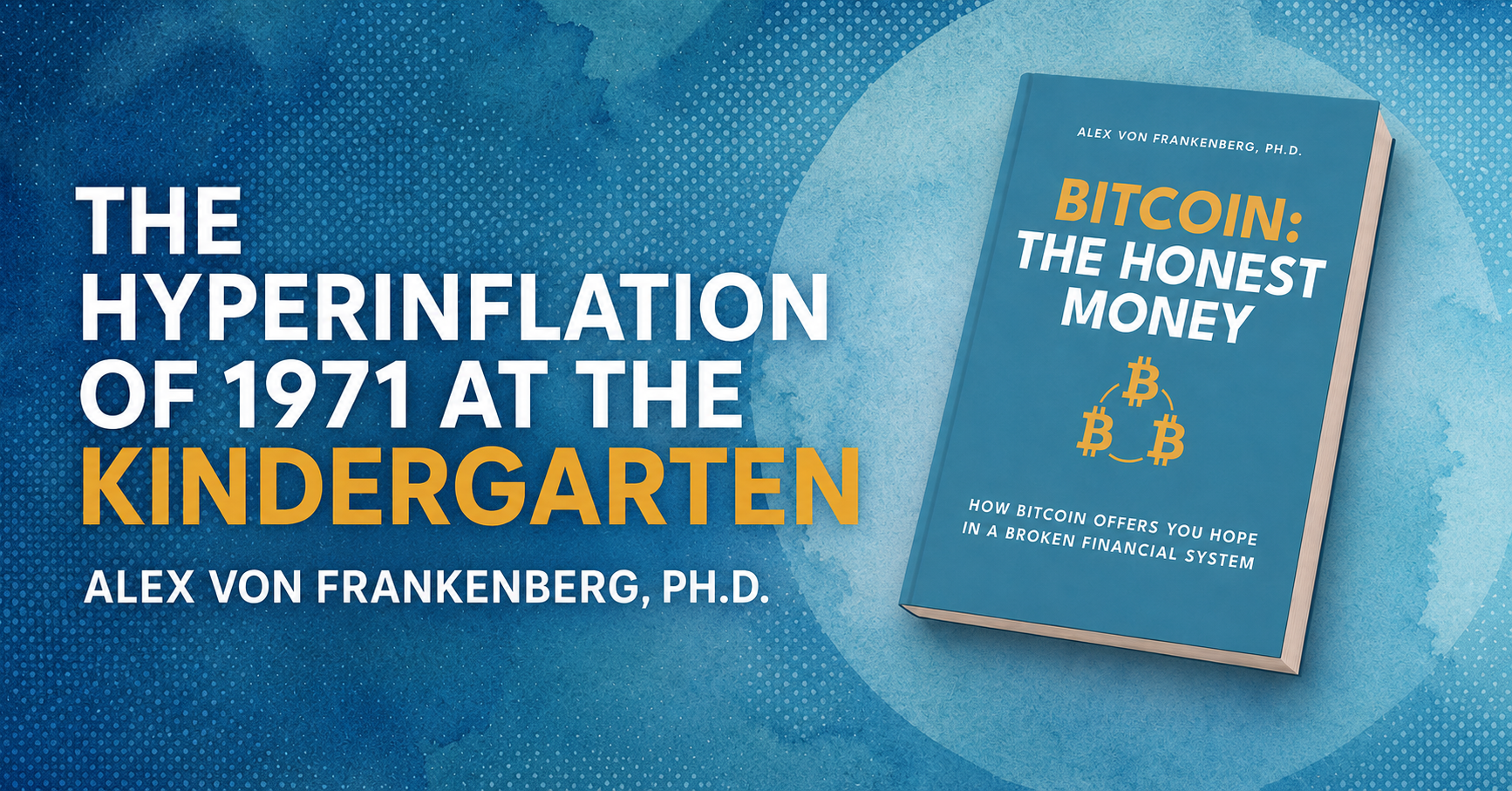
A five-year-old in 1971 experienced hyperinflation firsthand: in kindergarten, fabric scraps awarded for good behavior became worthless when a new teacher handed them out freely. What started as a barter system — one scrap for a bucket of sand, two for a piece of candy — ended with scraps littering the floor, useless. This story, recounted by a Bitcoin Magazine columnist, is a perfect metaphor for today's monetary system. The U.S. dollar has lost 97% of its value over the last hundred years. The British pound, originally representing a pound of silver, suffered the same fate. The cause is always the same: uncontrolled money creation. Governments and central banks change the rules when it suits them, just like that teacher.

The lesson is clear: when monetary rules are flexible, value erodes. In kindergarten, the children who had saved the most scraps were the hardest hit. Similarly, fiat savers — those holding cash, government bonds, or bank deposits — see their purchasing power vanish over time. Inflation is not an accident but a feature of the fiat system, where the money supply can expand without limit. Central banks, pressured by public debt and political demands, resort to money printing as a temporary solution, but in the long run, they destroy the currency's value.
“Bitcoin's rules cannot be changed. Fiat money's rules can, and they are systematically violated.”
On-Chain Data
- U.S. M2 Money Supply: Has increased over 40% since 2020, according to Federal Reserve data, diluting the dollar's purchasing power. This growth is part of a broader trend: since the Fed's creation in 1913, the dollar has lost over 96% of its value.
- Global Public Debt: Exceeds $300 trillion, per the IMF, pressuring central banks to keep printing money. The debt-to-GDP ratio in many developed countries exceeds 100%, making any attempt to reduce the money supply unsustainable.
- Bitcoin Supply: Fixed at 21 million. As of June 2026, over 19.8 million have been mined, leaving less than 1.2 million to be issued. This represents an annual inflation rate of approximately 0.8%, which will halve in 2028.
- Bitcoin Inflation Rate: Halves every four years. The next halving is in 2028, making new issuance even scarcer. Historically, halvings have preceded major price increases, though past performance does not guarantee future results.

The contrast is stark: while fiat supply expands uncontrollably, Bitcoin's supply is predetermined and verifiable by anyone. Anyone can run a full node and confirm that the total supply does not exceed 21 million. This transparency is impossible in the fiat system, where money supply figures are published by the same institutions that control them.
Market Impact
The kindergarten anecdote is not just a curiosity; it's a warning. When the fabric scraps lost value, the children who had saved the most were the hardest hit. The same happens to fiat savers: those holding cash or government bonds see their purchasing power erode year after year. In a persistent inflation environment, nominal assets lose real value, while scarce assets like Bitcoin tend to appreciate.
Bitcoin offers an alternative: a system where rules cannot be changed by any individual or institution. No central bank can decide to print more bitcoins. No government can force monetary expansion to finance deficits. Bitcoin's immutability is its most valuable feature, making it a hedge against inflation. Unlike gold, which can be mined in greater quantities if the price rises, Bitcoin's supply is absolutely inelastic.
Institutional investors are beginning to recognize this. Pension funds and insurance companies are allocating small percentages of their portfolios to Bitcoin as a hedge against fiat devaluation. The Bitcoin options and futures market shows growing interest, with daily volume exceeding $30 billion. Moreover, adoption by companies like MicroStrategy, which holds over 200,000 BTC, demonstrates that smart capital is taking positions.

However, not all is optimism. Bitcoin's volatility remains high, with 30-40% corrections not uncommon. Investors must be prepared for these fluctuations and have a long-term horizon. The key is to understand that volatility is the price paid for absolute scarcity and independence from the traditional financial system.
Your Alpha

- 1Diversify into hard assets: History shows fiat money tends to depreciate. Consider allocating a portion of your portfolio to Bitcoin or other assets with limited supply. A 5-10% exposure can be a good starting point, adjusted to your risk tolerance.
- 2Monitor money supply: Pay attention to M2 data and central bank policies. When money supply expands rapidly, it's a signal to seek protection in scarce assets. Tools like TradingView or money supply tracking websites can help you stay informed.
- 3Embrace volatility: Bitcoin can be volatile in the short term, but its long-term trend is upward due to programmed scarcity. Use dips to accumulate. Strategies like dollar-cost averaging (DCA) can reduce the impact of volatility.
Next Catalyst
Bitcoin's next halving is scheduled for 2028, but before that, events could drive its price. The potential approval of a spot Bitcoin ETF in several Asian countries and growing adoption by tech companies are factors to watch. In particular, the U.S. SEC's decision on spot Bitcoin ETF applications has been a key market driver in the past.
Additionally, the U.S. presidential election in November 2026 could bring regulatory changes. If a crypto-friendly candidate wins, we could see a significant market boost. Stay tuned to regulatory statements and SEC decisions. Also relevant is the development of second-layer solutions like the Lightning Network, which improve Bitcoin's scalability and could increase its adoption as a medium of exchange.
The Bottom Line

The kindergarten hyperinflation teaches us that when rules are changed arbitrarily, value is destroyed. Bitcoin, with its fixed supply and immutable code, offers protection against that arbitrariness. As the fiat world continues to expand its money supply, Bitcoin's digital scarcity becomes increasingly attractive. Position yourself now before the fabric scraps in your portfolio lose all their value. The lesson is simple: in a world where rules change, immutability is the greatest asset.