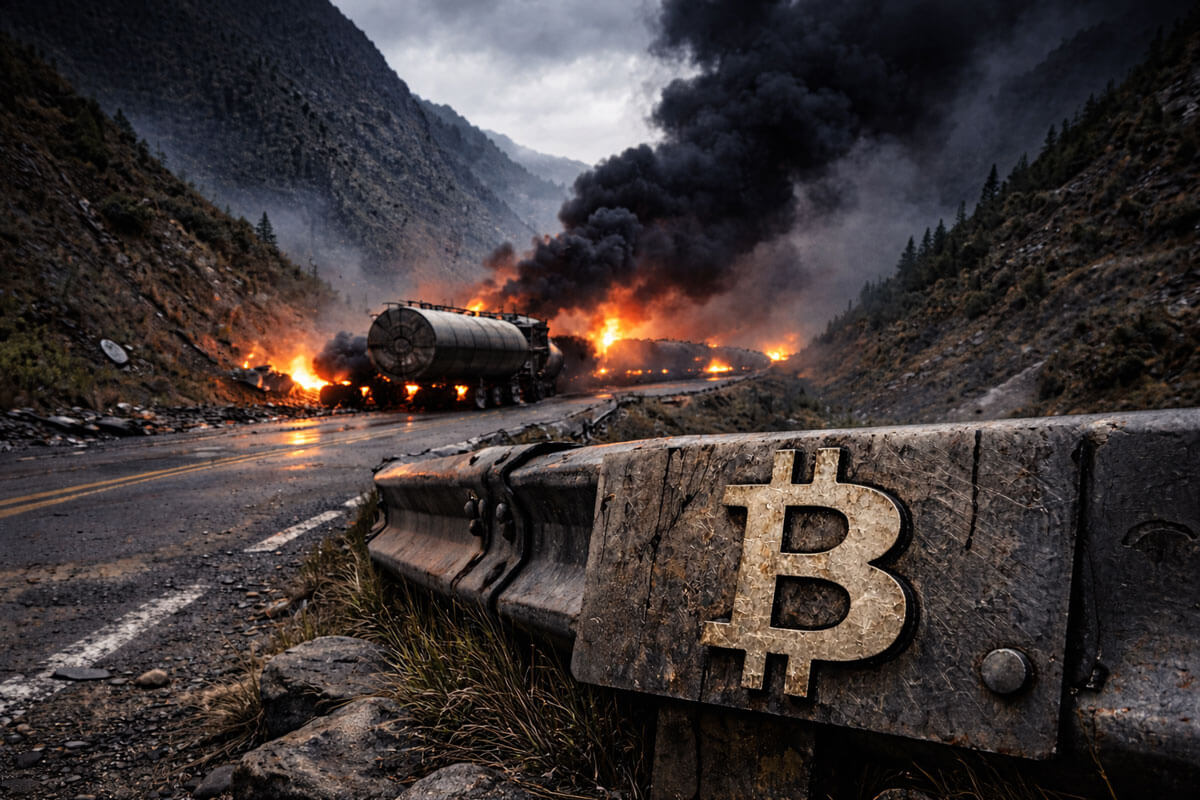
Bitcoin no longer attracts defensive flows during geopolitical crises but reacts to tighter financial conditions and a stronger dollar.
Bitcoin's safe haven narrative shatters. The cryptocurrency responds to tighter financial conditions as the US-Iran conflict deepens, reveal...
The crypto market faces accelerated repricing following President Donald Trump's April 1 remarks that dimmed hopes for near-term Middle East...
Bitcoin's safe haven narrative shatters. The cryptocurrency responds to tighter financial conditions as the US-Iran conflict deepens, revealing an unexpected correlation with commodity shocks that's redefining institutional investment frameworks. This structural shift occurs at a critical juncture where investors seek protection against inflation and geopolitical instability, only to discover that the digital asset once promising independence from traditional systems now moves in sync with them. The current crisis isn't just an isolated geopolitical event but an inflection point for Bitcoin's maturation as an asset class, where its behavior under systemic stress is being reevaluated by hedge funds, family offices, and wealth managers alike.
The Signal
The crypto market faces accelerated repricing following President Donald Trump's April 1 remarks that dimmed hopes for near-term Middle East easing. The administration signaled that US military operations could intensify over the next two to three weeks without offering a clear timeline for ending hostilities, pushing investors back into a defensive stance. The initial reaction showed across equities, though the deeper signal came from energy. What makes this event particularly significant is its timing: it comes after years where Bitcoin demonstrated some resilience during previous crises, creating entrenched expectations about its future behavior. Institutional investors who had allocated capital to Bitcoin specifically as a geopolitical hedge now face the reality that the asset may not provide the expected diversification when it's needed most.
The historical context is crucial here. During the 2022 Ukraine crisis, Bitcoin maintained relative stability while stocks fell, fueling the "digital safe haven" narrative. In the 2023 banking crisis, it even showed gains while regional banks collapsed. But in 2026, with Bitcoin more integrated into traditional financial systems through spot ETFs and corporate adoption, its behavior is converging with other risk assets. This convergence represents a maturation phase where Bitcoin responds more to global capital flows and macroeconomic conditions than to its original ideological narrative. Portfolio managers who don't adjust their risk models to reflect this new reality could face significant losses.
oil price chart spike
Oilprices.com data shows West Texas Intermediate crude jumped 11.41% to $111.54 a barrel, its biggest absolute gain since 2020, while Brent rose 7.78% to $109.03. The move followed US-Israeli strikes that began on Feb. 28 and Iran's effective closure of the Strait of Hormuz, the chokepoint carrying roughly one-fifth of global oil and liquefied natural gas flows. These developments significantly impact crypto markets as sustained crude rises directly feed inflation expectations, tighten financial conditions, and reduce market tolerance for speculation.
The oil-Bitcoin connection operates through multiple transmission channels. First, higher oil prices increase inflationary pressures, leading central banks to maintain restrictive monetary policies for longer. Second, more expensive oil acts as a tax on consumers and businesses, reducing discretionary spending and corporate profit margins. Third, energy shocks trigger flows into traditional safe havens like the US dollar and Treasury bonds, diverting capital from risk assets like Bitcoin. Fourth, volatility in commodity markets increases risk aversion across all financial markets. What makes the current shock particularly dangerous is its sustained nature: the Strait of Hormuz closure isn't a transient event but a structural supply disruption that could last weeks or months, maintaining upward pressure on oil prices and, by extension, on global financial conditions.
“Bitcoin no longer attracts defensive flows during geopolitical crises but reacts to tighter financial conditions and a stronger dollar.”
On-Chain Data
On-Chain Data
On-chain data provides quantitative evidence of Bitcoin's structural behavior shift. Unlike price data that reflects market sentiment at a given moment, on-chain metrics reveal actual token movements between addresses, offering a window into large holders' (whales) actions and fundamental supply-demand dynamics. In the current crisis, this data paints a picture of structural weakness that predates the geopolitical shock, suggesting Bitcoin entered this stress period from a position of vulnerability rather than strength.
Apparent Demand: Bitcoin's 30-day apparent demand growth stands at -63,000 BTC, indicating fresh demand hasn't been strong enough to absorb supply. This metric is particularly revealing because it measures the net change in holdings of non-miner entities, thus excluding newly created supply. A negative value of this magnitude suggests sellers are significantly outpacing buyers, even before the oil shock hit markets. Historically, sustained negative apparent demand values have preceded significant price corrections, as they indicate a lack of institutional and whale demand to support price levels.
Whale Distribution: Whale wallets holding 1,000-10,000 BTC have shifted from accumulation into one of the cycle's sharpest distribution phases. This group, representing approximately 15-20% of Bitcoin's total supply, has been steadily reducing holdings over the past 8 weeks. The speed of this distribution is notable: at the 2024 peak, these addresses were adding roughly 5,000 BTC weekly to their balances; they're now distributing 8,000-10,000 BTC weekly. This shift from accumulation to distribution among the largest holders creates structural selling pressure that smaller retail and institutional buyers cannot easily absorb.
One-Year Change: The one-year change in whale holdings has swung from about 200,000 BTC increase at the 2024 peak to a 188,000 BTC deficit. This nearly 400,000 BTC swing in the largest holders' net position represents one of the most dramatic shifts in Bitcoin's history. What makes this metric particularly concerning is its time horizon: it reflects not just short-term reactions to geopolitical events but a structural change in the largest holders' strategy over a 12-month period. When the largest holders reduce positions sustainably, they often anticipate more difficult macroeconomic conditions or a fundamental revaluation of the asset's worth.
on-chain analytics dashboard
Market Impact
The Iran escalation may have accelerated the latest sell-off but didn't create market fragility. Bitcoin was already losing support before the geopolitical backdrop deteriorated. CryptoQuant data shows selling pressure has continued to outweigh institutional accumulation despite earlier support from spot ETFs and corporate buyers like Strategy. This pattern is visible across large holders, suggesting a structural shift in ownership composition. What makes this dynamic particularly significant is its persistence: even during occasional price bounces, on-chain flows continue showing net distribution, indicating sellers are using any strength to reduce exposures rather than accumulating for longer bullish moves.
The impact on crypto derivatives markets has been equally severe. Perpetual futures funding rates, which measure the cost of maintaining leveraged positions, have turned negative for the first time since 2023, indicating leveraged traders are paying sellers to maintain their positions. Open interest in futures markets has dropped 22% from February's peak, showing significant deleveraging. Meanwhile, Bitcoin options show a pronounced volatility smile, with traders paying significantly higher premiums for put options than call options, reflecting asymmetric hedging against further downside. This derivatives dynamic creates a negative feedback loop: as prices fall, leveraged positions get liquidated, exerting more downward pressure, which triggers further liquidations.
With the dollar index up 0.48%, Treasury market spreads wider by 27%, and the VIX climbing toward 25, the broader macro picture is turning against risk assets that depend on abundant liquidity and steady investor appetite. Bitcoin's narrative as a hedge against inflation and geopolitical instability is crumbling just when investors need it most, potentially leading to deeper portfolio allocation reassessments across digital assets. The broader impact on the crypto ecosystem is significant: projects relying on Bitcoin's bullish sentiment for funding and adoption will face more difficult conditions, while DeFi protocols could experience liquidity strains if capital outflows continue.
Your Alpha
Your Alpha
Traders and investors must adjust mental frameworks to reflect Bitcoin's new behavioral reality. The cryptocurrency now moves in sync with global liquidity conditions and commodity shocks, not as an independent defensive asset. This requires shifts in hedging strategies and risk management approaches. Investors who treat Bitcoin as they did in previous cycles, assuming it will provide diversification during geopolitical stress, will face significant losses. Instead, they must adopt a more nuanced approach that recognizes Bitcoin's maturation as an asset class and its growing integration with traditional financial systems.
1Reduce Bitcoin exposure as a geopolitical hedge and treat it as a cyclical risk asset in your portfolio allocation. This means allocating Bitcoin to your portfolio's "risk sleeve" alongside growth stocks and commodities, not to the "defensive sleeve" with gold and Treasury bonds. In practice, this could mean reducing Bitcoin allocation from the typical 5-10% for defensive hedges to 2-3% as part of a broader risk asset allocation. Investors should also consider dynamic hedging strategies that increase Bitcoin exposure during periods of easy financial conditions and reduce it during tightening periods, using indicators like the dollar index, credit spreads, and oil prices as signals.
2Monitor whale on-chain flows and apparent demand to identify inflection points before they're reflected in prices. Set alerts for significant changes in whale holdings (±10,000 BTC moves in a week) and apparent demand crosses above zero. Combine these on-chain data points with macro indicators like oil prices and the dollar index for a more robust signal. For example, when apparent demand turns positive while oil prices stabilize or retreat, it could indicate a bullish inflection point. Similarly, when whales resume accumulation during periods of macroeconomic stability, it might signal institutional accumulation ahead of an upward move.
3Diversify into stablecoins and less correlated assets during macro stress periods to preserve capital. Allocate a portion of your crypto portfolio to high-quality stablecoins (USDC, USDT on regulated exchanges) during periods of macroeconomic stress, using these positions as "dry powder" to repurchase Bitcoin at lower levels. Also consider crypto assets with lower correlation profiles to Bitcoin, such as some niche DeFi tokens or real-world tokenized assets, though with rigorous due diligence. Implement hedging strategies using Bitcoin options or inverse futures to protect existing positions during high-volatility periods, paying particular attention to carry costs and counterparty risks.
trader adjusting portfolio allocations
Next Catalyst
The next significant catalyst arrives over the next two to three weeks as US military operations unfold in the Middle East. Any further escalation pushing oil prices above current levels will exert more pressure on financial conditions and likely trigger further risk asset outflows. The market will watch closely for any signals that Iran is ready to "end the war," which could trigger a bounce in Bitcoin and equities. However, investors should be cautious: even a geopolitical de-escalation might not immediately reverse market dynamics, as the damage to Bitcoin's safe haven narrative could be lasting.
Developments in the Strait of Hormuz will remain critical, as continued closure of this chokepoint would keep oil prices elevated and inflationary pressures intact. Traders should prepare for heightened volatility as markets process these geopolitical developments in real time. Beyond immediate events, investors should monitor several macroeconomic catalysts that could amplify or mitigate the oil shock's impact: Fed monetary policy decisions, US inflation data, Bitcoin spot ETF flows, and any changes in regulatory stance toward cryptocurrencies in key jurisdictions.
The Bottom Line
The Bottom Line
Bitcoin has temporarily lost its safe haven status during the current geopolitical crisis, behaving instead as a liquidity-sensitive risk asset. With -63,000 BTC apparent demand and aggressive whale distribution, the cryptocurrency enters this stress period from a position of weakness. Investors must reposition portfolios accordingly, treating Bitcoin as part of their risk sleeve rather than their defensive sleeve. Crypto markets will face continued tests while oil prices remain elevated and financial conditions keep tightening.
The broader implication of this shift is profound: Bitcoin is completing its transition from niche asset to mainstream asset class, and with that transition comes greater correlation with traditional macroeconomic factors. This isn't necessarily negative long-term: greater integration with traditional financial systems could lead to broader adoption and greater stability. But in the short to medium term, it means investors must abandon simplistic narratives about Bitcoin as "digital gold" or "hedge against everything" and adopt a more nuanced understanding of its price drivers. Those who make this mental and strategic adjustment will be better positioned to navigate current volatility and capture opportunities in the next cycle.