
Mark Cuban sold most of his bitcoin because it failed to provide a hedge when fiat confidence weakened and geopolitical risk rose. The billionaire investor called it "not the hedge I expected it to be," and the price record supports his frustration: bitcoin trades around $77,663 in mid-May 2026, roughly 38% below the record high of $126,000 set in early October 2025.
The Signal
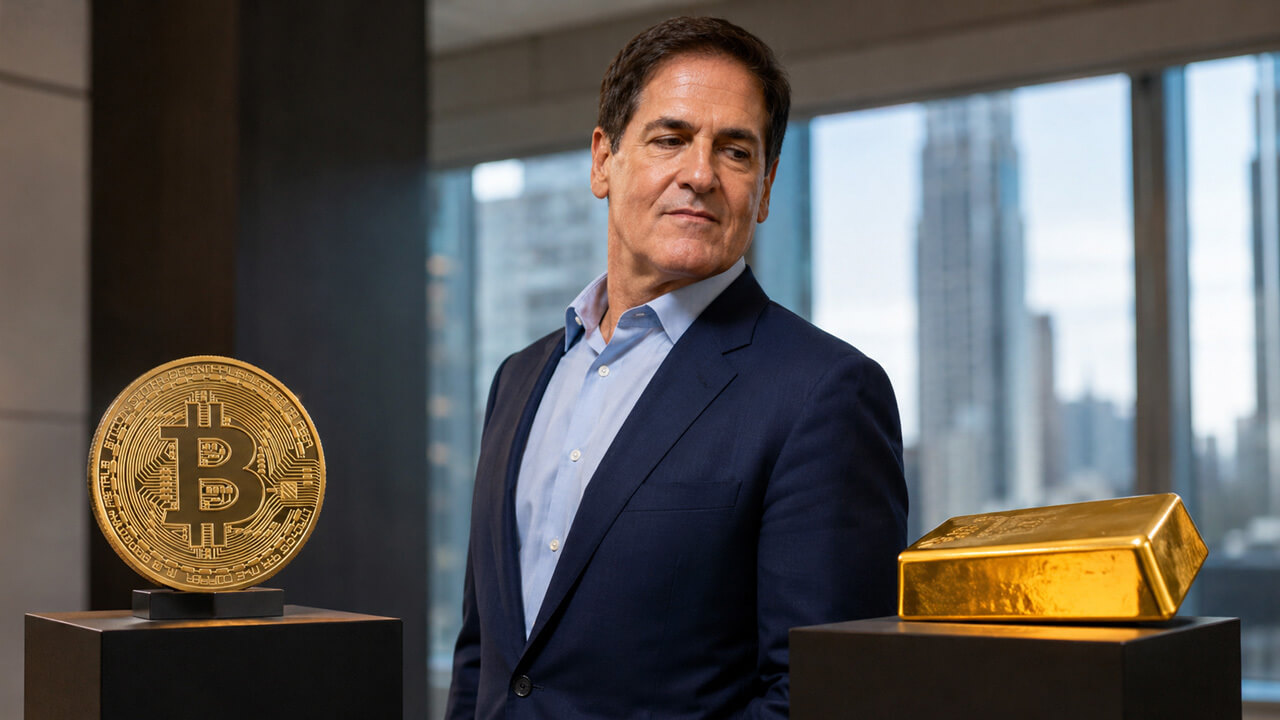

Spot gold hit a record $5,594.82 on Jan. 29, while silver touched $121.64 the same day, driven by the same macro variables Cuban cited: inflation fears, dollar weakness, and geopolitical pressure. World Gold Council data shows that gold demand in the first quarter reached 1,231 tonnes, including OTC, and the dollar value of quarterly demand jumped 74% year over year to a record $193 billion. Central banks bought 244 tonnes net in the same period, and bar-and-coin demand hit 474 tonnes, up 42% year over year.
Cuban also told Portfolio Players he is moving more money into Ethereum than Bitcoin, but the hedge critique is specific to Bitcoin. The 'digital gold' narrative always had a problem: Bitcoin.org describes the asset as peer-to-peer money with no central authority or banks and specifies that issuance halves over time, eventually stopping at 21 million Bitcoin. Nothing in that description commits Bitcoin to rising when geopolitical stress rises. Cuban built a thesis on a narrative the market constructed and the Bitcoin whitepaper never endorsed.