Bitcoin Rally: $72,734 Breakout After Ceasefire News — What Traders Ar
Bitcoin surged 5% to $72,734 after US-Iran ceasefire news, with $3 billion in taker buy volume on Binance. Oil dropped 15%, easing inflation pressures. This ana
Bitcoin surged past $72,000 on Middle East ceasefire headlines, marking a synchronized move with global markets that reveals the growing interdependence between digital assets, geopolitics, and macroeconomic expectations. The 5% rally to $72,734, driven by $3 billion in taker buy volume on Binance, was not an isolated event: it occurred alongside a 15% drop in oil and a bounce in global equities, showing how investors quickly recalibrated the risk of a prolonged energy crisis.
On Wednesday, Bitcoin reclaimed the psychological $70,000 level after news broke of a two-week ceasefire between the United States and Iran,...
Simultaneously, global equity indices experienced a relief bounce: Germany's DAX rose 4.7%, Japan's Nikkei 225 gained 5.4%, and South Korea'...
Bitcoin surged past $72,000 on Middle East ceasefire headlines, marking a synchronized move with global markets that reveals the growing interdependence between digital assets, geopolitics, and macroeconomic expectations. The 5% rally to $72,734, driven by $3 billion in taker buy volume on Binance, was not an isolated event: it occurred alongside a 15% drop in oil and a bounce in global equities, showing how investors quickly recalibrated the risk of a prolonged energy crisis. However, the sustainability of these levels depends on factors deeper than a temporary ceasefire, including the evolution of inflation, monetary policy, and the fragile stability in the Strait of Hormuz.
The Geopolitical Signal and Its Immediate Impact
On Wednesday, Bitcoin reclaimed the psychological $70,000 level after news broke of a two-week ceasefire between the United States and Iran, brokered by Pakistan. The deal includes reopening the Strait of Hormuz, a critical oil transit chokepoint that had been under threat of blockade. This move reflects an increasingly clear market dynamic: digital assets, especially Bitcoin, are acting as sensors for geopolitical risk and inflation expectations. The reaction was immediate and broad, with Bitcoin rising 5% to an intraday high of $72,734 before retracing to $71,477, while Brent crude fell 13.8% to $94.25 and US crude dropped 15.4% to $95.52.
Simultaneously, global equity indices experienced a relief bounce: Germany's DAX rose 4.7%, Japan's Nikkei 225 gained 5.4%, and South Korea's Kospi jumped 6.9%. This synchronized pattern suggests investors interpreted the ceasefire as meaningfully reducing the risk of a prolonged energy crisis, which in turn eases inflation pressures and improves appetite for risk assets. The inverse correlation between Bitcoin and oil during this event—when crude falls, Bitcoin rises—is particularly revealing, as it shows how traders are using the cryptocurrency as a hedge against inflation shocks stemming from geopolitical tensions.
bitcoin price chart with green candles showing the rally to $72,734
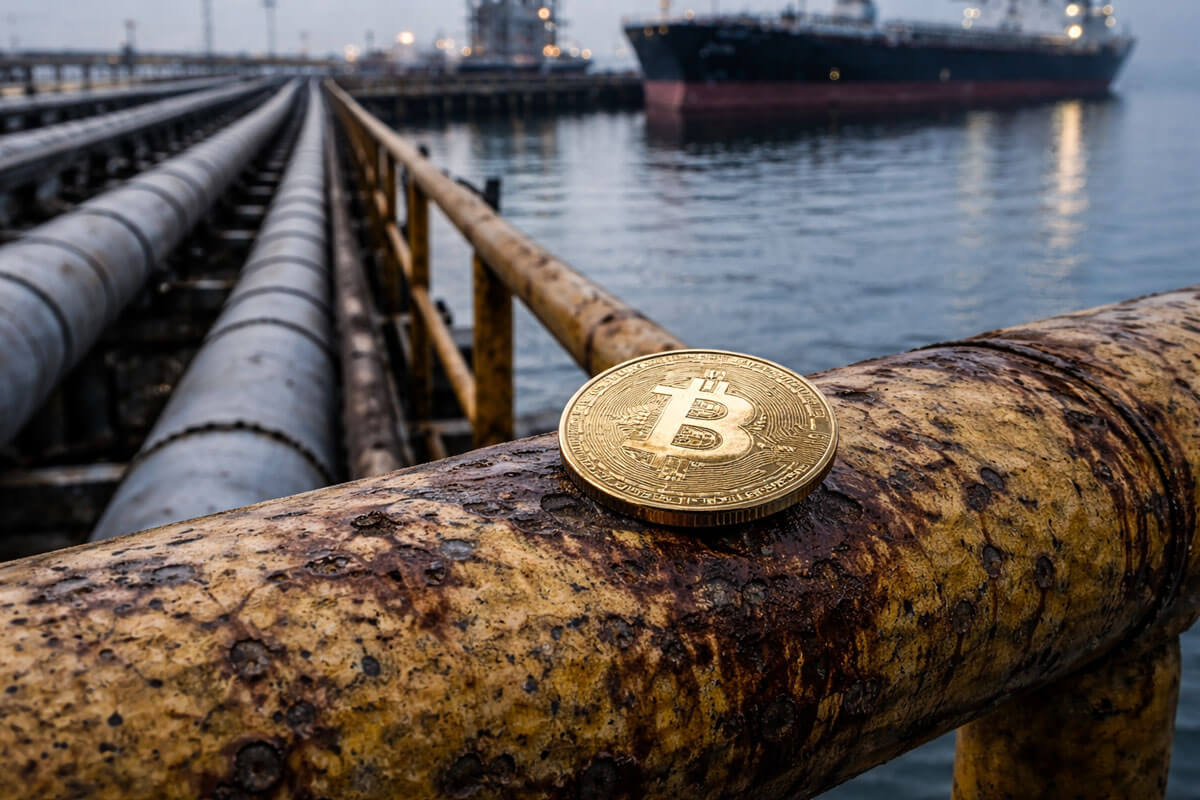
The truce erased part of the Middle East risk premium, lifting Bitcoin and stocks while crude reversed fast. This phenomenon isn't new, but its magnitude and speed in this case highlight Bitcoin's maturation as a macro asset. During the prior escalation, roughly 130 million barrels of crude and 46 million barrels of refined fuel were stranded on around 200 tankers in the Gulf, which had driven Brent up 55% since Feb. 28. Some physical oil markets were pricing crude near $150 per barrel before the announcement, creating a scenario of persistent inflation that now appears temporarily contained.
On-Chain Data: The Market's Pulse
On-Chain Data: The Market's Pulse
On-chain data provides a granular view of market participant activity during the rally. Within two hours of the news, $3 billion in taker buy volume was recorded on Binance's derivatives markets, indicating aggressive repositioning toward long positions. This volume is significant because it represents orders executed immediately at market price, showing high conviction among institutional and high-volume traders. Additionally, Bitcoin reached $72,734 as the intraday high, a 5% increase from pre-news levels, but then stabilized around $71,477 at press time, showing some profit-taking.
Binance Taker Buy Volume: $3 billion in taker buy volume on Binance's derivatives markets within two hours of the news, indicating aggressive capital inflow.
Intraday High: Bitcoin reached $72,734, a 5% increase from pre-news levels, but faced resistance at this level.
Subsequent Retracement: Price stabilized around $71,477 at press time, showing some profit-taking and consolidation after the initial impulse.
Exchange Flows: Data shows an increase in transfers to exchanges during the rally, suggesting some holders took profits while others entered capital to position long.
trading screen with buy orders showing the $3 billion volume on Binance
Analysis of wallet addresses also reveals that large holders (whales) increased their positions during the move, while smaller investors tended to sell at peaks. This pattern is common in news-driven rallies, where liquidity provided by retail traders allows institutional players to accumulate at favorable prices. The relationship between derivatives volume and spot price suggests the futures market played a key role in amplifying the move, though it also introduces a risk of cascade liquidations if the price retreats sharply.
Market Impact: Beyond Oil
The connection between the Strait of Hormuz and Bitcoin is more indirect but equally powerful. Approximately 20% of global oil exports move through this waterway, and any disruption directly affects energy prices, freight costs, and inflation expectations. During the recent escalation, roughly 130 million barrels of crude and 46 million barrels of refined fuel were stranded on around 200 tankers in the Gulf. This had driven Brent up 55% since Feb. 28, with some physical oil markets pricing crude near $150 per barrel before the ceasefire announcement.
Lower oil doesn't simply reduce one source of headline risk; it also eases one of the most immediate threats to the global macro outlook: a prolonged energy shock could revive inflation just as central banks were looking for room to loosen policy. Dallas Fed research suggested that a longer Hormuz disruption could push US headline inflation above 4% by year-end. For Bitcoin, that shift is crucial. The flagship asset didn't break higher as oil surged and war fears intensified, but it moved when oil dropped, equities rallied, and investors started to price in a less acute inflation shock.
Furthermore, the impact extends to other markets. Lower oil reduces production and transportation costs, which can translate into lower inflation for goods and services. This, in turn, affects the monetary policy decisions of the Fed and other central banks, creating a potentially more favorable environment for risk assets like Bitcoin. However, the fragility of the ceasefire means this relief could be temporary, and any renewed escalation would quickly reverse these benefits.
Your Alpha: Strategies to Navigate Uncertainty
Your Alpha: Strategies to Navigate Uncertainty
Traders who went long immediately after the news captured most of the 5% move, but the question now is whether momentum can be sustained. Maksym Sakharov, co-founder and group CEO of WeFi, notes that "whenever there's tension — geopolitics, macro, and even institutional or micro — the weak investors and traders are always shaken out. The fear is now partly gone with the ceasefire news, but holding onto the $70,000 mark would take more than just a ceasefire." This suggests current levels could be tested again, and traders should prepare for potential volatility.
1Monitor Oil-Bitcoin Correlation: The inverse relationship observed (oil down, Bitcoin up) could persist if the ceasefire holds. A rebound in oil above $100 could pressure Bitcoin, as it would renew inflation fears. Set alerts for key Brent levels ($100, $110) and watch how Bitcoin reacts to crude movements.
2Watch Derivatives Volume: The $3 billion in taker buy volume on Binance shows aggressive repositioning, but a spike in sell volume could signal the rally is exhausting. Monitor the buy-sell volume ratio in real-time, and pay attention to changes in futures open interest, which can signal accumulation or distribution.
3Assess Resistance at $72,734: This level acted as a clear intraday high. A sustained break above, accompanied by high volume, could open the path to new highs toward $75,000. Conversely, rejection with increased sell volume could lead to a test of $70,000 or even $68,000. Consider using stop-loss orders below $70,000 to manage risk.
crypto trader analyzing charts with Bitcoin, oil, and equity indices on multiple screens
Additionally, traders may consider hedging strategies, such as short positions in oil or Bitcoin put options, to protect against a reversal of the rally. Diversification into other digital assets with lower correlation to geopolitical events can also reduce portfolio risk during periods of high uncertainty.
Next Catalyst: Inflation and Monetary Policy
Attention now shifts to US economic data and central bank signals. The Consumer Price Index (CPI) and Fed decisions will be key in determining whether the inflation relief from lower oil translates into a more favorable macro environment for risk assets. If inflation shows signs of moderating, it could give the Fed room to consider earlier rate cuts, which has historically been positive for Bitcoin, as it reduces the opportunity cost of holding non-yielding assets.
Additionally, the situation in the Strait of Hormuz remains fragile. A collapse of the ceasefire or renewed tensions could quickly reverse the gains. Traders should watch for any geopolitical updates affecting oil flow, as this would have immediate repercussions on inflation expectations and, by extension, Bitcoin's valuation. Events like OPEC+ meetings or statements from regional leaders can serve as secondary catalysts.
Other factors to watch include institutional flows into Bitcoin ETFs, which can provide additional support at key levels, and network adoption data, such as transaction fees and active address counts, which reflect Bitcoin's fundamental health beyond speculative moves.
The Bottom Line
The Bottom Line
Bitcoin demonstrated once again its sensitivity to geopolitical shocks and macroeconomic expectations. The rally to $72,734 following the US-Iran ceasefire was driven by $3 billion in taker buy volume on Binance and synchronized relief across global markets, with oil dropping 15% and equities bouncing. However, holding above $70,000 will require more than a temporary ceasefire: it will depend on inflation continuing to moderate and Middle East tensions not resurfacing. Traders should prepare for a potential test of $70,000 while closely watching inflation data and geopolitical signals. The inverse correlation with oil and on-chain data will provide key clues about future direction, and proactive risk management strategies will be essential to navigate the volatility likely to persist in the coming months.