Bitcoin Rally: 5% Surge as Trump-Iran Ceasefire Eases Geopolitical Ris
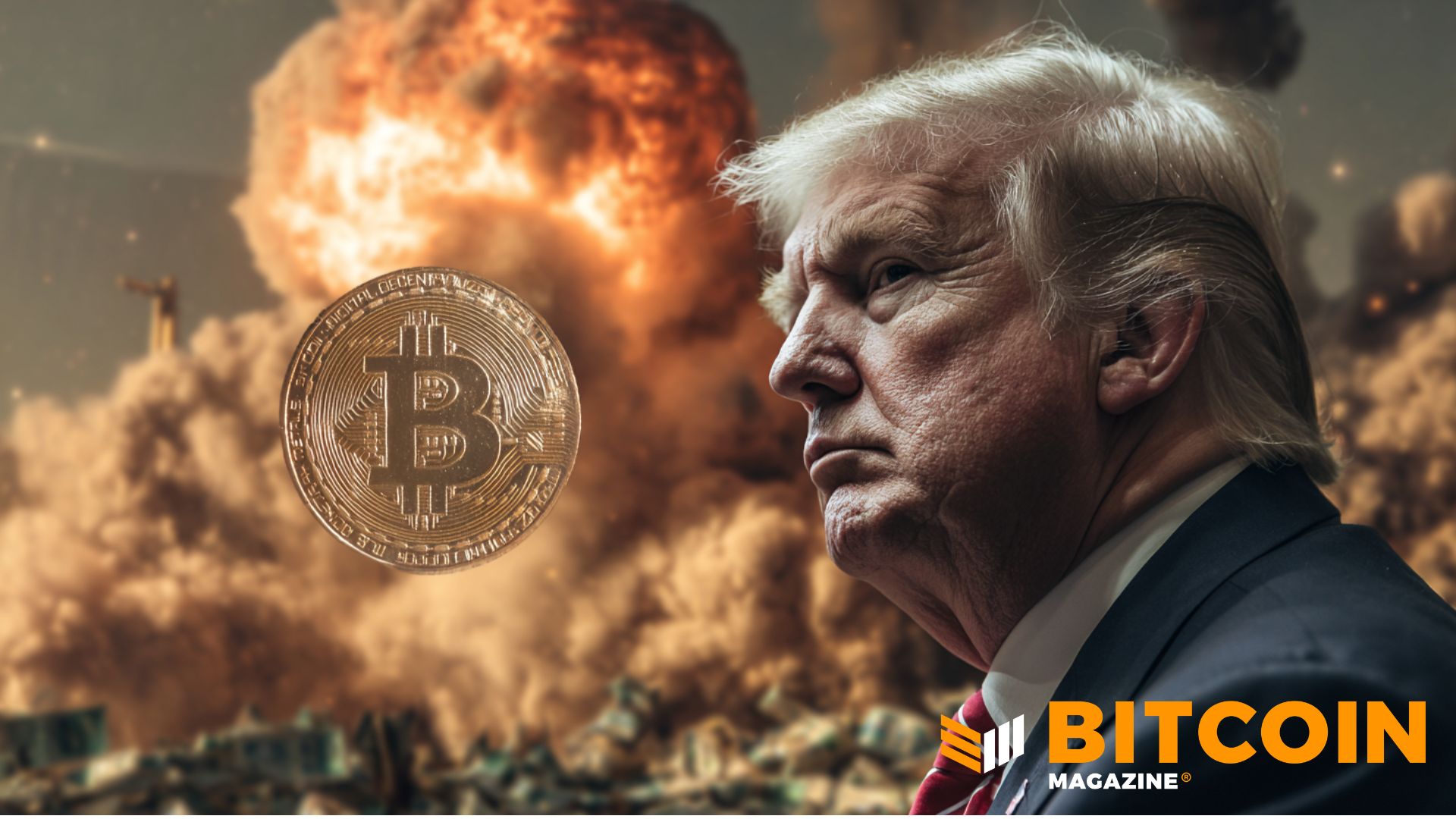
Bitcoin surged 5% to $72,753 after the Trump-Iran ceasefire announcement, highlighting crypto's acute sensitivity to geopolitical events. This analysis provides
Bitcoin proved to be the fastest-reacting financial asset to shifts in geopolitical risk sentiment, outpacing even S&P 500 futures or U.S. Treasury bonds in terms of response speed.
Bitcoin decisively broke above the $72,500 psychological barrier in late Tuesday trading, settling at $72,753 following an approximate 5% su...
The move occurred at a critical juncture. Prior to the announcement, Bitcoin had been trading in a tight sideways range between $67,000 and ...
Bitcoin decisively broke above the $72,500 psychological barrier in late Tuesday trading, settling at $72,753 following an approximate 5% surge. This rally was not an isolated event but the latest manifestation of how mature digital assets, led by Bitcoin, have evolved to become real-time barometers for global risk sentiment. In a context where traditional markets operate with limited hours and slower price discovery mechanisms, Bitcoin provided a 24/7 liquidity window that allowed institutional investors and trading algorithms to react within minutes to a fundamental shift in the geopolitical landscape. The speed of the reaction underscores a structural change: cryptocurrencies are no longer just marginal speculative assets but integral components of the global risk portfolio, responding with greater sensitivity and velocity than many traditional instruments.
The move occurred at a critical juncture. Prior to the announcement, Bitcoin had been trading in a tight sideways range between $67,000 and $68,000 for most of Tuesday, reflecting market caution amid escalating Middle East tensions. Uncertainty surrounding the Strait of Hormuz—a strategic chokepoint through which approximately 20% of global oil flows—had elevated risk premiums in commodity markets and raised concerns about prolonged global supply chain disruptions. In this environment, any signal of de-escalation was potentially catalytic. Donald Trump's post on Truth Social announcing a "double sided CEASEFIRE" provided exactly that signal, triggering an immediate risk reassessment by market participants.
bitcoin chart with green candles showing the 5% rally
The Geopolitical Signal and Market Reaction
Crypto markets reacted with unusual speed to the surprise ceasefire announcement between the United States and Iran. Bitcoin, which had displayed persistent sideways action near $67,000-$68,000 for most of Tuesday, broke higher mere minutes after Donald Trump posted on Truth Social about a "double sided CEASEFIRE." The roughly 5% move took the price to an intraday high of $72,753, reclaiming key psychological levels that had been lost during weeks of escalating Middle East tensions. This behavior is not isolated; Bitcoin has shown consistent patterns during geopolitical events in recent years. Initially, it tends to act as a haven asset during periods of moderate uncertainty, but during acute crises—such as direct military conflicts or blockades of critical trade routes—its correlation with traditional risk assets (like tech stocks) increases significantly.
The difference this time was reaction speed. While in previous crises, like the 2022 Ukraine invasion, the market response took hours or even days to fully materialize, this time trading algorithms and institutional traders appear to have internalized the pattern, executing buy orders almost immediately after the announcement. This internalization reflects the maturation of market infrastructure around Bitcoin, including the proliferation of derivative products, integration with institutional trading platforms, and the development of quantitative strategies that monitor news sources in real-time. The Strait of Hormuz, as the epicenter of tension, had been a focal point for traders. Previous Iranian blockades had pushed Brent crude prices above $90 per barrel, generating concerns about persistent inflation and global growth slowdown. The possibility of de-escalation immediately reduced these concerns, freeing capital from safe havens toward higher-risk, higher-return assets.
“Bitcoin proved to be the fastest-reacting financial asset to shifts in geopolitical risk sentiment, outpacing even S&P 500 futures or U.S. Treasury bonds in terms of response speed.”
On-Chain Data: The Anatomy of the Rally
On-Chain Data: The Anatomy of the Rally
On-chain data provides a granular view of the underlying dynamics of the rally, revealing not only the magnitude of the reaction but also the behavior of different holder types. These metrics are crucial for distinguishing between a speculative short-term move and structural accumulation with longer-term implications.
Exchange volume: Aggregate volume across major centralized exchanges (CEXs) increased by 40% in the hour following the announcement, with institutional platforms like Coinbase Prime and Binance Institutional leading purchases. This volume spike was not limited to spot markets; derivatives also saw significant increases, indicating participation from both cash and leveraged traders.
Exchange flows: Net outflows of approximately 8,500 BTC from centralized exchanges were observed in the 12 hours following the rally's initiation. This outflow suggests that a significant portion of buyers moved their holdings to cold wallets or institutional custodians, a pattern typical of long-term accumulation rather than high-frequency speculative trading.
Active addresses: The number of unique active addresses on the Bitcoin network increased by 15% during the upward move. This rise indicates broader ecosystem participation, including both small holders and larger entities, reinforcing the rally's robustness.
Exchange reserve ratio: This ratio, which measures the amount of Bitcoin held on exchanges relative to the total circulating supply, fell to levels not seen since January 2026. A sustained decrease in this ratio suggests a reduction in liquid supply available for immediate sale, which can create scarcity conditions that support higher prices in the future.
Whale activity: Chain analysis data shows that addresses holding over 1,000 BTC (commonly called "whales") executed net buy transactions during the event but also used price peaks to take partial profits. This "buy the dip, sell the rip" strategy indicates active risk management by large players rather than indiscriminate accumulation.
on-chain analytics dashboard showing exchange flows and address activity
Impact on the Crypto Ecosystem and Traditional Markets
Bitcoin's rally had cascading effects across digital markets, acting as a beacon of positive sentiment that illuminated other corners of the ecosystem. Ethereum, the second-largest crypto asset by market capitalization, rose 4.2% in near-perfect sync with Bitcoin, reinforcing its role as "Bitcoin's beta" in generalized risk moves. Layer-2 tokens, such as Arbitrum (ARB) and Optimism (OP), showed even more pronounced gains, between 6% and 8%, leveraging their higher beta and appetite for niche assets with strong technological narratives. This "risk-on" pattern within the crypto space is consistent with behaviors observed in previous rallies, where capital flows from large-cap assets to smaller-cap projects once an upward trend is established.
Crypto derivatives experienced massive rebalancing during the event. In the first hour of the move, over $150 million in short positions were liquidated on futures exchanges like Binance Futures and Bybit. These forced liquidations created a snowball effect: as short positions were closed, covering buy orders were generated that pushed prices even higher, which in turn liquidated more short positions. This "short squeeze" phenomenon significantly amplified the initial rally, adding several percentage points to the original move. In options markets, implied volatility (IV) spiked sharply, especially for short-term call options, reflecting traders' expectations of continued heightened volatility.
The underlying mechanisms connecting the geopolitical event to market movements are clear. When geopolitical risk recedes—as it did with the ceasefire announcement—institutional investors reallocate capital from defensive assets (like the U.S. dollar, Treasury bonds, or gold) toward higher-beta assets with greater return potential. Bitcoin, with its 24/7 liquidity, absence of market closures, and global nature, becomes the preferred vehicle to express this view rapidly, before equity or bond markets open. The announcement immediately reduced risk premiums in emerging markets, corporate credit spreads tightened, and the U.S. dollar weakened against emerging market currencies like the Brazilian real and Mexican peso. In this context, Bitcoin acted as the pure risk asset: first to rise when sentiment improves and, potentially, first to fall if negotiations collapse.
Your Alpha: Strategies for the Negotiation Window
Your Alpha: Strategies for the Negotiation Window
Institutional traders are already positioning for the next phase of volatility, which will be dominated by the two-week window for negotiations between the United States and Iran. This period creates an essentially binary scenario: diplomatic progress could extend the rally and push Bitcoin to test key resistance levels around $75,000, while a collapse in talks could quickly reverse all gains, potentially returning the price to pre-announcement levels near $68,000. On-chain data shows that large holders (whales) are using rallies like this to take partial profits while maintaining core exposure, a strategy that balances short-term gain capture with maintaining long-term structural positioning.
1Monitor derivatives term structure: Bitcoin quarterly futures currently show moderate contango, with an annualized premium of 2% to 3% over the spot price. This structure suggests the market is not excessively bullish despite the recent rally, leaving room for further appreciation if negotiations progress favorably. However, a sharp increase in contango (above 5%) could indicate overheating and serve as a warning signal.
2Set up a robust news alert system: Diplomatic announcements occur at unpredictable times, often outside traditional market hours. Set up automated alerts for key terms like "Strait of Hormuz," "Iran-U.S. negotiations," "Trump Truth Social," and "ceasefire" on platforms like Bloomberg Terminal, Reuters Eikon, or specialized services like CryptoPanic. The ability to react minutes before the broader market can make the difference between capturing significant gains and arriving late to the move.
3Diversify geopolitical exposure within the crypto portfolio: Consider allocating a small but strategic portion of the portfolio (e.g., 5-10%) to assets that specifically benefit from Middle East stability. This could include tokens from energy infrastructure projects in the region (such as blockchain-based energy trading platforms), stablecoins pegged to Gulf currencies (like AED or SAR), or even logistics and supply chain projects operating in critical trade corridors. This diversification can provide a hedge against pure Bitcoin volatility during the negotiation period.
professional trader setting up multiple screens with market alerts and charts
Next Catalysts and the Macro Context
Market attention is now intensely focused on negotiations over the next two weeks. Any signal of progress or setback in U.S.-Iran talks will have an immediate and likely amplified impact on crypto prices. Markets will be especially attentive to concrete announcements about the permanent reopening of the Strait of Hormuz to unrestricted commercial traffic, which would significantly reduce risk premiums in energy commodities and could trigger a broader rally in global risk assets. Conversely, any statement suggesting stalled or broken talks could prompt rapid selling, especially in leveraged positions.
Simultaneously, the crypto market faces its own macroeconomic calendar that could interact with the geopolitical dynamic. The next Federal Reserve (FED) meeting in late April could reintroduce volatility if expectations for interest rate cuts shift significantly. U.S. inflation data to be released this week (the Consumer Price Index, CPI) will show whether price pressures continue moderating, influencing broad risk appetite. Higher-than-expected inflation could strengthen the dollar and pressure Bitcoin, regardless of geopolitical developments. For Bitcoin specifically, the 2026 halving approaches—a scheduled event that will halve the block reward for miners, historically a precursor to prolonged bull cycles. The convergence of the halving with potential geopolitical stabilization could create an extremely powerful narrative for bulls.
The Bottom Line: Navigating Uncertainty with Data and Strategy
The Bottom Line: Navigating Uncertainty with Data and Strategy
Bitcoin reacted with surgical precision to the shift in geopolitical sentiment, rising 5% to $72,753 following the Trump-Iran ceasefire announcement. This move validated the thesis that mature crypto assets now function as high-frequency sensors for global risk, reacting faster than traditional stocks or bonds due to their continuous liquidity and decentralized nature. The two-week negotiation window creates a high-uncertainty but high-opportunity scenario for agile traders who can navigate volatility with discipline.
The optimal strategy in this environment involves maintaining core Bitcoin exposure as a bet on the secular adoption trend and the 2026 halving, while reserving sufficient liquidity to make rapid adjustments based on negotiation developments. On-chain data, particularly exchange flows and whale activity, should be monitored closely as leading indicators of sentiment shifts. The next 14 days will determine whether this rally is the start of a broader uptrend driven by reduced geopolitical risk and halving expectations, or merely a temporary respite in markets that remain volatile and headline-sensitive. In either case, the event has demonstrated once again that in the digital age, geopolitics and cryptocurrencies are inextricably linked, offering both risks and opportunities for those prepared to act with information and speed.