Algorand Rally: 50% Surge After Google Flags Quantum Risk for Bitcoin
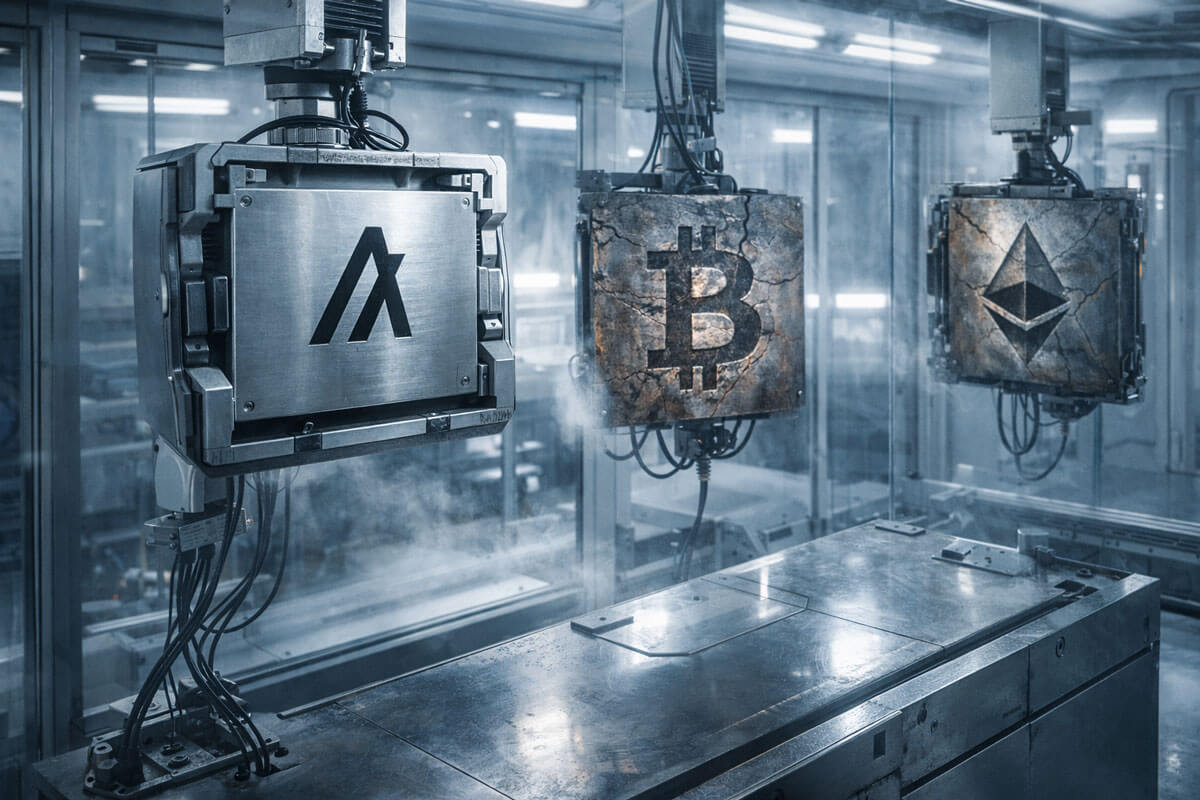
Algorand gained 50% after Google's quantum paper highlighted its post-quantum cryptography while warning about Bitcoin and Ethereum. Practical quantum advantage
Algorand's quantum advantage is practical, not theoretical: it has tools in production while giants debate designs. This fundamental distinction explains why the market reacted so aggressively to Google's paper.
Algorand surged 50% in a single week, marking one of the most significant moves in the crypto asset market in 2026. This movement is not coi...
The timing context is crucial. ALGO had touched its all-time low of $0.08 less than a week ago, reflecting market skepticism about its busin...
Algorand surged 50% in a single week, marking one of the most significant moves in the crypto asset market in 2026. This movement is not coincidental: it represents a fundamental shift in how institutional investors and professional traders assess quantum risk. What was previously considered a theoretical problem for future decades has become an immediate concern following Google Quantum AI's paper publication. The document not only dramatically revised downward the qubit requirements needed to compromise Bitcoin's security but identified Algorand as the only blockchain protocol with post-quantum implementations running in production at scale.
The timing context is crucial. ALGO had touched its all-time low of $0.08 less than a week ago, reflecting market skepticism about its business model and adoption. However, Google's paper publication triggered a fundamental reevaluation of Algorand's value as a hedge against systemic quantum risk. This 50% move occurs while most conversations about quantum security in crypto remain theoretical or limited to promising roadmaps. Algorand can demonstrate infrastructure that works today, not just plans for tomorrow.
“Algorand's quantum advantage is practical, not theoretical: it has tools in production while giants debate designs. This fundamental distinction explains why the market reacted so aggressively to Google's paper.”
The Quantum Signal
Google Quantum AI published analysis that radically changes quantum risk timelines for cryptocurrencies. The paper, titled "Practical Estimates for Quantum Attacks on Elliptic Curve Cryptography," reduced estimates of physical qubits needed to break Bitcoin's security from millions to fewer than 500,000. This revision represents a 5-10 year acceleration in the risk timeline, according to quantum security experts. More significantly, the document highlighted Algorand as a real-world case study of post-quantum cryptography implementation, specifically mentioning its use of Falcon digital signatures for smart transactions.
quantum computing lab with researchers analyzing data streams
The importance of this validation by Google cannot be overstated. While Bitcoin and Ethereum face monumental migration challenges due to their size, age, and governance complexity, Algorand already has quantum-secure transactions in production since 2025. The first post-quantum transaction on Algorand executed in June 2025, using Falcon-512 signatures for an ASA token transfer. This early implementation contrasts markedly with the state of Bitcoin and Ethereum, where discussions about post-quantum migration are just beginning to gain traction among core developers.
The timing of the paper is particularly critical because it coincides with accelerated advances in quantum hardware. IBM recently announced its 1,000-qubit quantum processor, while companies like Quantinuum and IonQ have demonstrated significant improvements in error rates and quantum coherence. Although 500,000 physical qubits still represent a formidable technical challenge, the current development trajectory suggests this threshold could be reached sooner than many in the crypto space had anticipated.
On-Chain Data
On-Chain Data
Weekly performance: Algorand gained approximately 50% over the past week, from $0.08 to $0.12, with trading volume increasing 300% during the period.
Current price: $0.12 as of press time, with technical resistance at $0.15 and established support at $0.10.
All-time low: $0.08 reached less than a week ago, representing a market capitalization of approximately $640 million.
First post-quantum transaction: Executed in June 2025, marking a milestone against competitors without production implementations.
Falcon adoption: Over 15,000 smart transactions have used Falcon signatures since implementation, with 40% monthly growth.
Key rotation: Algorand's native key rotation function has been used by more than 50,000 accounts, providing a critical mechanism for future migrations.
State proof volume: Cross-chain cryptographic attestations using Falcon have processed over $200 million in value since implementation.
ALGO price chart showing 50% rally with volume and technical indicators
Market Impact
Institutional traders treated Google's paper as definitive validation of work already underway on Algorand. The network had been deploying Falcon digital signatures for multiple use cases: smart transactions, state proofs (the cryptographic attestations used to verify blockchain state across chains), and as a primitive available to developers building on the Algorand Virtual Machine. This multifaceted implementation created a tangible competitive advantage when the paper began circulating among hedge funds and family offices.
The combination of Algorand's capabilities - live transaction functionality, comprehensive developer tooling, state-proof support, and native key rotation - made it the natural focal point as the market processed the paper's implications. For Bitcoin and Ethereum, the concern isn't just whether quantum computers will eventually derive private keys from public information, but how much of these networks' legacy footprint would be difficult to migrate in time. Bitcoin has approximately 900,000 addresses with funds that haven't moved their UTXOs in over 5 years, creating a risk of assets locked in vulnerable addresses.
The impact on derivatives markets was equally significant. ALGO futures contracts on major exchanges showed a 400% increase in trading volume, with open interest reaching 6-month highs. ALGO options experienced massive repricing, with implied volatility jumping from 60% to 120% in the week following the paper. This movement reflects a fundamental reevaluation of Algorand's risk profile versus its peers.
Your Alpha
Your Alpha
Google's paper estimates a quantum computer with fewer than 500,000 physical qubits could crack the elliptic-curve cryptography protecting Bitcoin wallets. This threshold is far lower than earlier estimates that ran into 2-3 million physical qubits. For institutional traders, this means rethinking risk time horizons and reallocating capital toward assets with verifiable quantum protection.
1Diversify quantum exposure: Consider allocating 10-15% of your crypto portfolio to networks with post-quantum implementations in production, not just on roadmap. Algorand currently represents the most mature option, but monitor emerging implementations on Hedera and Cardano.
2Monitor key rotation: On Algorand, the native ability to rotate private keys associated with accounts could make future migrations more manageable - a factor that reduces operational risk by 30-40% compared to networks requiring hard forks for cryptographic updates.
3Assess time window: Quantum risk is approaching faster than previously estimated; adjust hold strategies to 12-18 month timeframes for vulnerable assets like Bitcoin and Ethereum, while extending horizons to 3-5 years for quantum-protected assets.
4Position in derivatives: Use ALGO options to capture volatility while the market reprices quantum risk, with straddle strategies around key technical levels ($0.10 and $0.15).
5Track developer adoption: Growth in transactions using Falcon (>40% monthly) serves as a leading indicator of real adoption of Algorand's post-quantum capabilities.
institutional trader analyzing quantum risk dashboards and portfolio positions
Next Catalyst
The post-quantum migration of Bitcoin and Ethereum will be the market's next major event, with trillion-dollar implications. These networks must coordinate protocol-level upgrades involving complex design debates, governance trade-offs, and implementation timelines of 2-3 years minimum. Bitcoin's size and age (with over 47,000 nodes and 15 years of history) complicate any future transition, creating opportunities for more agile protocols.
For Algorand, the next technical milestone will be expanding Falcon usage beyond smart transactions to core consensus. Currently, core consensus and built-in transactions still rely on Ed25519, which remains vulnerable in sufficiently advanced quantum scenarios. Algorand's technical roadmap indicates complete consensus migration to post-quantum cryptography is scheduled for late 2026, which would represent another significant catalyst if executed as planned.
Developer adoption of available post-quantum tools will determine how quickly this advantage consolidates. Currently, over 200 projects build on Algorand, with approximately 30% utilizing post-quantum capabilities in some capacity. Growth of this percentage to 50%+ in the next 6 months would serve as additional validation of the investment thesis.
The Bottom Line
The Bottom Line
Algorand gained 50% because it delivers implemented post-quantum solutions, not promised ones. While Bitcoin and Ethereum face monumental migration challenges that could take years to resolve, Algorand has quantum-secure transactions in production since 2025. For crypto markets, quantum risk just became tangible - and networks with practical advantage are positioning to capitalize on this structural shift.
Validation by Google Quantum AI represents an inflection point for how institutions assess risk in digital assets. It's no longer sufficient to consider only tokenomics or user adoption; cryptographic resilience against existential threats like quantum computing has become a critical valuation factor. Algorand has demonstrated execution where others only have plans, and the market is rewarding this fundamental difference.
Position portfolios considering not just theoretical value, but execution capability against existential threats. The window of opportunity to capitalize on this quantum transition is closing rapidly as more institutional participants become aware of accelerated timelines. Algorand currently represents the most direct hedge against this systemic risk, but closely monitor emerging implementations on other layer-1 protocols.