The Signal
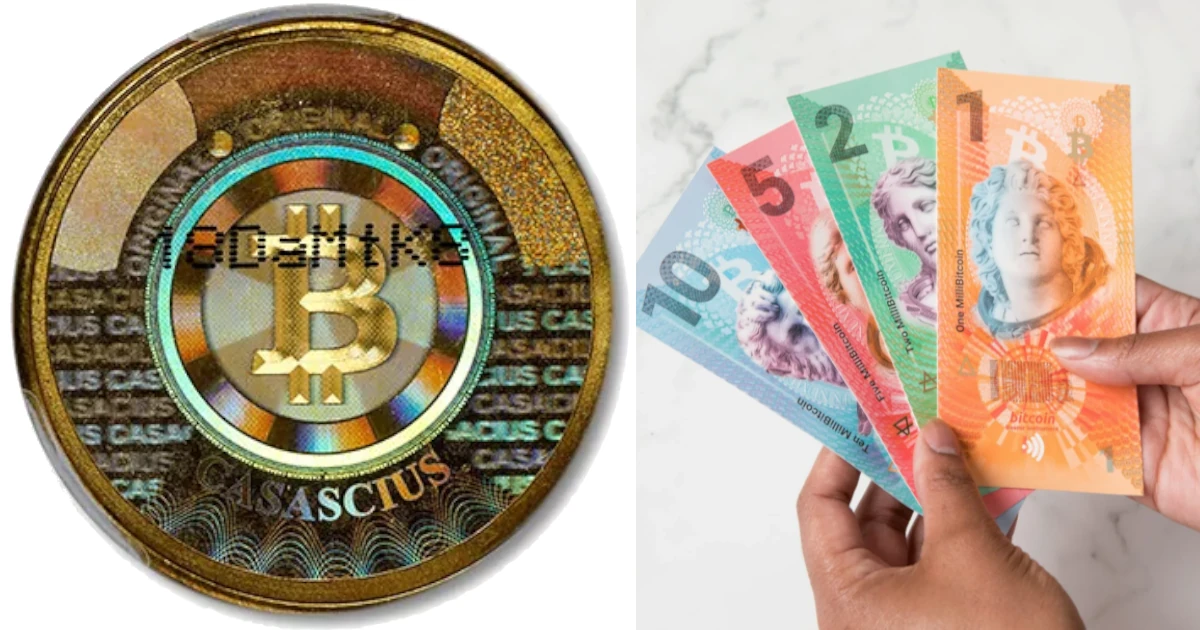
On September 6, 2011, with Bitcoin trading at a mere $8, a legend was born: the Casascius coin. Mike Caldwell, a developer under the Bitcointalk pseudonym, created the first physical artifact that captured the essence of the digital asset. But the real challenge wasn't minting metal—it was solving the private key problem: how to deliver a bitcoin without the creator being able to steal it.

Caldwell generated keys on an airgapped machine, printed them, glued them onto precious metal coins, and covered them with tamper-proof stickers that left a honeycomb pattern if removed. The system relied on trust in Caldwell, who built a legendary reputation. But in November 2013, the Financial Crimes Enforcement Network (FinCEN) notified him that he was an unregistered money transmitter. Casascius coins ceased production.
Caldwell's case was not isolated. FinCEN's intervention marked a turning point in the history of physical bitcoin. Until then, the crypto community viewed these coins as a curiosity, a way to bridge the digital and tangible worlds. But the U.S. regulator made it clear that any intermediary handling private keys for others is subject to money transmission laws. This not only stopped Casascius but also dampened enthusiasm for similar products.
“The biggest hurdle for physical bitcoin remains private key custody without a trusted intermediary.”
On-Chain Data
- Issuance Price: Bitcoin traded at $8 when the first Casascius coins were minted.
- Current BTC Value: Each Casascius coin contains a quantity of bitcoin worth thousands of dollars today, plus a collector premium.
- Shutdown Date: November 2013, after FinCEN intervention.
- RavenBit Model: Launched a year later, it allowed users to generate their own keys, avoiding trust in a central issuer, but shifting security to potentially infected home printers.
- Estimated Number of Casascius Coins: Approximately 28,000 coins were minted in various denominations, from 0.1 BTC to 1,000 BTC. Many have been redeemed or lost, reducing the circulating supply.
- Collector Premium: Unredeemed Casascius coins in good condition can command premiums of up to 10x the value of the contained BTC, depending on seal integrity and rarity.

Market Impact
Casascius's legacy extends beyond collectibles. These coins proved that the desire to physically hold Bitcoin is real, but regulation and security are massive barriers. Caldwell's shutdown by FinCEN set a precedent: any attempt to create physical bitcoin with pre-loaded keys could be considered money transmission. This stifled innovation for years.
RavenBit tried to decentralize trust but created a usability problem: the average user lacks a secure environment to generate keys. Most people use computers with malware, making the solution worse than the problem. The physical bitcoin market remains a collector's niche, not a mass adoption tool.
However, the impact is not entirely negative. The existence of these objects has created a secondary market where significant premiums are traded. For example, a Casascius 1 BTC coin (with BTC valued at $70,000) can sell for $100,000 or more if the seal is intact. This demonstrates real demand for items that combine historical rarity with digital value.
Your Alpha

- 1For Collectors: Casascius coins remain the gold standard. Their premium over BTC and metal value is high, but liquidity is low. Buying requires verifying sticker integrity and trusting the seller. It is recommended to use escrow services or verification by trusted community members.
- 2For Entrepreneurs: RavenBit's model is a dead end unless secure key generation is solved. A potential solution is integrating hardware wallets like Trezor or Ledger directly into the physical coin, letting the user be the sole custodian. Additionally, Secure Element chips that generate keys on-device and never expose them could be explored.
- 3For Investors: The value of these artifacts lies in their historical rarity, not as a payment medium. If you want Bitcoin exposure, buying the digital asset directly is more efficient. However, if you seek diversification into collectibles, Casascius offers a unique blend of history and digital value.

Next Catalyst
The evolution of secure chips and hardware wallets could revive the concept. If a company integrates a Secure Element into a physical coin, where the private key is generated on-device and never leaves, the trust problem disappears. Companies like Ledger already have the technology; only the will to create a collectible product is missing.
Moreover, growing institutional interest in Bitcoin as a reserve asset could drive demand for physical representations of ownership, similar to gold certificates. However, regulation will remain a hurdle: any centralized issuer will be seen as a custodian or transmitter. One possible path is for exchanges or institutional custodians to issue non-fungible tokens (NFTs) linked to physical bitcoins, but that would stray from the essence of a tangible object.
Another potential catalyst is the emergence of technical standards for integrating hardware wallets into collectible objects. If a company like Ledger or Trezor releases a limited edition of physical coins with their chip integrated, it could rekindle public interest. Additionally, growing awareness of self-custody could drive users to seek more secure ways to store their keys, and a physical object that securely contains them would be attractive.
The Bottom Line

The history of physical bitcoin is the history of trust. Casascius showed that one person can be trusted; RavenBit showed that decentralizing trust is hard. The future likely belongs to devices that put the user in absolute control of their key, without relying on third parties. Meanwhile, Casascius coins will remain relics of an era when touching Bitcoin was a dream.
The crypto collectibles market is small but resilient. If security technology advances enough, perhaps one day you'll be able to have a bitcoin in your pocket, not just in your mind. The combination of historical rarity, digital value, and the promise of self-custody keeps these objects relevant, even if mass adoption is still far off.