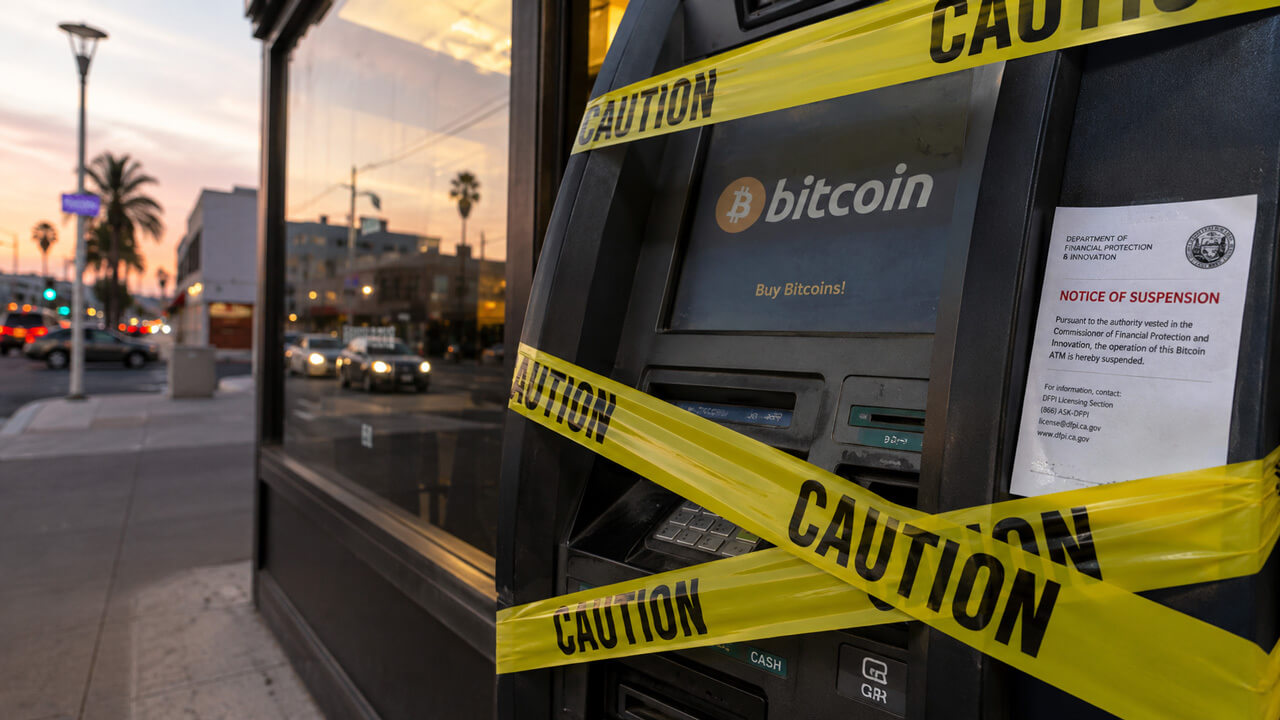
The Federal Reserve just upgraded FedNow for cross-border payments. This directly threatens the utility thesis that has supported XRP's value proposition for years, marking an inflection point in the competition between traditional infrastructure and specialized digital assets.

The Regulatory Signal

XRP Pivot: FedNow Upgrade Threatens Ripple's Core Payments Thesis with

On April 8, 2026, the Federal Reserve proposed a regulatory change allowing U.S. banks and credit unions to use intermediaries through the FedNow Service. The logic is explicit in the proposal details: institutions could employ a correspondent bank for the international portion of a transaction while using FedNow for the domestic U.S. leg. This isn't merely a technical update—it's a strategic move that invades the operational space XRP has spent years trying to own: faster movement of money across borders with fewer delays, less friction, and lower dependence on idle pre-funded capital.

The historical context is crucial. XRP emerged in 2012 as a response to the deficiencies of traditional cross-border payment systems, which relied on nostro/vostro accounts, multiple intermediaries, and settlements that could take days. Ripple's pitch was always that XRP would serve as a bridge asset that would eliminate the need for pre-committed funds in correspondent banks, reducing costs and accelerating transactions. For over a decade, this narrative has supported the asset's valuation, even during regulatory battles with the SEC. The Fed's proposal represents the first time traditional payment infrastructure has formally adopted an approach that directly competes with this core thesis.

cross-border payment flow diagram comparing traditional systems, XRP, and FedNow

The market tension starts here because XRP still trades with a utility narrative attached. Ripple's own description presents the asset as infrastructure for global payments, with settlement in three to five seconds and transaction costs measured in fractions of a cent. XRPL's overview goes further, describing XRP as a currency bridge within the network's decentralized exchange. These points have supported the asset's core pitch for years. If cross-border payments remain slow, expensive, and operationally fragmented, the case for a neutral bridge asset retains intuitive force. But once major payment rails begin to solve more of that friction within the regulated banking stack, the question changes fundamentally.

The issue becomes less about whether XRP can do the job and more about whether the job is becoming less scarce. When central banks and traditional networks adopt features that were once crypto-exclusive, the competitive advantage erodes.

On-Chain Data

On-Chain Data — regulation
On-Chain Data
  • FedNow Proposal: April 8, 2026 - Federal Reserve proposed allowing intermediaries for international payments through its instant settlement service, marking the first significant expansion of FedNow since its 2023 launch.
  • Swift Commitment: More than 25 banks have committed to processing payments under Swift's new framework by June 2026, including global institutions like JPMorgan Chase, HSBC, and Bank of America.
  • Initial Corridors: Swift's framework will span corridors across Australia, Bangladesh, Canada, China, Germany, India, Pakistan, Spain, Thailand, the UK, and the US, covering approximately 65% of global cross-border payment volume.
  • Remittance Markets: Recipients in five of the world's ten largest remittance markets will be among the first to benefit, including India, China, Mexico, Philippines, and Egypt.
  • XRP Volume: Daily transaction volume on XRPL has averaged $1.2 billion over the past 30 days, with approximately 40% related to cross-border payments according to chain analysis.
  • Bank Adoption: Only 15 financial institutions currently use XRP for production settlements, compared to over 11,000 banks connected to the Swift network.
Swift corridor map visualization showing global coverage versus limited XRP adoption

Market Impact

This regulatory change arrives at a critical moment for digital assets built on specific utility narratives. XRP has operated for years in the gap between what finance needs and what existing infrastructure fails to deliver: fast, cheap, predictable cross-border payments. The Fed's proposal suggests incumbents are working on the same problem with the advantages they already hold: bank relationships, regulatory standing, and direct access to domestic settlement infrastructure.

For XRP holders, this creates a far more uncomfortable frame than the familiar regulatory argument. A token can survive a long court fight and still face a harder competitive landscape when the legacy system upgrades the very function that made the token feel unique. Swift's offer to customers is easy to understand: certainty of cost, full-value delivery, the fastest possible speeds (including instant settlement where possible), and end-to-end traceability. Each of those features addresses a pain point long associated with the XRP pitch.

The competitive implication here is sharper than the usual view that banks are borrowing crypto ideas. XRP drew attention because it sat in the gap between what finance needed and what finance's existing rails were failing to deliver. That gap is now narrowing. It's narrowing from the top down through central bank policy changes and network-level reforms, and from the corridor level where banks are promising more certainty on speed, value, and transparency. The result is existential pressure on assets whose entire raison d'être is solving a problem that traditional infrastructure is learning to solve itself.

Your Alpha

Your Alpha — regulation
Your Alpha

The Fed's regulatory change represents an inflection point for assets built on narrow utility narratives. When traditional infrastructure begins solving the same problems that justify a token's existence, the value proposition must evolve or face gradual obsolescence.

  1. 1Re-evaluate single-utility exposures: Assets with narrow, highly specific use cases face greater risk of disruption from improvements in traditional infrastructure. Consider diversifying toward tokens with broader utilities or more complex ecosystems that offer multiple value sources beyond a single use case.
  2. 2Monitor institutional adoption: The commitment of more than 25 banks to Swift's new framework by June 2026 signals accelerating institutional competition. Projects competing directly with banking infrastructure will need to demonstrate significant advantages to justify their valuation, such as substantially lower costs or capabilities traditional systems cannot replicate.
  3. 3Focus on interoperability: In a world where multiple payment systems coexist, the ability to connect different networks and assets becomes more valuable than isolated settlement speed. Projects solving interoperability problems can capture value even as traditional rails improve, acting as bridges between fragmented ecosystems.
trader analyzing charts of bank adoption versus crypto volume

Next Catalyst

The implementation of Swift's new framework in June 2026 represents the next significant pressure point. More than 25 banks have committed to processing payments under this system, spanning key corridors across eleven countries. Swift's promise includes certainty of cost, full-value delivery, and the fastest possible speeds—features that directly compete with XRP's value proposition.

The performance of this rollout will provide concrete data about how much friction traditional infrastructure can remove. If banks can deliver faster, more predictable cross-border payments through regulated channels, pressure on tokens built primarily for this use case will increase significantly. Developers and communities around these projects will need to demonstrate competitive advantages beyond what traditional infrastructure can offer, such as lower marginal costs, greater censorship resistance, or programmability capabilities that banking systems lack.

The next milestone will be Q3 2026, when the first performance data from the new Swift system is published. If it achieves cross-border settlement times under one hour with predictable costs, XRP's narrative will face additional pressure. Concurrently, the XRP community will need to demonstrate real adoption beyond pilot cases, showing significant volumes that justify its current market valuation.

The Bottom Line

The Bottom Line — regulation
The Bottom Line

The Fed's April 8 proposal represents more than a technical update—it's a direct incursion into territory XRP has spent years trying to claim. When central banks and traditional payment networks begin solving the same friction problems that justify specific tokens' existence, utility narratives must evolve or face gradual erosion. The market is positioning for a world where multiple payment systems coexist, and the assets that survive will be those offering value beyond a single narrow use case.

For XRP, this means pivoting toward complementary capabilities that traditional infrastructure cannot easily offer, such as programmable payments, settlements across different asset classes, or decentralized financial services built on XRPL. The window for this transition is closing rapidly as banking incumbents accelerate their own innovations. Investors must assess whether the teams behind these projects have the agility and vision to navigate this radically changing competitive landscape.