Street Art Revolution: How Graffiti Culture Fuels Bitcoin's 2026 Narra | ChainPulse
Bitcoin
Street Art Revolution: How Graffiti Culture Fuels Bitcoin's 2026 Narra
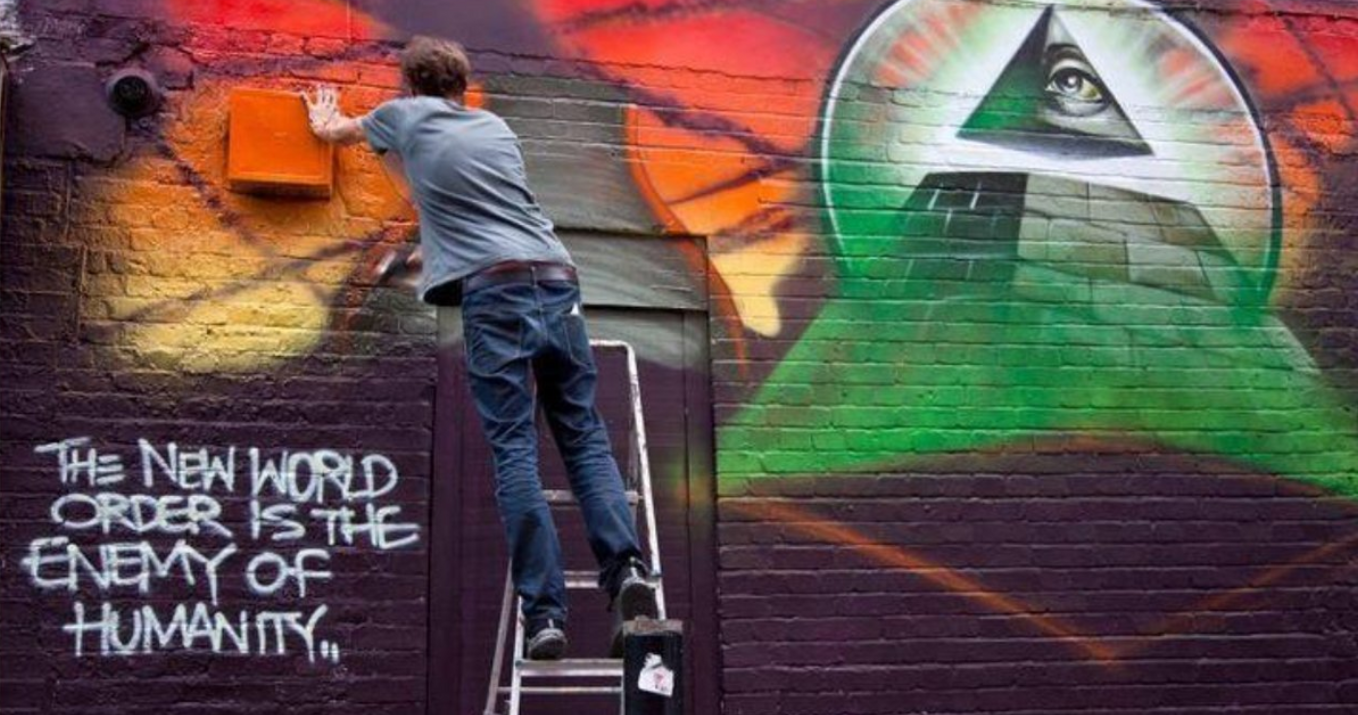
Graffiti pioneer Mear One, with 40 years of street activism, draws direct parallels between protest art and Bitcoin's philosophy. His Bitcoin 2026 appearance si
Cultural validation from veteran protest artists reinforces Bitcoin's narrative as a sovereignty tool, not just a digital asset.
Street protest art finds its digital counterpart in Bitcoin. Legendary artist Mear One's participation at Bitcoin 2026 marks a cultural infl...
Revolutions leave artifacts that transcend their original time. A newspaper headline about bank bailouts embedded in Bitcoin's Genesis Block...
Street protest art finds its digital counterpart in Bitcoin. Legendary artist Mear One's participation at Bitcoin 2026 marks a cultural inflection point for institutional adoption.
The Signal
Revolutions leave artifacts that transcend their original time. A newspaper headline about bank bailouts embedded in Bitcoin's Genesis Block. A protest poster wheat-pasted on a Los Angeles overpass. These aren't disconnected relics but parallel expressions of the same systemic discontent. Mear One's inclusion—an artist with four decades of street activism—at the Bitcoin 2026 conference isn't anecdotal curiosity. It's a clear signal that Bitcoin's narrative is evolving from purely technical to culturally significant.
protest art beside mining rig
When an artist whose work has confronted power structures from the Gulf War to Occupy Wall Street identifies Bitcoin as the natural continuation of his activism, we're witnessing convergence that transcends price charts. This cultural validation arrives at a crucial moment: 2026 represents the year Bitcoin must prove it's more than a speculative asset. It must establish itself as a philosophical movement with roots in dissent traditions that institutional investors can understand and endorse. The presence of physical protest artifacts alongside mining nodes at Bitcoin 2026 creates a powerful narrative bridge.
The graffiti-Bitcoin connection runs deeper than surface aesthetics. Both represent permissionless systems operating outside traditional gatekeepers—street art on public walls, Bitcoin on public blockchains. Both emerged as responses to centralized control: graffiti challenging property laws and censorship, Bitcoin challenging central banks and financial intermediaries. This philosophical alignment makes Mear One's participation profoundly meaningful. It's not merely an artist discussing cryptocurrency; it's a cultural resistance veteran recognizing Bitcoin as the next evolution in the struggle for individual autonomy. This validation matters because it comes from outside the crypto echo chamber, from someone whose credibility was earned through decades of tangible cultural production, not financial speculation.
“Cultural validation from veteran protest artists reinforces Bitcoin's narrative as a sovereignty tool, not just a digital asset.”
On-Chain Data
On-Chain Data
Artistic Tenure: Mear One has 4 decades of using public space for political and economic confrontation. His career spans from early organized graffiti in Los Angeles to contemporary global protests, creating a body of work that documents four decades of systemic discontent—a timeline that predates Bitcoin by nearly thirty years and provides historical depth to the cryptocurrency's anti-establishment narrative.
Cultural Movement: He pioneered the Melrose graffiti movement in the late 1980s, setting precedents Banksy would later follow. This movement transformed graffiti from random vandalism into organized political art, establishing the aesthetic foundations for protest art that would define subsequent generations and creating a cultural lineage that Bitcoin can now tap into.
Institutional Recognition: His work resides in permanent collections including Laguna Art Museum and was featured in MOCA LA's landmark "Art in the Streets" exhibition in 2011. This transition from public space to museum mirrors the same cultural legitimization Bitcoin seeks as it evolves from fringe technology to institutional asset, demonstrating how radical movements can gain establishment acceptance without losing their core values.
Continuous Activism: From anti-Gulf War protests in the early 1990s to Occupy Wall Street encampments in 2011, his work has maintained consistent critique of power structures. This continuity is crucial: it shows cultural resistance isn't a passing trend but a persistent tradition—exactly the type of historical legitimacy Bitcoin needs for its long-term narrative as it faces regulatory challenges and market cycles.
genesis block data visualization
Market Impact
The convergence between protest art and blockchain technology represents a critical evolution for Bitcoin's narrative. For years, Bitcoin advocates have argued it represents a break from traditional financial systems, but these claims have often sounded abstract to institutional investors. Validation from figures like Mear One—whose activism predates Bitcoin by decades—provides tangible cultural lineage. This isn't superficial marketing; it's the alignment of dissent philosophies sharing fundamental goals: challenging centralized power structures and creating permissionless alternatives.
For institutional fund managers evaluating Bitcoin in 2026, this cultural dimension adds a layer of narrative resilience. An asset existing only as computer code can appear technically sound but culturally sterile. A movement that can trace connections to established traditions of protest and artistic expression gains historical depth. This is particularly relevant in today's regulatory context, where Bitcoin faces challenges beyond the technical. The ability to frame Bitcoin as part of a broader continuum of movements for individual freedom and financial sovereignty may influence how regulators and legislators perceive its social value beyond speculation.
Market impact manifests across multiple dimensions. First, it reduces narrative risk: Bitcoin no longer relies solely on technical arguments that could become obsolete or be surpassed by competing technologies. Instead, it anchors itself in cultural traditions with centuries of history. Second, it broadens the asset's appeal beyond technologists and financial speculators to include cultural institutions, philanthropists, and funds with social impact mandates. Third, it creates new investment opportunities in the infrastructure facilitating this convergence—platforms authenticating art on blockchain, protocols preserving cultural artifacts digitally, and markets connecting traditional artists with the crypto ecosystem. This cultural layer could prove particularly valuable during market downturns, when purely financial narratives struggle to maintain investor confidence.
Your Alpha
Your Alpha
The integration of established cultural narratives represents an underappreciated opportunity for positioning within the Bitcoin ecosystem. Investors who have traditionally evaluated Bitcoin through purely technical metrics—hash rate, active addresses, NVT ratios—must now incorporate cultural analysis into their evaluation frameworks. Artists like Mear One appearing at Bitcoin 2026 isn't an isolated event; it's part of a broader pattern of cultural adoption that precedes and predicts institutional adoption.
1Diversify narrative exposure: Consider exposure to projects facilitating the intersection between art, culture, and blockchain beyond superficial NFTs. Look for infrastructure enabling preservation and verification of cultural artifacts on-chain. This includes authentication protocols, decentralized archival platforms, and secondary markets for tokenized art with significant cultural meaning. The key is identifying projects solving real problems at the art-technology intersection, not just those speculating on digital images. Focus on infrastructure plays rather than speculative collectibles, as they offer more sustainable value propositions.
2Monitor cultural adoption: Set alerts for collaborations between established artists and Bitcoin protocols. These partnerships often precede cycles of increased institutional and retail attention. Pay particular attention to artists with political activism credentials, as their participation carries special narrative weight. Traditional cultural institutions (museums, galleries, auction houses) announcing blockchain initiatives are also important signals, representing establishment cultural validation. Track mainstream media coverage in arts and culture publications—positive coverage there can be as significant as coverage in financial or tech media.
3Assess narrative resilience: In your due diligence, assign weight to how projects position themselves within broader cultural traditions. Protocols with strong cultural narratives demonstrate greater resilience during periods of regulatory volatility. Ask: Does this project have a story beyond its technical specifications? Does it connect with existing cultural movements or values? Does it have potential to become part of the cultural canon, not just the technological ecosystem? These considerations can differentiate between projects that survive market cycles and those that fade away. Cultural depth provides a moat that pure technical innovation often lacks.
institutional investor dashboard
Next Catalyst
Bitcoin 2026 in Las Vegas will serve as the testing ground for this cultural convergence. The conference won't just feature technical panels on Lightning Network or privacy enhancements but will host the "Relics of a Revolution" exhibition explicitly tracing connections between physical protest artifacts and Bitcoin's birth. This narrative framing will be crucial as Bitcoin navigates an increasingly complex regulatory landscape in 2026. The ability to present Bitcoin as part of a broader cultural movement—not just a technological innovation—could influence how legislators perceive its social value.
The latter half of 2026 will likely see more integrations between established art and blockchain, particularly as traditional cultural institutions—museums, galleries, auction houses—seek to validate their digital forays. Collections that have historically preserved artifacts from social movements will now consider how blockchain can authenticate and preserve digital protest art. This convergence will create new opportunities for protocols that can serve as infrastructure for decentralized cultural preservation.
Specific catalysts to watch include: collaboration announcements between major museums and blockchain projects, launches of platforms tokenizing works by historical protest artists, and regulatory developments recognizing blockchain art as a legitimate category of cultural preservation. Also monitor how this convergence gets covered in traditional media—coverage in established arts and culture publications could drive different investor demographics than coverage in financial or tech media. The cultural legitimization process often follows predictable patterns, and Bitcoin appears to be entering the phase where it transitions from technological novelty to cultural institution.
The Bottom Line
The Bottom Line
Mear One's participation at Bitcoin 2026 represents more than cultural curiosity; it's validation of Bitcoin's fundamental narrative as a sovereignty tool. For investors, this means evaluation metrics must expand beyond on-chain data to include cultural signals. Protocols that successfully integrate established cultural narratives will demonstrate greater resilience during volatile market cycles. Position yourself in infrastructure facilitating this convergence as Bitcoin consolidates its status not just as an asset, but as a movement.
The broader lesson is that technological adoption rarely happens in a vacuum. Technologies that endure are those that intertwine with existing cultural narratives, offering new expressions of enduring human values. Bitcoin, by connecting with traditions of protest art and political resistance, is doing exactly that. For investors, this creates a new set of variables to consider: not just how good the technology is, but how well it integrates into the cultural fabric. In 2026 and beyond, projects that master this intersection between technology and culture will likely be the ones defining the next phase of the blockchain ecosystem. The graffiti on the wall and the code on the blockchain are telling the same story—one of resistance, autonomy, and creating alternatives to centralized control. Recognizing this connection isn't just culturally insightful; it's financially astute.