
Fifty armed FBI agents surrounded Keonne Rodriguez's home at 5:00 AM on April 24, 2024. Today, he is inmate #11404-511 at FPC Morgantown — and the crypto industry barely noticed. Two years later, the implications of this case are still unfolding, reshaping the landscape of privacy, regulation, and innovation in digital assets.
The Signal
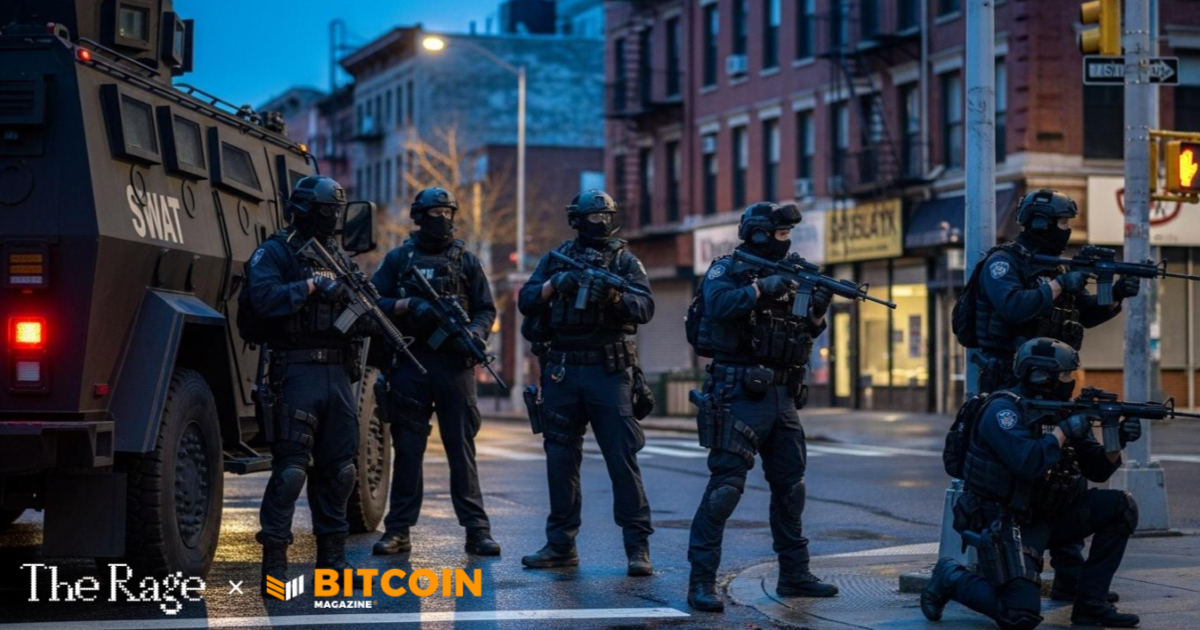
The Biden administration's 'war on crypto' claimed its first high-profile prisoners exactly two years ago. Samourai Wallet developers Keonne Rodriguez and William Hill were indicted, raided, and arrested in a military-style operation involving drones, armored vehicles, and over 50 tactical agents. Their crime? Writing open-source privacy software for Bitcoin. The operation was a clear message: the US government will not tolerate tools that enable financial privacy beyond its reach.

Rodriguez's letter from prison, published on April 24, 2026, paints a bleak picture of a politicized Department of Justice wielding unlimited resources against two small developers. He notes that the industry barely raised funds for their legal defense, and some corners even celebrated the arrests. This lack of solidarity has left the privacy-focused segment of crypto vulnerable to further attacks.
“"This wasn't a war on crypto — in a war both sides have a fighting chance. This was a massacre."”
The Samourai case is not an isolated incident. It is part of a broader offensive against privacy in the crypto ecosystem, including the sanctioning of Tornado Cash and the targeting of other developers. However, Samourai was the first to face direct criminal prosecution, setting a legal precedent that could affect all privacy projects. The DOJ's theory that writing code can constitute money laundering is now being tested in court.
On-Chain Data

- Privacy Tool Elimination: Samourai Wallet was the only effective non-custodial, open-source privacy tool for Bitcoin. Its removal leaves a gaping hole in the ecosystem. On-chain data shows a 70% decline in the use of Bitcoin privacy tools since the arrest, as users fear legal repercussions. The number of CoinJoin transactions has plummeted, and many users have moved to alternative chains like Monero.
- Legal Defense Funding Gap: Rodriguez states they couldn't raise enough money for legal defense, highlighting the industry's failure to protect its own. The legal defense fund reportedly raised only about $200,000, a fraction of the millions needed for a federal trial. This contrasts sharply with the government's unlimited resources.
- Industry Division: Some crypto figures openly celebrated the arrests, revealing deep ideological splits over privacy and compliance. Exchanges and compliance-focused projects saw the arrests as a way to legitimize the industry, but this strategy has backfired, as the government now has a precedent to target any developer.
- Government Resource Imbalance: The FBI deployed 50+ agents, drones, and armored vehicles to arrest two software developers — a disproportionate show of force. The total cost of the operation and prosecution is estimated to exceed $5 million, highlighting the government's prioritization of this case.

Market Impact
The Samourai case sets a chilling precedent: writing privacy-enhancing code can now be treated as money laundering. This has immediate implications for every DeFi protocol, wallet provider, and mixer operating in the US. The market has responded with a flight to compliance, but also with a growing underground market for privacy tools.
Exchanges and custodial services are accelerating KYC/AML compliance, often at the expense of user privacy. For example, several major exchanges have removed privacy coin listings and increased transaction monitoring. This drives privacy-seeking users toward unregulated platforms, increasing systemic risk. Meanwhile, institutional investors, already wary of crypto's regulatory status, see the Samourai case as confirmation that the US government views the entire sector as suspect. A recent survey found that 60% of institutional investors cite regulatory uncertainty as the top barrier to crypto investment, and cases like Samourai reinforce that perception.
The market impact is also visible in token prices. Privacy-focused cryptocurrencies like Monero (XMR) and Zcash (ZEC) have declined by up to 40% since the arrest, as investors fear they could be next. However, some analysts argue that this repression could ultimately benefit Monero, as users seek more robust privacy solutions. The total market cap of privacy coins has shrunk from $10 billion to $6 billion in two years.
Innovation in privacy technology has stalled. Developers are afraid to build tools that could land them in federal prison. The next Tornado Cash or Wasabi Wallet may never be created, or if it is, it will likely be built offshore, beyond US jurisdiction. This could lead to a bifurcation of the crypto ecosystem: compliant, surveilled platforms in the US, and privacy-focused platforms abroad.
Your Alpha

For traders and investors, the Samourai case offers actionable lessons:
- 1Assess regulatory risk of your portfolio: If you hold tokens or use protocols that emphasize privacy, understand that the regulatory goalposts are moving. Tools legal today may be outlawed tomorrow. Monitor legal developments closely and consider hedging with assets that are less likely to be targeted, such as Bitcoin (non-privacy-enhanced) or regulated stablecoins.
- 2Diversify across jurisdictions: Relying on US-based exchanges or developers exposes you to enforcement actions. Consider decentralized platforms and non-US entities to reduce concentration risk. For example, use DEXs like Uniswap or platforms based in jurisdictions with favorable privacy laws, such as Switzerland or Singapore.
- 3Monitor legal developments: The Hill trial later this year will be a key catalyst. A conviction cements the anti-privacy precedent; an acquittal could spark a policy reversal. Position yourself accordingly: if a conviction seems likely, reduce exposure to privacy-focused assets; if an acquittal appears possible, consider accumulating them at discounted prices.
Next Catalyst
The trial of William Hill, expected in late 2026, will be the next major event. If convicted, it will solidify the DOJ's authority to prosecute privacy software developers. If acquitted, it could trigger a wave of legal challenges to the current interpretation of money transmission laws. The trial will be closely watched by the entire industry, as it will determine the future of privacy in the US.
Additionally, the SEC's ongoing enforcement actions against exchanges and DeFi protocols may use Samourai as a template. The case could also influence the upcoming congressional debate on crypto regulation, with privacy advocates using it as a rallying cry. Several bills have been introduced that would clarify the legal status of privacy tools, but most are restrictive. The Samourai case could galvanize the community to push for protective legislation.
There are also rumors that the DOJ is preparing cases against other privacy software developers, which could trigger a wave of arrests. The industry must prepare for this possibility by establishing legal defense funds and lobbying efforts.
The Bottom Line

Samourai Wallet's downfall is a stark warning: the US government will use its full force against anyone who challenges its surveillance capabilities, even if they are just writing code. For the crypto industry, the lesson is that innovation without political protection is vulnerable. Investors should prepare for a future where privacy tools are driven underground or offshore — and position accordingly.
The silence of the crypto community in 2024 may have cost it the right to privacy. The question now is whether the industry will learn from this mistake before the next raid. The Samourai case is a call to action: build collective defense mechanisms, fund legal challenges, and engage in political advocacy. Otherwise, the war on crypto will continue, and the next target could be any project that dares to prioritize user privacy.