Regulation: SEC's Strategic Pivot After Admitting Crypto Crackdown Pri | ChainPulse
Regulation
Regulation: SEC's Strategic Pivot After Admitting Crypto Crackdown Pri
SEC dismissed 7 crypto cases after admitting its prior approach was 'conceptually wrong,' prioritizing action volume over real protection. This shift reduces im
In November 2024, the SEC presented its enforcement strategy as an unqualified success. The agency celebrated 583 enforcement actions and $8...
The 2024 context is essential to understanding the magnitude of the current shift. Every metric the SEC celebrated just two years ago is now...
The U.S. Securities and Exchange Commission (SEC) has executed one of the most significant regulatory pivots in cryptocurrency history. By dismissing seven crypto registration-related cases and publicly criticizing its own prior strategy as "conceptually wrong," the agency isn't just reducing immediate regulatory pressure—it's fundamentally redefining how it will engage with the industry for years to come. This shift arrives at a critical juncture where regulatory clarity has become the primary bottleneck for institutional adoption and ecosystem growth.
The Signal: From Offensive to Strategic Retreat
In November 2024, the SEC presented its enforcement strategy as an unqualified success. The agency celebrated 583 enforcement actions and $8.2 billion in remedies, specifically using crypto cases as proof it could keep pace with emerging financial threats. The case against Terraform Labs and Do Kwon, which accounted for roughly 56% of that year's total remedies, was promoted as a signature achievement demonstrating the SEC's ability to tackle large-scale fraud in the digital space. At that time, crypto wasn't a side project for the agency; it was the flagship of its enforcement strategy—a way to demonstrate relevance in a rapidly evolving financial landscape.
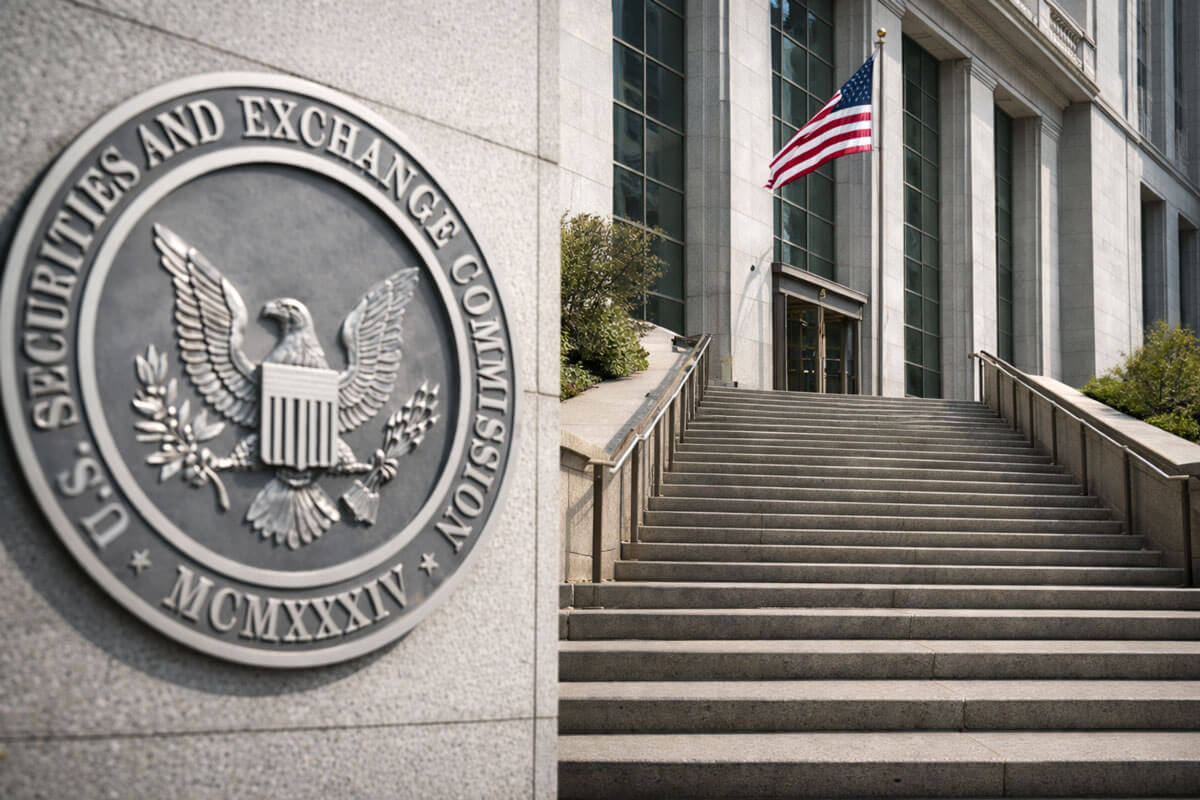
SEC headquarters in Washington with American flag
The 2024 context is essential to understanding the magnitude of the current shift. Every metric the SEC celebrated just two years ago is now being used against it in the fiscal 2025 review. The document reveals , a decline of more than . The headline monetary relief figure reported is $17.9 billion, but the agency itself acknowledges this number is significantly inflated by long-running litigation and money credited against other judgments rather than freshly collected. When these accounting elements are stripped out, the real fiscal 2025 total lands at approximately : $1.4 billion in disgorgement and prejudgment interest, plus $1.3 billion in civil penalties. This 67% reduction in real remedies versus the previously reported $8.2 billion isn't just a quantitative decrease—it's a qualitative admission that the prior strategy was fundamentally misaligned with investor protection objectives.
456 enforcement actions
20% from the prior year
$2.7 billion
What's most revealing isn't the numbers themselves, but the language used. The SEC now criticizes its own prior approach as "conceptually wrong" rather than just less productive. This semantic shift is significant: it suggests the problem wasn't execution, but the fundamental principles guiding the strategy. The agency specifically admits it "misapplied resources" on cases designed to generate statistical volume and attract media attention, rather than focusing on actual investor harm. This unprecedented public self-critique establishes a new regulatory tone likely to persist through at least 2026.
On-Chain Data: The Metrics of Change
On-Chain Data: The Metrics of Change
Dismissed Cases: 7 cases specifically related to crypto registration were dismissed as part of this course correction. These cases ranged from allegations against exchanges for operating as unregistered exchanges to actions against projects for offering tokens as unregistered securities.
Enforcement Drop: Enforcement actions fell from 583 in 2024 to 456 in 2025, a 22% decrease that reflects strategic retreat rather than mere resource reduction. This drop is particularly pronounced in the crypto segment, where the SEC has withdrawn or dismissed multiple high-profile cases.
Real Remedies: Excluding items inflated by creative accounting, real monetary remedies were $2.7 billion versus the previously reported $8.2 billion. This 67% gap reveals how much the SEC's success narrative depended on singular flagship cases like Terraform Labs.
Flagship Case: The Terraform Labs case represented approximately 56% of 2024's total remedies, meaning over half of the year's enforcement "success" depended on a single case. This concentration of risk is now recognized as a strategic weakness.
Resolution Time: The dismissed crypto cases had an average litigation time of 14 months before dismissal, suggesting the SEC maintained regulatory pressure for significant periods before acknowledging the weakness of its arguments.
interactive chart showing SEC enforcement actions drop from 2024 to 2025
Market Impact: Beyond Immediate Relief
This regulatory shift represents an immediate, tangible reduction in regulatory risk for centralized exchanges and crypto projects with U.S. exposure. Over the past twelve months, we've seen a string of high-profile retreats that reconfigure the landscape: the SEC dismissed its civil enforcement action against Coinbase in early 2025, voluntarily dropped its lawsuit against Binance a few months later, and closed its investigation into Robinhood's crypto arm with no action at all. Each of these moves not only reduces immediate legal pressure on key market players but also frees resources these companies can redirect toward growth and innovation rather than legal defense.
The deeper impact, however, is psychological and strategic. For years, the crypto industry has operated under the constant threat of surprise enforcement actions from the SEC, creating an environment of "regulation by enforcement" where rules were defined through court cases rather than clear guidance. This public admission that the agency "misapplied resources" on cases designed to generate statistical volume fundamentally changes the power dynamic. Projects can now more credibly argue in court that they're being targeted for political or public relations reasons rather than actual investor harm. This could lead to greater willingness to fight SEC actions in court, knowing the agency itself has questioned the validity of its prior approach.
The ripple effect extends beyond individual companies. Venture capitalists and institutional investors who had reduced exposure to U.S. projects due to regulatory risk may now reconsider their allocation strategies. Funds that had focused on jurisdictions like Singapore, Switzerland, or the EU may begin reevaluating opportunities in the U.S. market, especially for projects with more traditional business models that could comply with registration requirements if clarified. This potential capital flow could reinvigorate ecosystem segments that had been in regulatory limbo.
Your Alpha: Strategic Opportunities in a Shifting Landscape
Your Alpha: Strategic Opportunities in a Shifting Landscape
The SEC's admission creates immediate strategic opportunities but also persistent risks requiring careful positioning. Projects that previously avoided the U.S. market due to regulatory risk may now reconsider their approach, especially those with more traditional business models that could comply with registration requirements if clarified. However, this isn't a regulatory "all clear" but rather a temporary pressure reduction while clearer rules develop.
1Reassess exposures to U.S. projects with solid fundamentals: Tokens of U.S.-based companies facing existential regulatory risk may experience short-term relief as the likelihood of aggressive enforcement actions diminishes. Specifically look for projects with sustainable business models, experienced teams, and market-tested products that were being penalized primarily for regulatory uncertainty rather than fundamental deficiencies. Examples include exchanges with transparent fee models, DeFi platforms with clear governance mechanisms, and infrastructure projects with validated enterprise use cases.
2Monitor pending litigation to identify inflection points: Cases still in progress against the SEC may be dismissed or settled favorably in the next 6-12 months. Set alerts for updates in key cases like those involving Ripple, Coinbase, and other projects with active litigation. Announcements of dismissals or favorable settlements will likely trigger significant rallies, especially for tokens with high float and institutional liquidity. Consider gradual accumulation strategies ahead of anticipated resolutions, but maintain tight stops given inherent volatility.
3Strategically diversify across jurisdictions while clarity develops: While immediate regulatory risk in the U.S. decreases, uncertainty about final rules persists through at least 2026. Maintain significant exposure to projects in jurisdictions with clearer, more predictable regulatory frameworks, particularly the EU under MiCA (Markets in Crypto-Assets Regulation), which enters full effect in December 2024. Also consider exposures to projects in jurisdictions like Singapore (regulated by MAS), Switzerland (regulated by FINMA), and the UAE (with progressive frameworks in Abu Dhabi and Dubai). This geographic diversification protects against regulatory setbacks in any single market.
professional trader analyzing multiple screens with regulatory data and crypto charts
Next Catalyst: The Quest for Real Clarity
The next significant regulatory move will come when the SEC publishes clear, applicable guidance on what constitutes a security in the crypto context. The agency has created a new crypto task force specifically to shift its stance from punishing firms for failing to register toward clarifying what registration actually requires. This task force, composed of enforcement division veterans and fintech experts, should produce preliminary guidance within the next 6-12 months, with more formal rules possibly by 2026. Any tangible progress in this direction will be a significant positive catalyst for the entire market, as it would reduce the uncertainty that has hampered institutional adoption.
Concurrently, pending court cases challenging the SEC's authority over certain crypto assets will continue shaping the regulatory landscape in fundamental ways. Decisions in cases like those involving Ripple (regarding whether XRP is a security) and Coinbase (regarding the SEC's jurisdiction over crypto exchanges) will set legal precedents the agency cannot ignore, even with its new, more moderate approach. These rulings will likely arrive in stages during 2025-2026, creating recurring catalytic events investors must anticipate.
The U.S. Congress also represents a critical variable. If legislators perceive the SEC is backing down without providing clear regulatory alternatives, they may intervene with legislation establishing specific rules for crypto. Several bipartisan bills are already circulating, and the SEC's posture shift could accelerate their consideration. Any legislative progress would be the most significant possible catalyst, as it would provide long-term regulatory certainty rather than the temporary administrative guidance that can change with administrations.
The Bottom Line: A Paradigm Shift, Not a Solution
The Bottom Line: A Paradigm Shift, Not a Solution
The SEC has publicly admitted its crypto crackdown prioritized headlines and volume metrics over real investor protection. This shift represents an immediate reduction in regulatory risk for exchanges and projects, but leaves unanswered the fundamental question: what rules actually apply to different types of crypto assets and activities? Investors should view this not as a regulatory "all clear" but as a window of opportunity to reassess U.S. projects previously penalized for regulatory uncertainty, while maintaining diversified exposure to jurisdictions with clearer, more predictable frameworks.
The real catalyst for sustained ecosystem growth will come when the SEC and Congress provide clear guidance and legislation, not when they simply stop enforcing unclear rules. Until then, the optimal strategy combines cautious exposure to U.S. opportunities with a solid foundation in jurisdictions with defined rules. The SEC's pivot is a positive development that reduces short-term risk, but the quest for real regulatory clarity remains the determining factor for crypto's institutional future.