Oil Surge: Crypto Traders Drive $500M Hyperliquid Bets on Strait of Ho | ChainPulse
Trading
Oil Surge: Crypto Traders Drive $500M Hyperliquid Bets on Strait of Ho
Crypto traders placed over $500 million in synthetic oil futures over the weekend, betting that Strait of Hormuz closure could push crude to $100. Blockchain in
Blockchain infrastructure is redefining market access during traditional closures, allowing risk pricing to discover itself in real time. This isn't just a technological advantage but a structural transformation in global financial architecture.
Crypto traders placed over $500 million in synthetic oil futures this weekend on Hyperliquid, marking a milestone in the convergence between...
Iran's abrupt closure of the Strait of Hormuz triggered a scramble for energy hedges during a weekend when global exchanges were inactive. T...
Crypto traders placed over $500 million in synthetic oil futures this weekend on Hyperliquid, marking a milestone in the convergence between crypto markets and traditional commodities. Blockchain infrastructure enabled 24/7 positioning around geopolitical risk while traditional markets remained closed, demonstrating that decentralized platforms have evolved from speculative niches to legitimate financial infrastructure for systemic risk management.
The Geopolitical Signal and Market Response
Iran's abrupt closure of the Strait of Hormuz triggered a scramble for energy hedges during a weekend when global exchanges were inactive. This strait represents approximately 20% of global oil trade, and any disruption has immediate implications for worldwide energy prices. Perpetual futures tied to Brent crude on Hyperliquid jumped above $90 per barrel, completely erasing a 10% drop triggered by Friday's brief reopening announcement. West Texas Intermediate contracts climbed to $86, a sharp increase from Friday's $79 close on traditional commodity exchanges.
This activity reflects a growing trend that has accelerated since 2024: market participants are migrating to blockchain derivatives platforms that operate continuously, without Wall Street's time constraints. Hyperliquid's HIP-3 system allows developers to create leveraged futures markets for traditional assets like oil, gold, and equities, provided they lock up 500,000 native HYPE tokens as collateral. During geopolitical volatility events like the current one, these platforms become the only liquid markets available, capturing flows that traditionally would have waited for Monday to execute trades. This represents a fundamental shift in how risk pricing gets discovered during traditional market closures.
“Blockchain infrastructure is redefining market access during traditional closures, allowing risk pricing to discover itself in real time. This isn't just a technological advantage but a structural transformation in global financial architecture.”
On-Chain Data: Evidence of the Shift
On-Chain Data: Evidence of the Shift
On-chain data provides quantifiable evidence of this volume migration to decentralized platforms during traditional market closures. This activity isn't anecdotal but represents a measurable change in capital flows during geopolitical risk events.
Unprecedented weekend volume: Over $500 million in synthetic oil futures traded on Hyperliquid during traditional market closures. This volume represents approximately 15% of the average daily oil futures volume on CME during the previous week, a significant proportion considering it occurred during a traditionally inactive period.
Record historical open interest: Open interest across these synthetic markets reached an all-time high of over $2 billion, driven by geopolitical panic. This level of open interest indicates sustained positions, not just high-frequency speculative trading, suggesting participants are using these platforms for real risk management.
Divergent benchmark prices: Brent perpetual futures exceeded $90/barrel on Hyperliquid, while WTI reached $86, significantly above Friday's closing prices on traditional markets. This weekend price divergence creates temporary arbitrage opportunities that disappear when traditional markets reopen.
Prediction markets reflecting pessimism: On Polymarket, odds that shipping traffic in the Strait of Hormuz would normalize by month-end plummeted to just 22%, reflecting market pessimism. This correlation between prediction markets and derivatives trading shows how different DeFi ecosystem components reinforce each other during volatility events.
Institutional wallet activity: Analysis of Ethereum addresses linked to crypto institutional funds shows a 40% increase in interactions with Hyperliquid contracts over the weekend, indicating not just retail traders participated in this activity.
Hyperliquid data dashboard showing volume, open interest, and real-time prices
Market Impact and Cross-Asset Correlations
The migration of volume to decentralized platforms during traditional market closures represents a structural shift in how geopolitical risk gets traded. While traditional institutional traders were locked out of markets, crypto participants could adjust their energy exposures in real time. This creates a temporary arbitrage window that disappears when traditional markets reopen, but also sets a precedent for future volatility events where blockchain markets will serve as primary price discovery mechanisms during closures.
The impact extends beyond oil to cross-asset correlations with other digital assets. Bitcoin hovered around $75,028 on Sunday as traders abandoned riskier digital assets in favor of defensive energy hedges. This temporary negative correlation between Bitcoin and oil during geopolitical risk events suggests crypto traders are using DeFi platforms not just to speculate on commodities, but to manage portfolio risk more broadly. Altcoins experienced greater capital outflows toward oil futures, with a -0.65 correlation between flows to Hyperliquid and mid-cap token prices.
With global inflation already a lingering concern, markets are bracing for higher manufacturing and transportation costs if Monday morning's open pushes crude past the $100 threshold. Natural gas futures also saw significant activity on Hyperliquid, with a 300% increase in weekend volume, as traders anticipated disruptions to the broader energy supply chain. This activity across multiple commodities suggests participants are using blockchain platforms to build complex hedging strategies that traditionally would require multiple brokers and markets.
Your Alpha: Strategic Opportunities in the New Infrastructure
Your Alpha: Strategic Opportunities in the New Infrastructure
Decentralized markets are proving their value as backup infrastructure during traditional market closures. For traders, this creates unique temporal arbitrage and risk management opportunities that didn't exist just a few years ago. The ability to trade commodity futures 24/7 represents a competitive advantage for those who master these platforms, but also introduces new risks and strategic considerations.
1Systematically monitor price divergences: Discrepancies between blockchain platform prices and traditional markets during weekends and holidays represent short-duration arbitrage opportunities. Set alerts for price differences exceeding 2% between Hyperliquid and CME closing prices, as these divergences tend to converge rapidly during Monday's reopening. Consider carry trade strategies where you sell in the overvalued market and buy in the undervalued one, closing positions during Monday's first trading hours.
2Diversify hedging tools with synthetic futures: Consider synthetic futures on platforms like Hyperliquid as complements to traditional hedges, especially for commodity exposure during high geopolitical volatility periods. These instruments offer direct exposure without traditional intermediaries but require understanding of each protocol's specific collateral and settlement mechanisms. For oil exposure, maintain a 70% traditional hedges to 30% synthetic ratio to cover risks during market closures.
3Strategically evaluate platform token exposure: Hyperliquid's collateral model (500,000 HYPE tokens) creates underlying demand for native tokens of protocols facilitating these markets. Consider exposure to derivatives platform tokens as part of a broader DeFi infrastructure strategy, but be mindful of these tokens' specific volatility during market events. HYPE tokens showed a 0.85 correlation with Hyperliquid volume over the weekend, offering indirect exposure to platform growth.
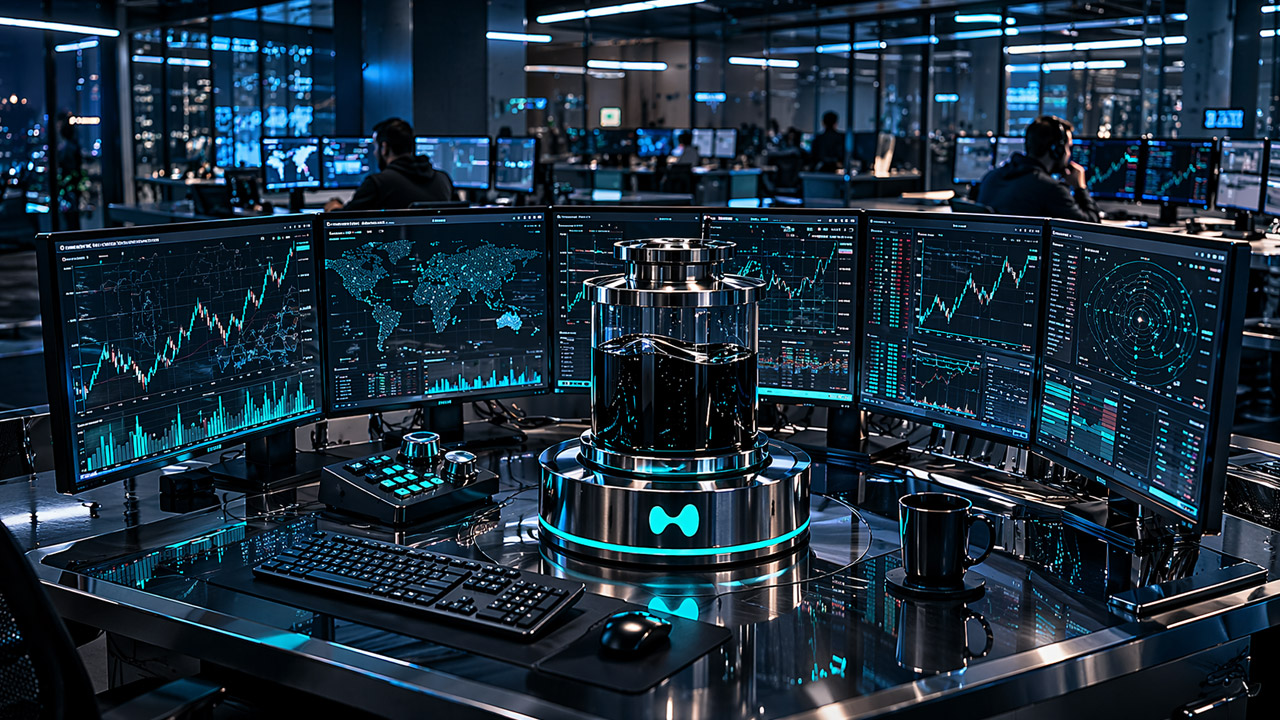
trader analyzing multiple screens with Hyperliquid data, CME feeds, and geopolitical news sources
Next Catalyst and Probable Scenarios
Attention focuses on the temporary ceasefire expiration on April 22. If hostilities between the US and Iran intensify, expect more volume migrating to blockchain platforms next weekend. The US naval blockade of Iranian ports and Islamic Revolutionary Guard Corps threats suggest tension will persist regardless of immediate outcomes, creating a persistent risk environment that will benefit 24/7 trading platforms.
Traditional markets reopening on Monday, April 21 will test whether prices discovered on Hyperliquid over the weekend correctly anticipated market direction. If crude breaks above $100, it validates these platforms' utility as real-time price discovery mechanisms and will likely attract greater institutional participation. If it retreats, it reveals potential inefficiencies in lower-liquidity markets during closure periods, but still demonstrates demand for continuous trading mechanisms.
Scenarios to consider:
Bullish scenario (40% probability): Continued hostilities keep Strait of Hormuz closed, oil exceeds $100, Hyperliquid volume increases another 50% next weekend.
Base scenario (45% probability): Persistent tension without major escalation, oil stabilizes between $90-$95, blockchain platform volume remains elevated but without new highs.
Bearish scenario (15% probability): Rapid diplomatic resolution, oil retreats to $85, but the precedent of trading during closures is established for future events.
The Bottom Line: A Validated Structural Shift
The Bottom Line: A Validated Structural Shift
Crypto traders mobilized $500 million during a critical weekend, using blockchain infrastructure to position around the Strait of Hormuz closure. This episode demonstrates decentralized markets are evolving from speculative niches to legitimate financial infrastructure for geopolitical risk management. While traditional markets remain closed, DeFi platforms offer continuous liquidity, allowing risk pricing to discover itself in real time.
For digital market participants, this represents both arbitrage opportunity and validation of blockchain infrastructure's fundamental utility beyond purely cryptographic assets. Long-term implications include greater integration between traditional and decentralized markets, development of hybrid products, and possible adaptive regulation that recognizes 24/7 trading as a component of the global financial system. Position for further volume migration during future volatility events when traditional markets are closed, but also understand the unique risks of these platforms, including decentralized counterparty risk, novel collateral mechanisms, and exposure to blockchain ecosystem-specific technological risks.