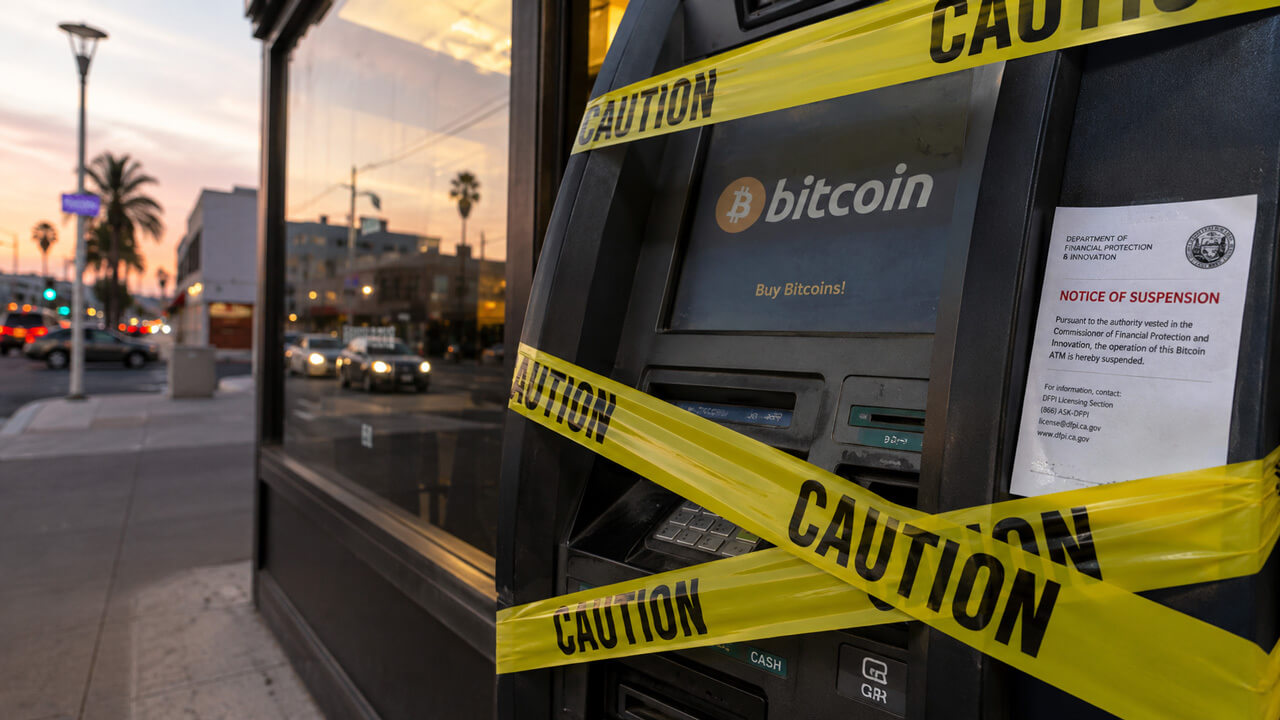
The U.S. Treasury has seized nearly $1 billion in cryptocurrency linked to Iran, Secretary Scott Bessent revealed at the Reagan National Economic Forum. The disclosure comes amid Operation Economic Fury, a campaign to dismantle Tehran's financial networks following one of the most intense military confrontations in the Middle East in decades.
The Signal
On February 27, 2026, the U.S. and Israel launched Operation Epic Fury — a coordinated airstrike campaign targeting Iran's nuclear facilities, military infrastructure, and Revolutionary Guard command centers. Iran retaliated with ballistic missile strikes across the region, hitting Saudi Arabia, Bahrain, Qatar, the UAE, and Iraq. A fragile ceasefire was brokered in early April and is still in the works, but the economic war never stopped.

Enter Operation Economic Fury. Ordered by President Trump and executed by the Treasury Department, the campaign is designed to systematically dismantle every financial lifeline Tehran has left. Since its launch, OFAC has sanctioned over 1,000 Iran-linked entities, frozen bank accounts held by Revolutionary Guard-affiliated businesses, and — according to Bessent — reached directly into crypto wallets. "Just outright grabbed the wallets. Some of them may be typing in right now and might not realize their wallet had been grabbed," Bessent said.
“"We will track the funds that Tehran is urgently attempting to transfer abroad and target all financial avenues linked to the regime." — Scott Bessent, Treasury Secretary”
The geopolitical backdrop is essential. Operation Epic Fury was the largest direct military action against Iran since the 1979 hostage crisis. The strikes destroyed an estimated 60% of Iran's nuclear enrichment capacity, according to Israeli intelligence estimates, but also triggered a regional response that spiked oil prices to $120 per barrel for two weeks. The April ceasefire, brokered by Qatar and China, halted active combat, but economic sanctions intensified. The crypto seizure is the centerpiece of this new phase.
On-Chain Data

- Tether Freeze on USDT: In late April, Tether confirmed it froze $344 million in USDT across two Tron blockchain addresses linked to the IRGC. One wallet held roughly $213 million; the other, $131 million. The action was enabled by cooperation with Treasury and Chainalysis analysis.
- Total Seizure Amount: The total seizure figure has since climbed past $500 million, and Bessent's most recent comments suggest the running total is approaching $1 billion. This includes not only USDT but also Bitcoin, Ether, and other assets in identified wallets.
- OFAC Sanctions: Over 1,000 Iran-linked entities have been sanctioned since the operation's launch, including crypto exchanges, money service businesses, and front companies in the UAE and Turkey.
- Chainalysis Detection: Blockchain analytics firm Chainalysis identified on-chain patterns consistent with known Iranian military wallets, enabling Tether's action. Additionally, fund movements toward Asian exchanges were detected and blocked.

The use of Tron for USDT transactions is no coincidence. Tron offers low fees and high speed, but its centralized nature allows Tether to freeze funds when requested by authorities. This contrasts with blockchains like Ethereum, where USDT is also freezable but with greater base-layer decentralization. Iran's choice of Tron suggests they prioritized efficiency over censorship resistance — a mistake that now costs them hundreds of millions.
Market Impact
This massive seizure sends a clear signal to crypto markets: governments can and will intercept digital assets when used to evade sanctions. The coordinated action between the U.S. Treasury and Tether demonstrates that centralized stablecoins are vulnerable to regulatory pressure, especially when issued on blockchains that allow freezing.
For exchanges and stablecoin issuers, the message is unequivocal: compliance is not optional. Tether, by cooperating with authorities, reinforces its position as a responsible actor, but also underscores the risk of centralization. Traders using USDT in markets with sanctions exposure must be aware that their funds can be frozen if linked to illicit activity.
Iran's reported plan to require ships passing through the Strait of Hormuz to pay transit tolls in Bitcoin adds another layer of complexity. While Bitcoin is more censorship-resistant than stablecoins, its adoption by sanctioned regimes could accelerate global regulation of exchanges and on-chain surveillance. Indeed, OFAC has already added Bitcoin addresses to its sanctions list, and exchanges are expected to implement stricter filters.
The market reacted with volatility. USDT's price remained stable, but trading volume on Iranian exchanges plummeted 40% in the weeks following the announcement. Bitcoin briefly dipped to $85,000 before recovering, while privacy coins like Monero rose 15% on expectations of increased demand.
Your Alpha

- 1Diversify stablecoin holdings: Don't rely solely on USDT or USDC. Consider holding a portion of your liquidity in decentralized assets like DAI or in Bitcoin and Ether, which cannot be frozen by centralized issuers. A 20-30% allocation to DAI could mitigate freeze risk.
- 2Monitor sanctioned addresses: Use blockchain analytics tools like Chainalysis or Elliptic to verify counterparties aren't on blacklists. A transaction with a sanctioned address could freeze your funds. Automate alerts for high-risk addresses.
- 3Assess geopolitical risk: Tensions in the Middle East can trigger crypto market volatility. Consider reducing leverage and increasing reserves in decentralized stablecoins or safe-haven assets like Bitcoin. Also, watch ceasefire news; any breakdown could spark a new wave of selling.
Next Catalyst
The ceasefire in the Middle East remains fragile. Any breakdown in negotiations could trigger a new wave of sanctions and seizure operations. Additionally, the U.S. Treasury is expected to release updated guidance on sanctions compliance for crypto exchanges in the coming weeks, potentially tightening KYC/AML requirements. This could include mandatory real-time reporting of suspicious transactions.
On the other hand, the crypto community is watching closely how Iran responds to these seizures. If Tehran accelerates adoption of privacy coins like Monero or Zcash, we could see increased regulatory scrutiny on these assets. OFAC has already sanctioned crypto mixers, and they are likely to extend their reach to privacy protocols.
The Bottom Line

The seizure of nearly $1 billion in Iran-linked crypto marks a milestone in digital financial warfare. It demonstrates that centralized stablecoins are vulnerable to government action and that blockchain is not anonymous for those with resources to trace it. For investors, the lesson is clear: decentralization is not just a technical feature, but a protection against financial censorship. Stay diversified, stay compliant, and prepare for an environment where geopolitics and crypto are increasingly intertwined.