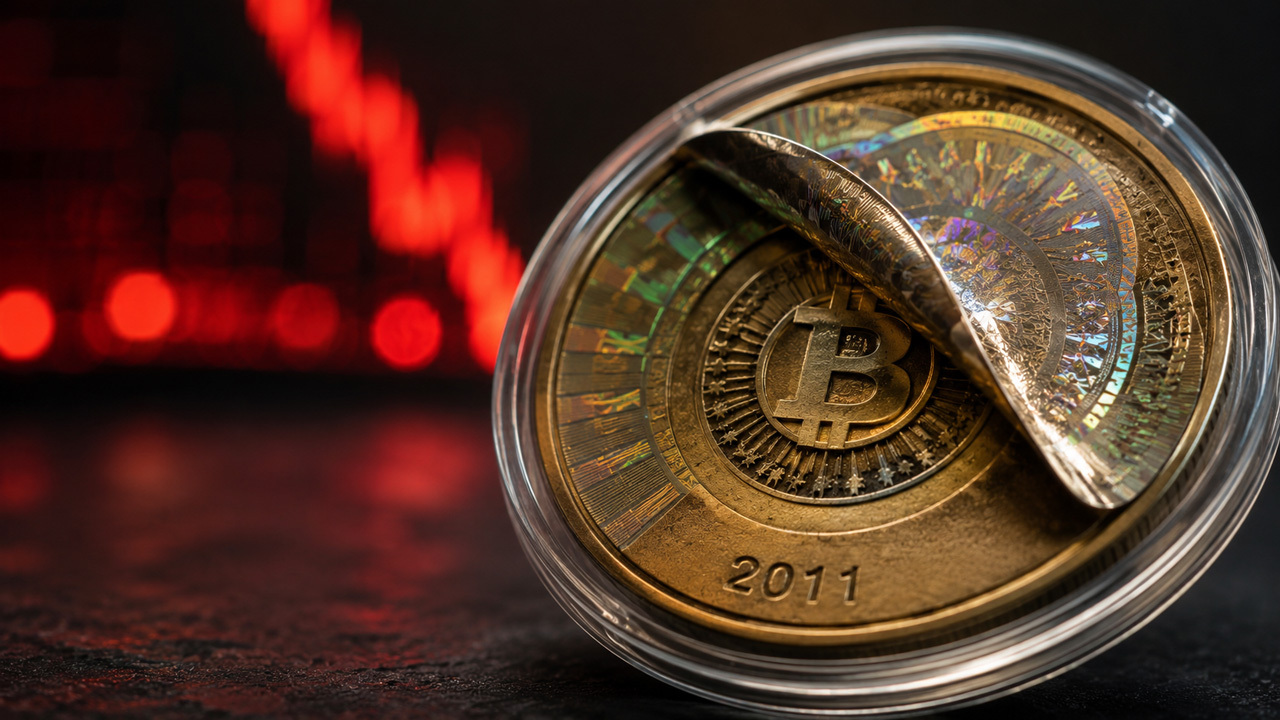
Bitcoin Plunges Below 'Fire Sale' Territory as Fear Index Reads 12 — Echoing the FTX Crash

Bitcoin just broke below the 'Fire Sale' band on the Rainbow Chart for the first time since FTX collapsed in 2022. The Fear and Greed Index hit 12, deep in 'Extreme Fear,' signaling a rare buying opportunity — or further pain. This level of panic has only been seen during the FTX collapse and, more recently, in February 2026 when the index hit an all-time low of 5. The current reading suggests the market is pricing in a crisis scenario, but also opens the door for a potential recovery if history is any guide.
The Signal

Bitcoin opened today near $63,500 after sliding below $62,000 overnight. That puts BTC below even the most discounted valuation band on the Bitcoin Rainbow Chart — a level the model historically flags as a rare and extreme buying signal. The last time this happened was during the FTX collapse, when BTC fell to $15,500 before recovering to over $60,000 in the following 18 months.

The Rainbow Chart is a logarithmic growth curve overlaid with color-coded sentiment bands. The deepest band — labeled 'Basically a Fire Sale!' — represents the lowest tier of the model's projected fair value range. When Bitcoin trades beneath it, the asset sits outside the historical channel that has contained BTC's long-term price behavior. This is not a simple correction; it is a structural breakdown that, in the past, has signaled major turning points.
The last confirmed breach of the 'Fire Sale!' floor occurred during the FTX exchange collapse in November 2022, when Sam Bankman-Fried's crypto empire imploded and BTC cratered under forced selling pressure. That event remains one of the most severe liquidity crises in crypto history. However, following that event, Bitcoin experienced a recovery that took it to new all-time highs in 2024. The question now is whether history will repeat itself or if the current macro context is different.
“'This is only the second time in four years Bitcoin has fallen below the fire sale band — a level that historically preceded major recoveries.'”
On-Chain Data
- Fear and Greed Index: Registers 12, deep in 'Extreme Fear.' Readings below 25 have historically preceded price recovery periods. The last time the index was in this range was February 2026, when it hit 5, and Bitcoin subsequently rallied 40% in the following weeks.
- All-time low: February 2026 saw the index touch an all-time low of 5, driven by a 52% drawdown from Bitcoin's peak of $126,000. Thursday's reading of 12 sits just above that nadir, suggesting panic has not yet peaked.
- Selling pressure: The decline may have been compounded by Strategy selling 32 BTC to fund preferred-share dividends — its first bitcoin sale since 2022. While small relative to its total holdings (approximately 200,000 BTC), the signal is negative for market sentiment.
- Debt reduction: Strategy recently reduced debt by repurchasing $1.5 billion of convertible notes at a discount, which lowers balance sheet risk but doesn't halt the sell pressure. This move frees up capital but also indicates the firm needs liquidity.
Market Impact
The plunge below 'Fire Sale' has sparked debate among investors. On one hand, the model suggests Bitcoin is undervalued and purchases at this level have historically been profitable. On the other hand, the macro context is different: institutional capital rotating into AI infrastructure, as argued by Strategy's Michael Saylor, could keep pressure on BTC. Additionally, Strategy's sale of 32 BTC, though small, sends a worrying signal. It is the first sale since 2022 and could be interpreted as a need for liquidity or a lack of short-term conviction. However, the $1.5 billion debt repurchase suggests the firm remains bullish long-term.
The market is also grappling with regulatory and macroeconomic uncertainty. The Fed maintains a restrictive stance, and high interest rates continue to pressure risk assets. However, some analysts point out that the 2028 halving, though distant, is already being priced in by the market, which could provide a floor for the price.
Your Alpha
- 1Aggressive buyers: Historically, buying at the 'Fire Sale' band has generated extraordinary returns over the following 12-24 months. However, the current macro environment warrants caution. Consider dollar-cost averaging rather than a lump sum entry. For example, you could split your investment into 4 equal parts and buy each week for a month to mitigate timing risk.
- 2Short sellers: The drop may not be over. If the Fear Index approaches 5 again, we could see another leg down. Shorts must manage risk of a violent squeeze, as extreme fear readings often precede sharp rallies. Consider using tight stops or reducing position size.
- 3Long-term investors: This is a time to review your bitcoin allocation. If your horizon is 4+ years, entries at these levels have historically been the best. But don't leverage or invest money you need short-term. Patience is key; if the price falls another 10-20%, you could increase your position gradually.

Next Catalyst

The market is watching the Fed's June meeting for a decision on interest rates. Any signal of a pause in the hiking cycle could be a positive catalyst for bitcoin. Additionally, the 2028 halving is approaching, and while far off, the market is already starting to price it in. Historically, halvings have preceded significant bull markets, and the next one may be no exception.
Another key factor is the evolution of the AI rotation. If the market perceives that AI offers better risk-adjusted returns, capital flows into crypto could remain limited. However, bitcoin's narrative as a store of value could strengthen if macroeconomic uncertainty increases. The key is to monitor capital flows into bitcoin ETFs and Fed statements.
The Bottom Line
Bitcoin is in fire sale territory for the second time in four years, with the Fear Index screaming panic. For investors with strong stomachs, this could be a generational buying opportunity. But risks are real: the AI rotation, Strategy's sale, and macro uncertainty could prolong the pain. The key is time horizon: if you can wait, history is on your side. If not, better to wait for confirmation signals, such as an increase in buying volume or the Fear Index stabilizing above 20.