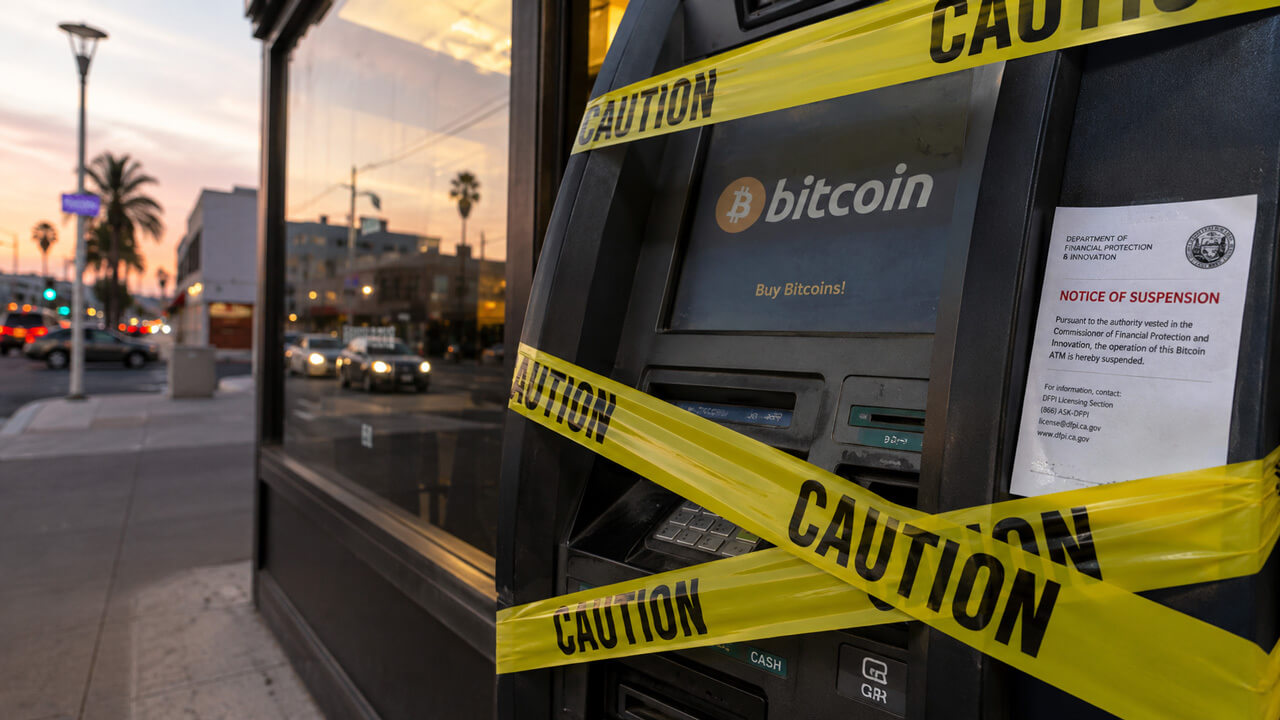
The CFTC just greenlit Bitcoin perpetual futures on US soil. Two separate actions create a regulatory fork that will shape how the most liquid crypto instrument trades in America.
The Signal
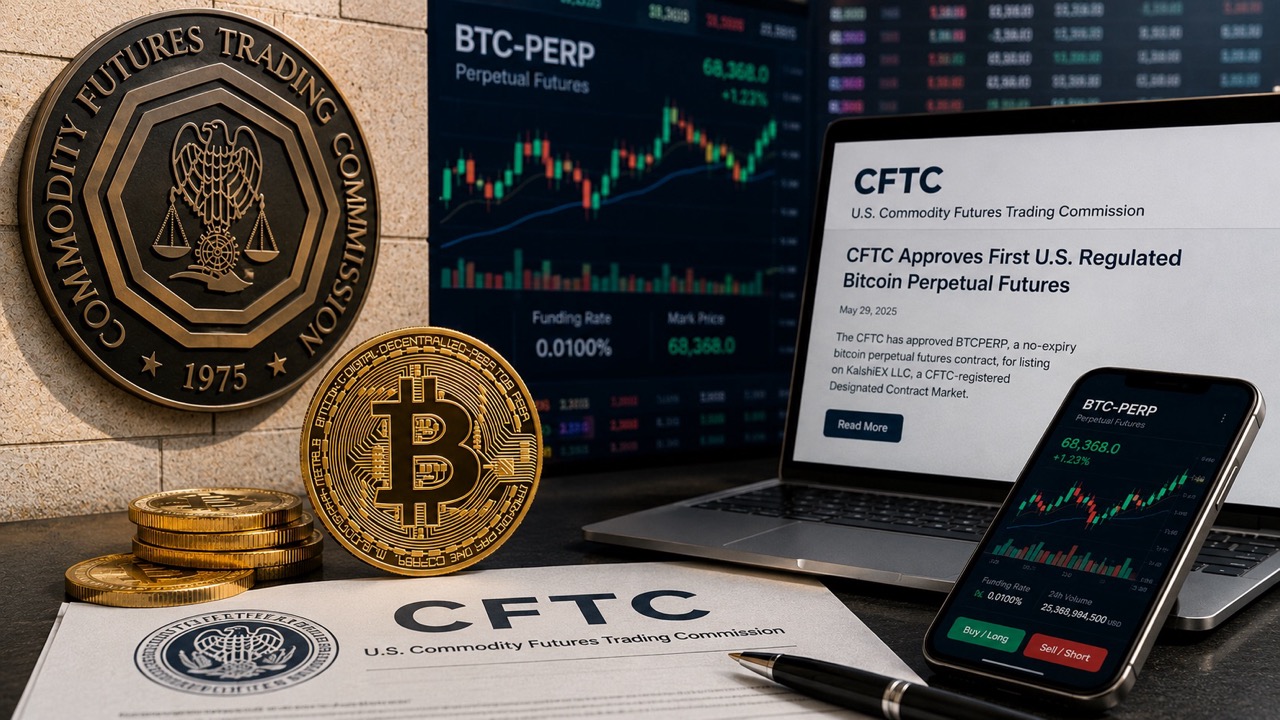
On May 29, 2026, the Commodity Futures Trading Commission approved KalshiEX LLC's BTCPERP contract—a cash-settled Bitcoin perpetual futures tied to the spot price of BTC—marking the first time a true perpetual has been authorized for listing on a US designated contract market (DCM). Simultaneously, CFTC staff issued a no-action letter allowing Coinbase Financial Markets to route certain Deribit digital commodity derivatives to US clients, treating them as foreign futures under specific conditions.

These two paths represent a seismic shift. Until now, US users were locked out of approximately 80% of global crypto markets, according to Coinbase CEO Brian Armstrong. Perpetual futures are the most heavily traded instruments in crypto, with daily volumes often exceeding $80 billion. Bringing them onshore could change where price discovery happens and how violent market moves feel.
“"The distinction between a formal Commission order and a staff no-action letter is central to the market impact."”
On-Chain Data

- Offshore perpetual volume: The global crypto perpetual futures market handles daily volumes exceeding $80 billion, per industry estimates.
- US exclusion: US users were previously locked out of ~80% of global crypto markets, according to Brian Armstrong.
- Approval date: The CFTC issued the KalshiEX order on May 29, 2026, with the contract submission date of May 28.
- Legal basis: The CFTC order relies on Section 5c(c)(4) of the Commodity Exchange Act and Commission Regulation 40.3.

Market Impact
The first path, KalshiEX's, carries the heaviest legal weight. It is a formal Commission order approving a specific product: BTCPERP, a no-expiry Bitcoin perpetual cash-settled futures contract. This means any registered DCM could theoretically follow a similar route. CFTC Chairman Mike Selig framed the decision as delivering on his pledge to onshore crypto asset perpetuals, bringing one of crypto's most liquid market segments inside the US regulatory framework.
The second path, Coinbase's, is more conditional. The Market Participants Division issued an interpretation and no-action position, allowing certain Deribit products to be categorized as foreign futures under Regulation 30.1. But this is subject to specific conditions regarding customer digital assets and stablecoins posted as margin through Coinbase affiliates. It's a door, but one with fragile hinges.
Industry reactions reflect this duality. Michael Saylor, Executive Chairman of Strategy, linked the guidance to Bitcoin holders and his company's Bitcoin-backed credit strategy. Brian Armstrong emphasized the customer-access angle and the size of the global market US users could not previously reach. Both see opportunity, but from different angles: one from corporate balance sheets, the other from user access.
Your Alpha

- 1For traders: The approval of BTCPERP on KalshiEX opens the door to trading Bitcoin perps with US regulatory oversight. This reduces offshore counterparty risk and could attract institutional investors who previously avoided these products. However, the CFTC order's fine print will limit leverage and liquidation conditions, potentially making US perps less volatile than their offshore counterparts.
- 2For institutional investors: Coinbase's path to Deribit is a signal that regulators are willing to create controlled bridges to global liquidity. But the conditions on margin and digital assets require detailed legal analysis. Firms looking to use this route must ensure compliance with the no-action letter's requirements, which are non-binding and revocable.
- 3For infrastructure builders: The CFTC's move validates the business model for DCMs wanting to list perps. Expect other regulated exchanges like CME or Bakkt to follow. The key will be designing contracts that fit traditional futures rules (margins, settlements, reporting) without losing the essence of a crypto perpetual.

Next Catalyst
The next regulatory milestone will be the actual launch of BTCPERP on KalshiEX and the market's response. If volume and open interest are significant, the CFTC could accelerate approvals for similar products. Additionally, Coinbase's no-action letter has an implicit duration tied to current conditions; any change in Deribit's structure or CFTC policies could alter the landscape.
Also watch for SEC reactions. Although the CFTC has jurisdiction over futures, the SEC may weigh in on the nature of underlying assets. Any comment from the SEC could add uncertainty or, conversely, pave the way for greater integration.
The Bottom Line

The CFTC has opened two doors for Bitcoin perpetuals in the US: one solid and formal for KalshiEX, another conditional and administrative for Coinbase. The market now has a regulated path for one of its most liquid instruments, but the distinction between the two routes will define who enters first and with what advantages. For traders, the opportunity is clear: less counterparty risk, but also less leverage. For the broader market, it's the start of a new era where Bitcoin's price discovery happens on US soil. Positioning now means understanding that regulation isn't a barrier—it's a new playing field.
Broader Context
To fully grasp the significance, it's worth recalling that perpetual futures were popularized by offshore exchanges like BitMEX, Binance, and Deribit. These contracts have no expiry and use a funding rate mechanism to keep prices aligned with the spot market. Until now, US investors could only access dated futures (like CME's) or investment products such as ETFs. The arrival of regulated perps could democratize access to sophisticated trading strategies like carry trades and dynamic hedging.
Moreover, the CFTC's decision could have implications for price formation. Currently, the bulk of Bitcoin volume trades on offshore exchanges, meaning the global reference price is influenced by jurisdictions with lighter oversight. By bringing perps onshore, the CFTC may be laying the groundwork for Bitcoin's price to be discovered in more transparent, regulated markets, potentially reducing volatility and boosting institutional confidence over the long term.
Risk Analysis
Despite the optimism, significant risks remain. The primary one is that Coinbase's no-action letter is non-binding and revocable at any time, creating uncertainty for investors committing long-term capital. Additionally, the KalshiEX order is product-specific and does not set a broad precedent; each new perpetual would require its own approval, potentially slowing adoption.
Another risk is potential SEC intervention. While the CFTC has authority over futures, the SEC could argue that some underlying digital assets are securities, complicating the regulatory landscape. Any inter-agency conflict could create confusion and delays.
Finally, there is market risk. Perpetuals are highly leveraged instruments, and even regulated ones will have limits, but they can still amplify losses. Traders must remember that regulatory oversight does not eliminate market risk—it only changes the framework in which it operates.