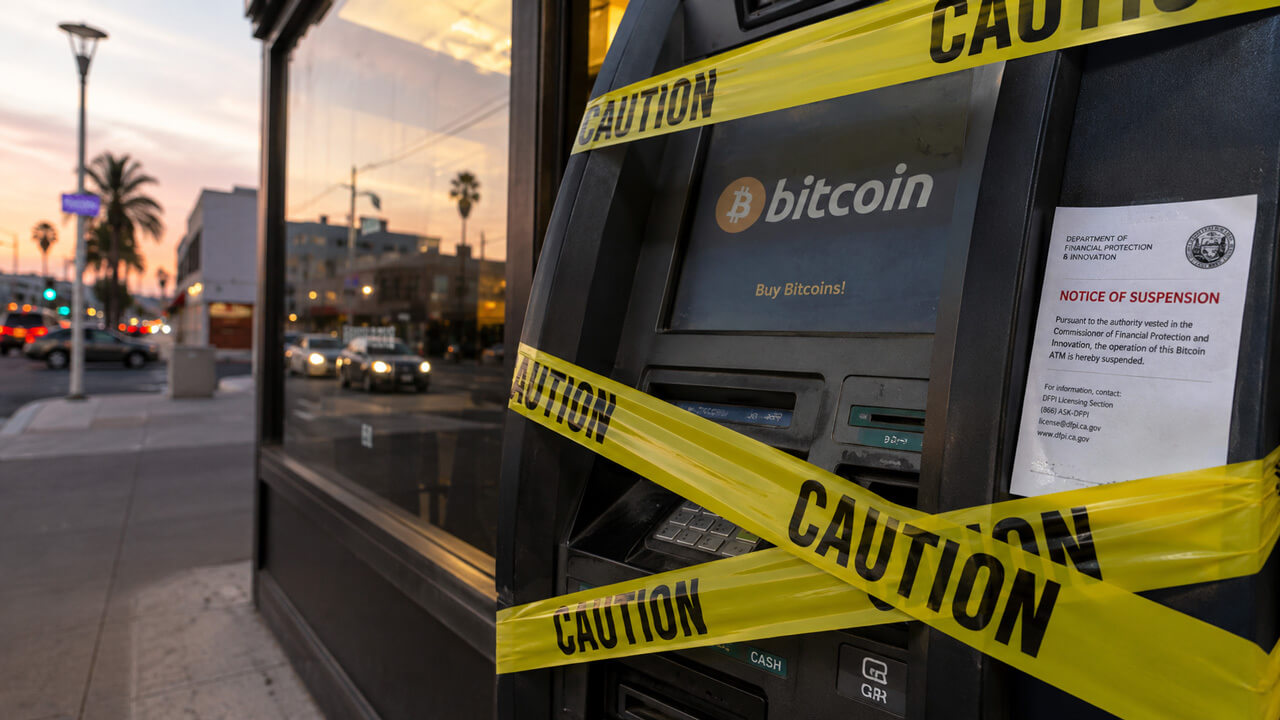
The US Treasury market, the bedrock of global finance, is showing cracks. Total marketable debt surpassed $30.2 trillion in fiscal 2025, with a $1.8 trillion deficit and interest payments exceeding $1 trillion for the first time, outpacing defense and Medicare spending. This raises a critical question for crypto investors: can Bitcoin serve as a hedge against the growing fragility of the traditional financial system?
The Signal


The US Treasury market is the foundation of the global financial system. It determines mortgage rates, government borrowing costs, corporate lending, and the price of money across the world. For decades, investors treated it as the safest and most stable market on Earth. But after years of exploding government debt, repeated liquidity scares, and increasingly aggressive Federal Reserve interventions, Wall Street is starting to confront an uncomfortable possibility: the Treasury market may have become too large, too leveraged, and too systemically important to function without constant support.
Total marketable Treasury debt has more than doubled since 2018, crossing $30.2 trillion by the end of fiscal year 2025. That year, the US also ran a $1.8 trillion deficit and, for the first time, paid more than $1 trillion in interest on its publicly held debt, outpacing both defense spending and Medicare. The refinancing calendar adds more pressure: nearly $3 trillion of outstanding debt matured in 2025 alone, all of it requiring fresh buyers, and the pool of buyers that used to handle that load has been steadily thinning.
“"The US Treasury market, the largest and most liquid in the world, is showing structural stress that could redefine Bitcoin's role as a reserve asset."”
On-Chain Data
- Treasury Debt: Marketable Treasury debt exceeded $30.2 trillion in 2025, doubling since 2018.
- Fiscal Deficit: The US deficit reached $1.8 trillion in 2025, driving new debt issuance.
- Interest Payments: For the first time, interest payments surpassed $1 trillion, more than defense and Medicare combined.
- Leveraged Positions: Hedge funds held over $1 trillion in short Treasury futures positions by March 2025, with leverage ratios exceeding 18:1, per the Fed.
- Market Liquidity: The April 2025 tariff announcement caused a sharp liquidity deterioration, prompting speculation of Fed intervention.

Market Impact
The Treasury market's fragility has direct implications for Bitcoin and crypto. If US government bonds, considered the risk-free asset, show signs of stress, investors may seek alternatives. Bitcoin, with its fixed supply of 21 million coins and decentralized nature, positions itself as a potential store of value, akin to digital gold.
Moreover, rising debt and fiscal deficits tend to weaken the dollar over the long term, which could benefit non-sovereign assets like Bitcoin. The growing involvement of stablecoin issuers in the Treasury market also directly links the crypto ecosystem to the health of US debt. If the Treasury market becomes more volatile, stablecoins backed by bonds could face liquidity risks, affecting the entire sector.
Your Alpha

- 1Monitor the Treasury risk premium: If 10-year yields spike above 5%, it could signal a confidence crisis. Historically, Bitcoin has benefited from uncertainty around sovereign debt.
- 2Watch stablecoins: Stablecoins like USDC and USDT hold significant reserves in Treasury bonds. A liquidity crisis in that market could trigger de-pegs, creating arbitrage opportunities or systemic risks.
- 3Accumulate on dips: If the Treasury market suffers an acute stress event, Bitcoin may initially fall due to panic selling, but then recover as a hedge. Consider staggered buys during such episodes.

Next Catalyst
The upcoming US employment report and Federal Reserve statements will be key to assessing the direction of interest rates. If the Fed is forced to cut rates to stabilize the bond market, Bitcoin could receive a bullish boost. Additionally, the debt ceiling deadline in September 2026 could generate volatility.
The Bottom Line
The US Treasury market is showing structural stress that could redefine the global financial landscape. For crypto investors, this represents both risk and opportunity. Bitcoin, as a decentralized, supply-limited asset, could benefit from fading confidence in sovereign debt. However, the interconnectedness of stablecoins and the Treasury market adds a layer of complexity. Stay vigilant on liquidity data and Fed decisions.
In-Depth Analysis: The Role of Hedge Funds
Hedge funds have significantly increased their leveraged exposure to the Treasury market. According to Federal Reserve data, net short positions in Treasury futures exceeded $1 trillion by March 2025, with leverage ratios above 18:1. This strategy, known as the "basis trade," exploits small price differences between cash bonds and futures but carries extreme liquidity risk. If the market moves against them, they could be forced to deleverage rapidly, selling bonds and other assets, potentially triggering a liquidity crisis similar to 2020.
This systemic risk is particularly relevant for Bitcoin. In liquidity stress events, investors tend to sell all assets, including Bitcoin, to meet margin calls. However, once the Fed intervenes to stabilize markets, Bitcoin historically rebounds strongly. For example, during the March 2020 liquidity collapse, Bitcoin fell to $3,800 but then surged to over $60,000 in the following 12 months. Understanding this pattern can help investors position themselves.
Historical Context: Lessons from 2020
In March 2020, the Treasury market experienced a severe dislocation when the pandemic triggered a massive bond sell-off. The Fed had to intervene with large-scale purchases and swap lines to restore liquidity. At that time, Bitcoin fell alongside risk assets but quickly recovered and surpassed its previous highs. The current situation differs in scale: debt is much larger, leverage is more extreme, and the traditional buyer base (foreign central banks) has shrunk. This suggests any crisis could be deeper and more prolonged.
Moreover, the growing participation of pension funds and insurance companies in the Treasury market through interest rate swaps adds another layer of interconnectedness. If the Treasury market freezes, these actors could face significant losses, affecting equity markets and, by extension, cryptocurrencies. Therefore, Bitcoin investors should monitor not only yields but also bond market liquidity indicators, such as the spread between Treasury yields and interest rate swap rates (the "swap spread").
Implications for Stablecoins
Stablecoins like USDC and USDT have accumulated large Treasury holdings as backing for their reserves. Circle, the issuer of USDC, reported that over 80% of its reserves are in Treasuries and repurchase agreements. Tether has also increased its exposure. If the Treasury market experiences a liquidity crisis, these stablecoins could face difficulties redeeming their holdings, potentially leading to temporary de-pegs. In April 2025, during the tariff announcement, USDC traded at $0.98 on some exchanges, highlighting market sensitivity.
For investors, this creates both risks and opportunities. A de-peg of a major stablecoin could cause panic in the crypto market, but it could also offer arbitrage opportunities for those with available capital. Additionally, if the Fed intervenes to support the Treasury market, stablecoins could benefit from the resulting stability. Therefore, it is crucial to closely track stablecoin reserve compositions and any signs of stress in repo markets.
Long-Term Investment Strategies
Given the macroeconomic backdrop, Bitcoin could play an increasingly important role as a hedge against sovereign debt. However, investors must be aware that Bitcoin is not immune to short-term liquidity crises. A prudent strategy might include gradual accumulation during dips using dollar-cost averaging (DCA), and maintaining a portion of the portfolio in cash or stablecoins to capitalize on buying opportunities during stress events.
Furthermore, diversifying into other decentralized assets, such as Ethereum or tokenized real-world assets, could provide additional protection. Tokenization of Treasury bonds on blockchains like Ethereum is also growing, potentially offering new ways to gain exposure to the debt market with greater transparency and liquidity. However, these products are still in early stages and carry their own risks.
Conclusion
The US debt crisis is not imminent, but structural tensions are clear. Bitcoin occupies a unique position: it can benefit from fading confidence in the traditional financial system, yet it is also vulnerable to the same forces. The key lies in preparation and constant monitoring of key indicators. Investors who understand these dynamics will be better positioned to navigate volatility and capitalize on emerging opportunities.