The SEC is about to ignite a new battle in digital markets: allowing crypto-native exchanges to list tokenized stocks of companies like Tesla, Apple, and Nvidia without those companies' consent. The proposal, part of the agency's 'Project Crypto,' would create an innovation exemption for tokenized securities, opening the door for decentralized platforms to offer these instruments during a limited experimental period. But the core issue is whether retail investors understand that they aren't shareholders in any meaningful legal sense, as these tokens may lack voting rights, dividends, and direct legal protection.
The Signal
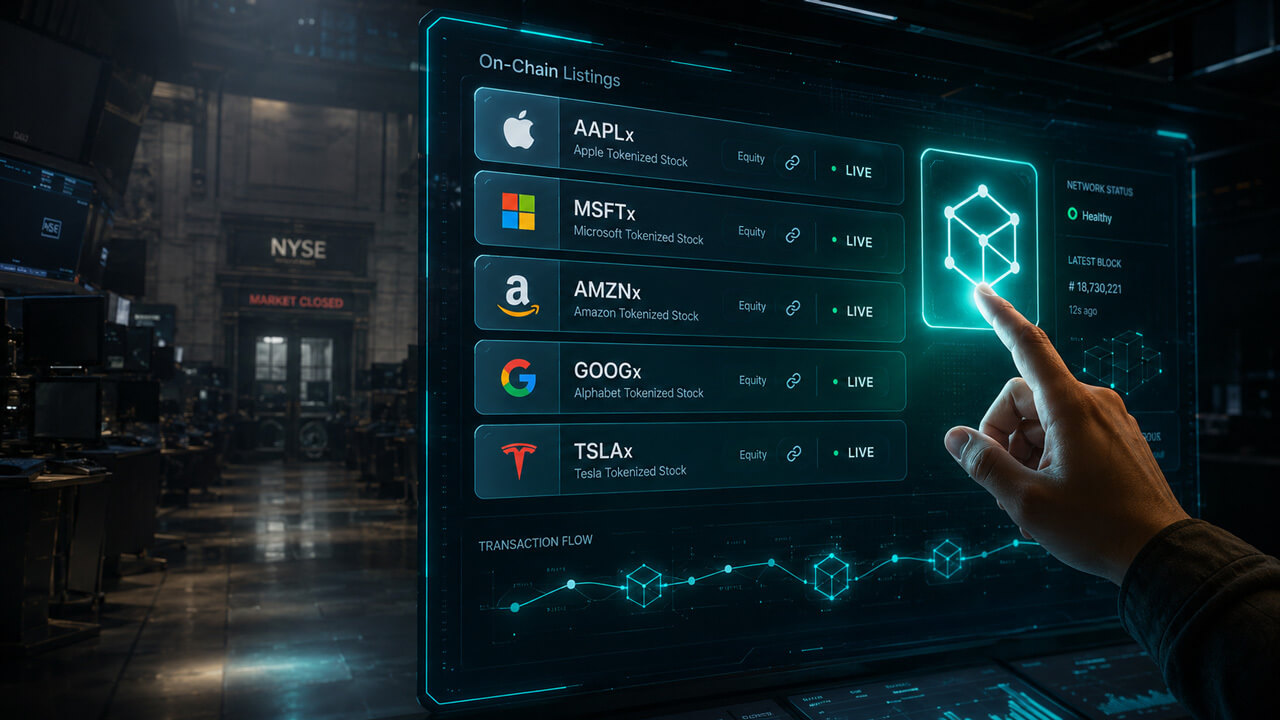

Bloomberg Law reported on May 18 that the SEC is preparing an 'innovation exemption' for tokenized stocks, allowing crypto-native platforms to offer digital versions of publicly traded securities under lighter regulatory requirements. This follows the SEC's approval of Nasdaq's rules for tokenized equities in March 2026 and a similar approval for the New York Stock Exchange in April. Both exchanges now allow tokenized versions of select equities and ETFs, using the Depository Trust Company's (DTC) tokenization pilot. The key difference is that while those prior approvals kept tokenized trading inside existing market structure, the new exemption is designed to permit broader on-chain trading by crypto-native venues and some decentralized finance protocols during a limited experimental period.
According to DefiLlama data, the on-chain RWA market is close to $30 billion, which represents just 0.02% of global equity value against SIFMA's 2024 global equity market capitalization of $126.7 trillion. The tokenized stock segment is minuscule, but the exemption could determine whether it grows into a regulated extension of US equities or stays a crypto side market with no investor protection. The proposal also raises custody concerns: while 1:1 backed tokens with a regulated custodian offer a legal claim on the underlying share, synthetic tokens only replicate price without ownership rights. The SEC may allow both types but with different conditions.
“The SEC's exemption could define whether tokenized stocks become a regulated product or a speculative market with no real rights.”
On-Chain Data
- RWA on-chain market: Close to $30 billion per DefiLlama, representing 0.02% of global equity value.
- Kraken xStocks volume: Surpassed $25 billion in total transaction volume since launch in June 2025, with 100 fully backed 1:1 tokenized US stocks and ETFs.
- Global equity market cap: $126.7 trillion per SIFMA 2024.
- SEC approvals: Nasdaq in March 2026 and NYSE in April 2026 for tokenized equities under DTC pilot.
- Proposed exemption: Would allow on-chain trading on crypto-native venues and some DeFi protocols during a limited experimental period, with reduced requirements but without company consent.

Market Impact
The SEC's proposal represents a significant shift in stance. Previously cautious about tokenized securities, the agency is now leaning toward allowing trading of tokens that don't have the backing or consent of the public companies whose shares they track. These tokens would be tradeable on decentralized platforms without offering the same benefits as conventional stocks, such as voting rights or dividends. Under the proposal, platforms that fail to provide those benefits would lose the right to list the tokens. But that condition still leaves room for a product that looks and trades like a stock but offers a much different legal standing to the holder. For instance, if a tokenized company goes bankrupt, synthetic token holders may have no claim on the company's assets, unlike traditional shareholders.
Crypto exchanges like Kraken have already demonstrated demand: its xStocks platform, offering fully backed 1:1 tokenized stocks, has surpassed $25 billion in total transaction volume, though only available outside the US. Coinbase also sought SEC approval in 2025 to offer tokenized equities, which would put it in direct competition with traditional retail brokerages. If the exemption passes, it could open a new front of competition between crypto exchanges and traditional trading platforms like Robinhood or Charles Schwab. Additionally, DeFi protocols could integrate these tokens into liquidity pools, generating extra yield but also smart contract risks.
Your Alpha

For investors and traders, this development presents both opportunities and risks. Here are three practical takeaways:
- 1Understand the difference between backed and synthetic tokenized stocks. The former have a regulated custodian and represent a legal claim on the underlying share; the latter only provide price exposure without ownership rights. The SEC's exemption could encourage synthetic products, which are riskier for retail investors. Before buying, verify if the token is 1:1 backed by a custodian like DTC or a bank.
- 2Monitor which platforms get approval. If Coinbase or Kraken manage to list tokenized stocks in the US, they could capture significant retail trading volume. This could also pressure traditional brokers to offer similar products. Keep an eye on SEC filings and partnerships with regulated custodians.
- 3Prepare for regulatory volatility. The exemption is experimental and could be revoked or modified. Investors should stay tuned to SEC announcements and adjust positions in stock-linked tokens accordingly. Consider using stop-loss orders and diversifying between backed and synthetic tokens based on risk tolerance.

Next Catalyst
The SEC is expected to publish the innovation exemption within the next week, per Bloomberg Law. This will trigger a 30-60 day public comment period and potential litigation from companies opposed to having their stocks tokenized without consent. Market reaction will be crucial: if major crypto exchanges like Coinbase announce intentions to list tokenized stocks, we could see a surge in interest and volume. Additionally, the SEC's decision on Coinbase's 2025 application to offer tokenized equities could come soon. If approved, it would mark a milestone in the integration of crypto and traditional markets.
Another catalyst is the evolution of DTC's tokenization pilot. If more companies join the pilot, it would increase the supply of backed tokens, reducing demand for synthetic products. Investors should follow news on DTC and traditional exchanges.
The Bottom Line

The SEC's tokenized stock exemption is a bold step that could transform how retail investors access equity markets. However, the lack of clarity on holder rights and the potential for synthetic products without real backing pose significant risks. Investors should proceed with caution, prioritizing platforms that offer 1:1 backed tokens with regulated custody. The future of tokenized stocks hinges on whether regulation can balance innovation with investor protection. In a best-case scenario, the exemption could lead to a more efficient and accessible market; in a worst-case, it could spark a wave of fraud and losses for retail investors.