
A counter on the American Gaming Association's website has been climbing for months. On Thursday, it rolled past $1 billion. That figure, according to the AGA, represents what states and tribes have lost to prediction markets like Kalshi and Polymarket. For the casino-and-sportsbook lobby, it's a perfect weapon: a round number any voter can grasp. But the timing couldn't be more awkward for the gambling industry itself, which just closed out its best year ever, generating $78.72 billion in revenue and a record $18.09 billion in gaming taxes for 2025. The paradox is striking: while the AGA cries foul over lost tax revenue, legal gambling tax receipts have never been higher. This suggests the $1 billion claim is more a political tool than an economic reality, designed to sway lawmakers in a critical election year.
The Signal
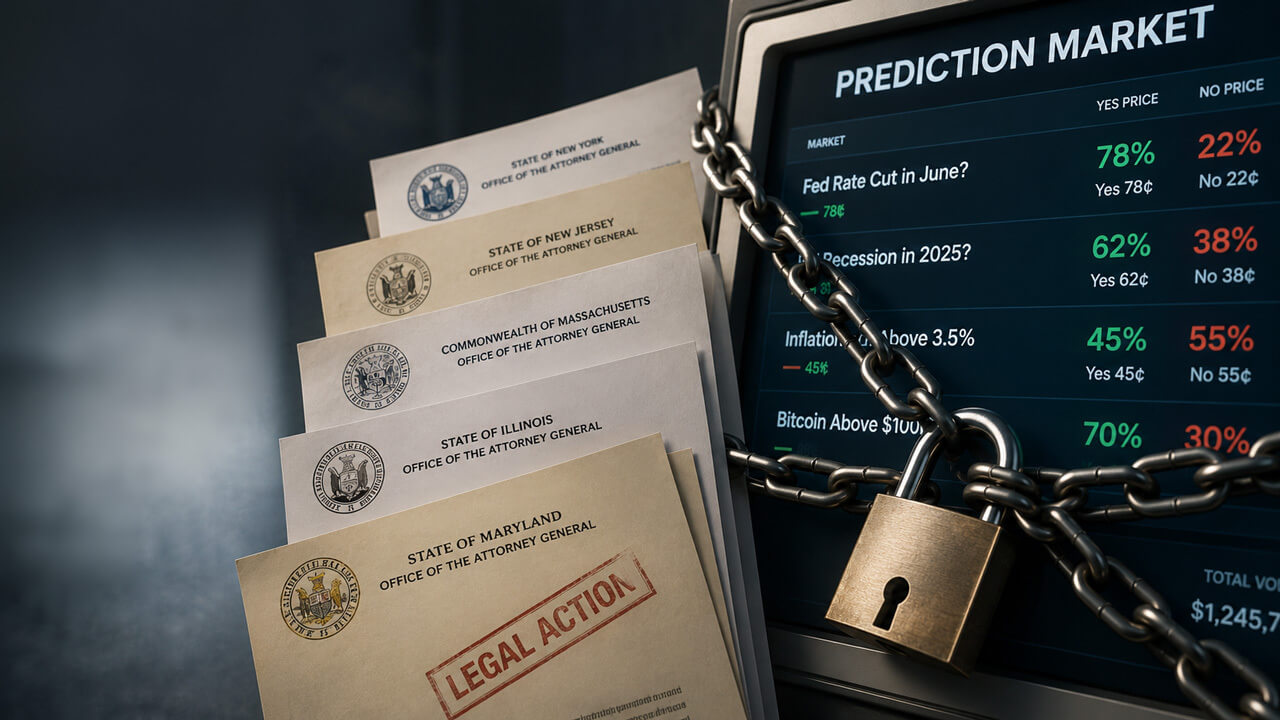
The AGA, which represents casinos, sportsbooks, and tribal operators, is waging a jurisdictional war against prediction markets. These platforms let users trade contracts on real-world outcomes—like who wins Sunday's game—priced like odds. The CFTC regulates them at the federal level, allowing them to operate in all 50 states, even where sports betting is restricted. States have argued for over a year that these contracts are gambling and should face the same licenses, rules, and taxes as legal sportsbooks. But court rulings have been split, and the CFTC has sided with the platforms in every recent case. The $1 billion figure sidesteps all that philosophical and legal debate, offering a simple, powerful argument: prediction markets are stealing from taxpayers.

“The $1 billion claim is a political weapon that simplifies a complex jurisdictional fight into a number any voter understands.”
The AGA claims states have lost $1 billion that would have funded community programs, education, and pensions. But prediction markets dismiss the figure. Kalshi calls it "fake math from casinos" afraid of losing their monopoly. The Coalition for Prediction Markets says the AGA's underlying sources can't be located. Meanwhile, the gambling lobby is pressing Washington. In March, Senators John Curtis and Adam Schiff introduced the Prediction Markets Are Gambling Act, a bipartisan bill that would bar any CFTC-registered venue from listing contracts resembling sports bets or casino games. Pressure is also coming from states: 41 attorneys general have urged the CFTC to act. However, the methodology behind the $1 billion is questionable. The AGA calculates the loss based on the volume of sports contracts on platforms like Kalshi, assuming every dollar wagered on a prediction market would have gone to a legal operator. But critics note that many prediction users would not bet on legal sports due to geographic restrictions or personal preferences, artificially inflating the figure.
On-Chain Data

- Gaming industry revenue 2025: $78.72 billion, an all-time high, driven by sports betting expansion in new states.
- Gaming taxes paid 2025: $18.09 billion, also a record, with 12% year-over-year growth.
- New York tax rate: 51% on online sports betting, the highest in the country, generating $1.3 billion in 2025 alone.
- US sports betting handle 2025: Estimated $150 billion, per the AGA, with an average state tax rate of 20%.
- Federal excise tax on sports betting handle: 0.25%, which the AGA argues targets illegal bookmaking but barely affects legal operators.
- Kalshi volume 2025: $3.2 billion in contracts traded, with 40% on sports events, according to company data.

Market Impact
The battle has direct implications for prediction markets. If the Prediction Markets Are Gambling Act advances, platforms like Kalshi and Polymarket would lose a huge chunk of their business. Contracts on sports and casino-like events would become illegal at the federal level. This would force these platforms to operate only in states that explicitly regulate them, fragmenting the market and raising compliance costs. On the flip side, traditional gambling operators would benefit by eliminating unregulated competitors, consolidating their hold on a $78 billion market. However, prediction markets argue they are not gambling but tools for hedging and information gathering. The CFTC, so far, has agreed, but political pressure could shift its stance. Moreover, a federal ban could push users to unregulated offshore platforms, reducing transparency and consumer protection.
The gambling lobby has an edge: it can point to the $1 billion lost and say it's money that should go to schools and pensions. State politicians, especially those reliant on gambling tax revenue, will listen. New York, with its 51% tax rate, is a prime example of how legal gambling can generate massive revenue. But prediction markets also generate economic activity and, their advocates say, provide valuable information that improves market efficiency. The question is whether Congress will prioritize state tax revenue over financial innovation. Recent data shows that states with legal sports betting have seen increased tax revenue, but also higher regulatory costs and problem gambling rates. The trade-off is not clear-cut.
Your Alpha

- 1Monitor the Prediction Markets Are Gambling Act: If it advances, shares of platforms like Kalshi could drop. Look for short positions or bearish options strategies. The options market already shows increased implied volatility for Kalshi, suggesting investors are betting on sharp moves.
- 2Watch traditional gambling operators: Companies like DraftKings and FanDuel would benefit from the elimination of competitors. Consider long positions if the bill progresses. DraftKings has increased its lobbying spend by 30% in the last quarter, signaling its stake in the outcome.
- 3Diversify away from sports contracts: Prediction markets can survive by focusing on financial, weather, or political events. Invest in platforms that already have a wide range of non-sports contracts, such as Polymarket, which has 60% of its volume in political events. The sector's resilience will depend on its ability to adapt.

Next Catalyst
The next milestone is the Senate hearing on the bill, expected in July 2026. If it passes, the House could vote before year-end. Additionally, the CFTC is reviewing new rules for prediction markets, with a decision expected in September. States are also acting: Indiana and Ohio are considering bills to regulate prediction markets as gambling, which could create a regulatory patchwork. In parallel, a class-action lawsuit against Kalshi by shareholders alleging market manipulation could set a legal precedent. The legislative calendar is tight, with midterm elections in November 2026 adding urgency to both sides.
The Bottom Line
The battle between prediction markets and the traditional gambling industry boils down to who controls the future of betting in the US. The $1 billion figure is a powerful political weapon, but prediction markets have the advantage of innovation and CFTC support. For investors, the key is to follow the legislation and position accordingly. If the bill fails, prediction markets could surge; if it passes, traditional gambling wins. Either way, 2026 will be a decisive year. Transparency in data and methodology will be crucial to determining the validity of the AGA's claim, and investors should demand clarity before making moves.