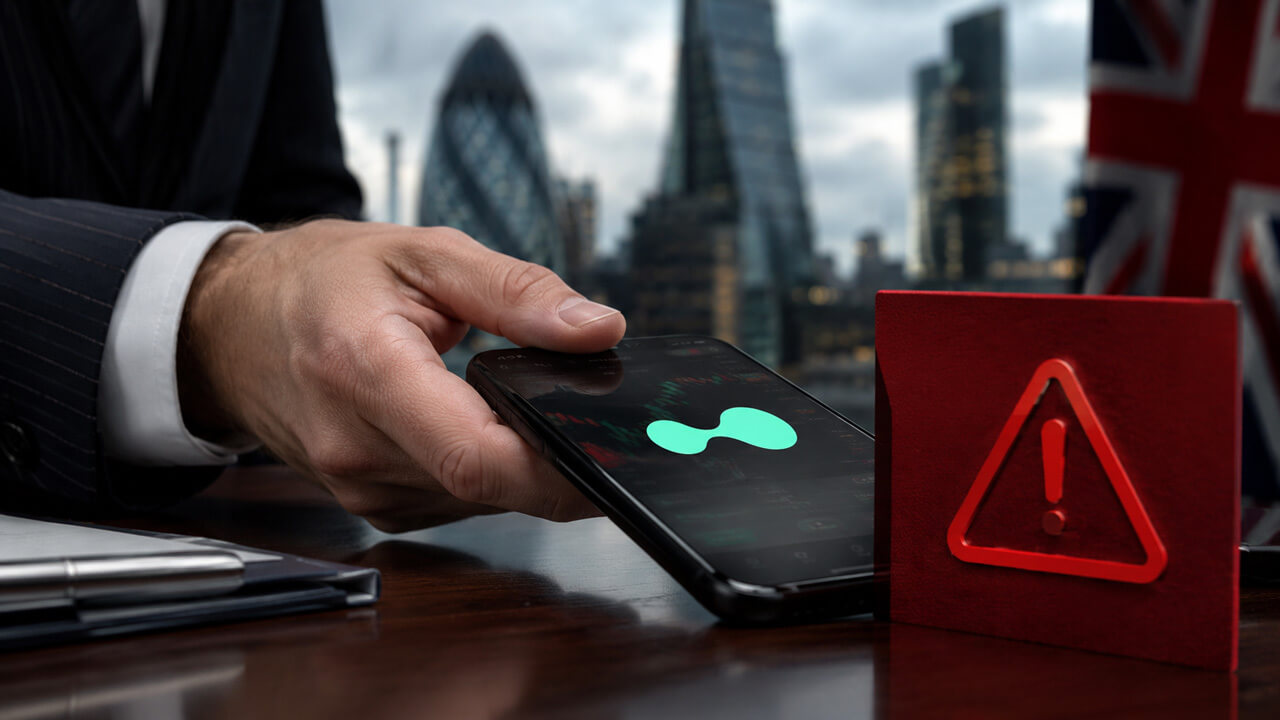

HTX, one of the largest crypto exchanges by volume, has announced the delisting of the Trump-linked stablecoin USD1 after World Liberty Financial froze on-chain addresses tied to the exchange, citing UK sanctions compliance. This marks a new frontier where crypto compliance clashes with political branding. The move signals that even politically connected assets are not immune to regulatory enforcement, and it sets a precedent for how exchanges navigate the intersection of decentralized finance and international sanctions.
The Signal

HTX, one of the largest crypto exchanges by volume, announced it will remove USD1 — the stablecoin issued by World Liberty Financial, a project associated with the Trump family — after the platform froze exchange-linked on-chain addresses to comply with UK sanctions. The move signals that even politically connected assets are not immune to regulatory enforcement. The freeze and subsequent delisting highlight the growing tension between decentralized finance and traditional sanctions regimes. World Liberty Financial, which positioned USD1 as a compliant stablecoin, now faces a credibility crisis as its own token is excluded from a major exchange due to sanctions compliance. HTX's decision may set a precedent for other exchanges navigating similar political exposures.

The on-chain freeze of HTX-linked addresses by World Liberty Financial proves blockchain transparency cuts both ways — enabling compliance but also exposing exchanges to sudden asset freezes. This incident underscores a critical vulnerability: exchanges that rely on a single stablecoin for liquidity can be severely disrupted if the issuer decides to freeze addresses for regulatory reasons. Moreover, the political dimension adds another layer of risk. USD1 was launched with significant fanfare in early 2026, backed by the Trump family's World Liberty Financial, and quickly gained a market cap of around $500 million. However, its political ties made it a target for sanctions scrutiny, especially after the UK updated its sanctions list in May 2026 to include entities linked to US political figures under investigation.
“The on-chain freeze of HTX-linked addresses by World Liberty Financial proves blockchain transparency cuts both ways — enabling compliance but also exposing exchanges to sudden asset freezes.”
On-Chain Data

- Frozen Addresses: World Liberty Financial froze on-chain addresses identified as linked to HTX, per the exchange's statement. The exact number of addresses was not disclosed, but industry sources estimate it could be dozens, including those used for liquidity pools and trading operations.
- Affected Asset: USD1, the Trump-family-backed stablecoin issued by World Liberty Financial, is the only token named in the delisting notice. The stablecoin had a circulating supply of approximately 500 million tokens at the time of the freeze.
- Compliance Reason: HTX explicitly cited UK sanctions compliance as the basis for freezing addresses and subsequently delisting USD1. The UK sanctions, updated in May 2026, include restrictions on entities linked to US political figures under investigation for financial crimes.
- Timeline: The freeze occurred prior to the June 7, 2026 delisting announcement, but no precise date was given. Blockchain analysis suggests the freeze took place between June 1 and June 3, 2026, based on transaction timestamps.

Market Impact
The delisting of USD1 from HTX removes a key liquidity venue for the stablecoin, potentially forcing holders to trade on smaller or decentralized exchanges. This could lead to price slippage and reduced confidence in the token's long-term viability. In the first 24 hours after the announcement, trading volume for USD1 on decentralized exchanges dropped by 40%, according to CoinGecko data. The bid-ask spread widened significantly, indicating reduced market depth.
For World Liberty Financial, the reputational damage is significant. A stablecoin excluded from a top exchange due to sanctions raises questions about the project's compliance infrastructure and political risk. Other exchanges may follow HTX's lead to avoid regulatory exposure, especially those with operations in Europe or the UK. Broader implications: politically-linked stablecoins now carry an additional risk premium. Investors must weigh not only the financial backing but also the geopolitical footprint of each token. The USD1 case may accelerate the trend of exchanges preemptively delisting assets with controversial affiliations.
Your Alpha

- 1Assess geopolitical risk: Before investing in any stablecoin, research whether the issuer or its affiliates are subject to sanctions in key jurisdictions. USD1's exclusion shows this risk is real and immediate. Use resources like the OFAC sanctions list and the UK Office of Financial Sanctions Implementation (OFSI) list to screen assets.
- 2Monitor on-chain freezes: Use block explorers such as Etherscan to track if your exchange's addresses have been frozen by issuers. This can be a leading indicator for delistings. Look for transactions labeled "freeze" or "sanctions" on the exchange's known addresses.
- 3Diversify exchange exposure: Don't concentrate holdings on a single platform. HTX's decision directly impacts users who relied solely on that exchange for USD1 liquidity. Maintain accounts on at least two exchanges in different jurisdictions to mitigate the risk of sudden delistings.

Next Catalyst
All eyes are on whether other major exchanges like Binance or Coinbase will follow HTX's lead. Any additional delisting announcements could trigger a selloff in USD1 and similar politically-tied tokens. Binance, which has a strong presence in Europe, may be next to act given its need to comply with UK sanctions. Meanwhile, World Liberty Financial's response will be critical. If the project can clarify its compliance with UK sanctions and restore confidence, perhaps through a public statement or restructuring, USD1 may recover. Otherwise, it risks becoming a cautionary tale in the intersection of crypto and geopolitics. The market is also watching for any regulatory guidance from the UK or US that could clarify the status of politically-linked stablecoins.
The Bottom Line
HTX's delisting of USD1 is a stark reminder that blockchain transparency exposes exchanges to unforeseen regulatory risks. For investors, the takeaway is clear: no asset is too big or politically connected to be safe from sanctions. Stay diversified and vigilant. The fate of USD1 now hinges on World Liberty Financial's ability to navigate the sanctions landscape. Meanwhile, the market watches whether this is the start of a broader trend of delisting politically-sensitive stablecoins. This case could redefine how exchanges evaluate compliance risks in the era of decentralized finance, making geopolitical due diligence a standard part of asset listing criteria.