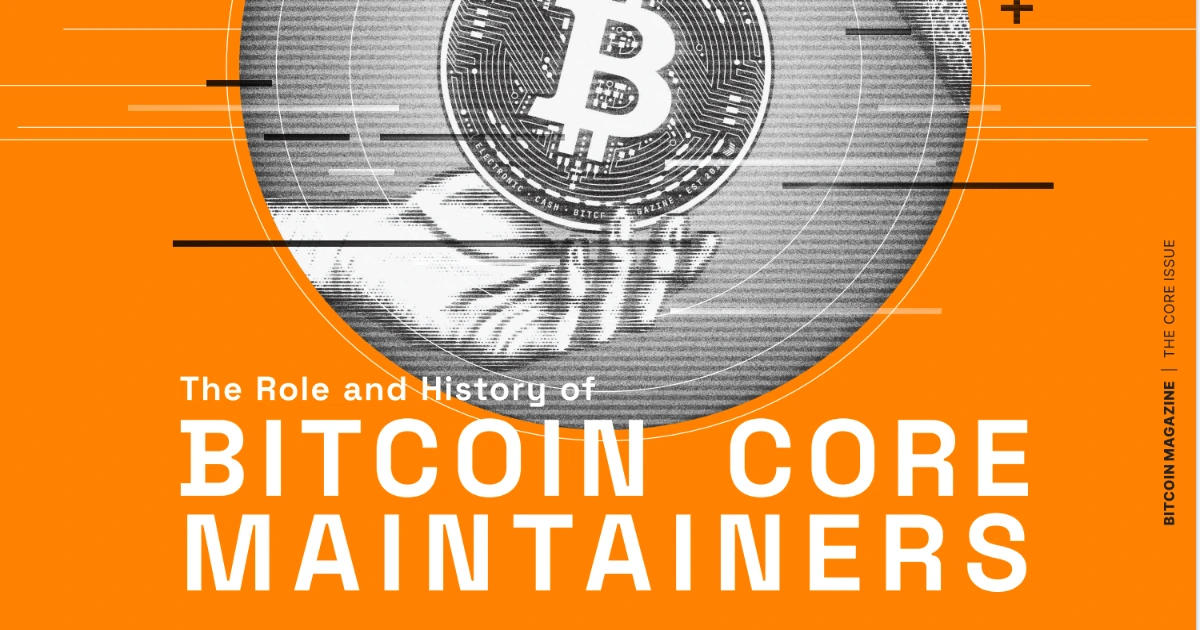
Bitcoin Maintainers: The Hidden Power Shift Driving Crypto Markets
Bitcoin Core maintainers have held commit access since 2008, with Hal Finney as the first after Satoshi. Their reputation is critical for network stability, as
Bitcoin Core maintainers need commit access, community reputation, and peer consensus—a fragile equilibrium protecting $1.3 trillion in market value.
Bitcoin's codebase is guarded by fewer than 100 maintainers with commit access. Their decisions shape a $1.3 trillion market.
Bitcoin's infrastructure relies on a concentrated group of developers who control commit access to the core repository. This system, establi...
Bitcoin's codebase is guarded by fewer than 100 maintainers with commit access. Their decisions shape a $1.3 trillion market.
The Signal
Bitcoin's infrastructure relies on a concentrated group of developers who control commit access to the core repository. This system, established by Satoshi Nakamoto in 2008 when he added Hal Finney to the Sourceforge project on December 18, has created a unique governance layer that operates mostly invisibly to markets. Yet every protocol upgrade, security patch, and consensus change filters through these individuals, making their stability critical for investor confidence.
Bitcoin Core developers reviewing code
The historical pattern reveals the fragility. Hal Finney wasn't just an early contributor—emails show his node kept the network alive during Bitcoin's first days when Nakamoto's own node had connection issues. Today's maintainers serve a similar function as gatekeepers, merging only code that achieves technical consensus. Their role carries what the source calls "high status within the Bitcoin industry" but also makes them "vulnerable to reputation-ending mistakes," as seen when Gavin Andresen lost commit access in 2016 after endorsing Craig Wright.
This maintainer system represents a fundamental paradox in Bitcoin's decentralization. While the network of nodes and miners is globally distributed, control over the codebase remains concentrated. This concentration isn't accidental but deliberate: Satoshi designed a model where code quality and security trumped mass participation. Current maintainers inherit this philosophy, operating as technical guardians whose authority derives from demonstrated expertise and accumulated reputation.
The evolution of the maintainer system reflects inherent tensions in Bitcoin's growth. In early years, a handful of individuals could coordinate changes rapidly. Today, with market capitalization exceeding $1.3 trillion, every protocol modification faces intense scrutiny. Maintainers must navigate between necessary innovation to keep Bitcoin competitive and the stability demanded by financial institutions now allocating trillions to the asset. This delicate balance explains why significant changes like Taproot took years to implement, following a meticulous process of peer review and gradual consensus.
“Bitcoin Core maintainers need commit access, community reputation, and peer consensus—a fragile equilibrium protecting $1.3 trillion in market value.”
On-Chain Data
On-Chain Data
First maintainer after Satoshi: Hal Finney added to Bitcoin Sourceforge project on December 18, 2008.
Access revoked for reputation error: Gavin Andresen lost privileges in 2016 after endorsing Craig Wright as Satoshi.
Maintainers quitting due to harassment: Gregory Maxwell left the role after targeted attacks.
Strict maintainer definition: Only those with commit access to the primary development branch who can merge pull requests.
Average review timeline: Improvement proposals (BIPs) require 6-18 months from initial discussion to implementation.
Geographic distribution: Active maintainers are concentrated primarily in North America and Europe, with limited representation from Asia and other regions.
Contribution patterns: Fewer than 20% of maintainers perform over 80% of significant code merges.
Historical turnover: Approximately 15-20% of maintainers leave or are replaced annually for various reasons.
Bitcoin Core contribution graph
Market Impact
The concentration of power among Bitcoin Core maintainers creates a single point of institutional failure that sophisticated investors monitor closely. When Gavin Andresen lost his commit privileges in 2016, the market didn't immediately react, but the incident revealed how reputation failures can alter governance. Institutional allocators building long-term Bitcoin positions are betting, in part, that this maintainer system continues functioning without regulatory capture or technical corruption.
Hedge funds and family offices track these dynamics more closely than retail traders. A dispute among maintainers over a critical upgrade could freeze development for months, affecting the innovation narrative that supports valuation multiples. The risk isn't a hard fork—the market survived Bitcoin Cash—but progressive paralysis that erodes Bitcoin's competitive edge against Ethereum and alt-L1s. The source notes maintainers must have "a good reputation among the developer community" and be "frequent, producing Contributors," creating a high bar that limits the pool of qualified individuals.
Market impact manifests across multiple dimensions. First, perceptions of technical stability directly affect valuation multiples investors assign to Bitcoin. When maintainers operate in a coordinated, predictable manner, they reinforce Bitcoin's narrative as "digital gold"—an asset with solid technical foundations. Second, development timelines influence Bitcoin's ability to incorporate innovations like advanced smart contracts or privacy enhancements, areas where competitors like Ethereum have gained ground. Third, power concentration creates regulatory vulnerabilities: if authorities like the SEC or EU decide to hold individual maintainers liable for network activities, it could trigger a governance crisis with immediate price implications.
The 2016 experience with Gavin Andresen offers crucial lessons. While Bitcoin's price didn't immediately collapse after he lost commit access, the incident exposed governance fractures that took months to heal. Institutions then considering Bitcoin as a potential reserve asset reevaluated their risk models, incorporating human governance factors alongside traditional hash rate and adoption analysis. Today, with Bitcoin integrated into institutional portfolios and approved ETFs, sensitivity to these events is greater: any signal of dysfunction in core development could accelerate rotations toward competing assets or cash.
Your Alpha
Your Alpha
Bitcoin's governance operates in technical channels like mailing lists and GitHub repositories, far from the noise of social media. This creates information asymmetry: those who understand internal dynamics can anticipate changes that affect market sentiment.
1Monitor Bitcoin-Dev and Bitcoin-Core mailing lists: Discussions about improvement proposals (BIPs) and security patches emerge here months before reaching mainstream media. Set alerts for terms like "consensus change," "soft fork," or names of key maintainers. Intensive technical discussions precede significant changes, offering 3-6 month anticipation windows.
2Track GitHub commit patterns: Activity from key maintainers indicates development priorities and potential upgrade timelines. Tools like GitStats or mirrored repositories with automated analysis can reveal changes in development velocity, contribution concentration, or the emergence of new influential maintainers.
3Assess reputation risk: Events like Gavin Andresen's 2016 endorsement of Craig Wright show how single errors can alter code access. Long positions should account for this fragility. Develop a scorecard for key maintainers monitoring their public activity, political statements, and regulatory exposure. Assign risk weights to each maintainer based on their history and critical contributions.
4Analyze geographic and organizational diversification: Concentration of maintainers in certain jurisdictions or companies creates systemic risks. Monitor whether new maintainers emerge from underrepresented regions or independent organizations versus crypto company employees. A more diverse base reduces risks of regulatory or coordinated capture.
5Establish development-based triggers: Define quantitative thresholds like "more than 30 days without significant commits from key maintainers" or "50% increase in critical unassigned issues" as signals to reduce exposure or implement hedges. These objective metrics cut through general market sentiment noise.
trader analyzing GitHub repository
Next Catalyst
The next significant Bitcoin upgrade, likely involving scripting improvements or privacy enhancements, will require consensus among active maintainers. The code review and merge process typically takes 6-18 months, creating expectation windows in the market. Traders should watch technical discussions preceding these upgrades, as they signal network direction.
Global regulatory pressure on open-source developers represents another catalyst. If jurisdictions like the EU or US attempt to hold maintainers liable for illicit network transactions, it could trigger a governance crisis. Some maintainers might abandon their roles, concentrating power further—or worse, freezing development over legal concerns.
In 2026, several imminent catalysts are observable. First, discussions about privacy enhancements like integrated CoinJoin or additional Schnorr signatures are gaining traction in technical mailing lists. These improvements could close the competitive gap with specialized privacy coins but require consensus among maintainers with different philosophical views on Bitcoin's fungibility. Second, the full implementation of Taproot and its scripting capabilities is revealing new possibilities—and new technical disputes about limits and priorities.
The regulatory landscape is growing more complex. Legislative proposals like the EU's on critical infrastructure developer liability, or SEC efforts to classify certain development activities as financial intermediation services, create existential uncertainty for maintainers. Some have begun operating through legal entities in favorable jurisdictions, while others limit their public participation. This dynamic could lead to a silent "brain drain," where experienced maintainers reduce their involvement without public announcement, gradually eroding development capacity.
A third, less-discussed catalyst is the financial sustainability of Bitcoin Core development. Unlike projects with well-funded foundations or on-chain treasury mechanisms, Bitcoin relies primarily on voluntary contributions and corporate sponsorships. If economic conditions reduce these flows, or if conflicts of interest between corporate sponsors and protocol neutrality intensify, we could see reduced development velocity just when innovation is most needed.
The Bottom Line
The Bottom Line
Bitcoin depends on approximately 100 maintainers with commit access to core code, a system that has worked since 2008 but faces growing pressures. For investors, this means technical stability isn't guaranteed by pure mathematics but by humans with fragile reputations. Long-term positions should allocate a small risk percentage to governance events, while tactical traders can find opportunities in discrepancies between technical reality and market narrative. The next decade will test whether this model survives intact.
The evolution of the maintainer system will be decisive for Bitcoin's future as an institutional asset. While some advocate for more formal governance or funding mechanisms, others insist the current model—with all its imperfections—is precisely what has allowed Bitcoin to maintain its decentralization and resistance to capture. Smart investors recognize this tension won't resolve soon, and instead develop capabilities to monitor the technical and social signals indicating shifts in power balance.
Ultimately, Bitcoin's value derives from both its code and the community maintaining it. Maintainers are the most critical—and vulnerable—link in this chain. Their continued effective operation isn't a mathematical certainty but a social achievement requiring constant vigilance. Those who understand this reality hold significant information advantage in markets where most still operate under the illusion that Bitcoin is purely algorithmic and immune to human factors.