
The Signal
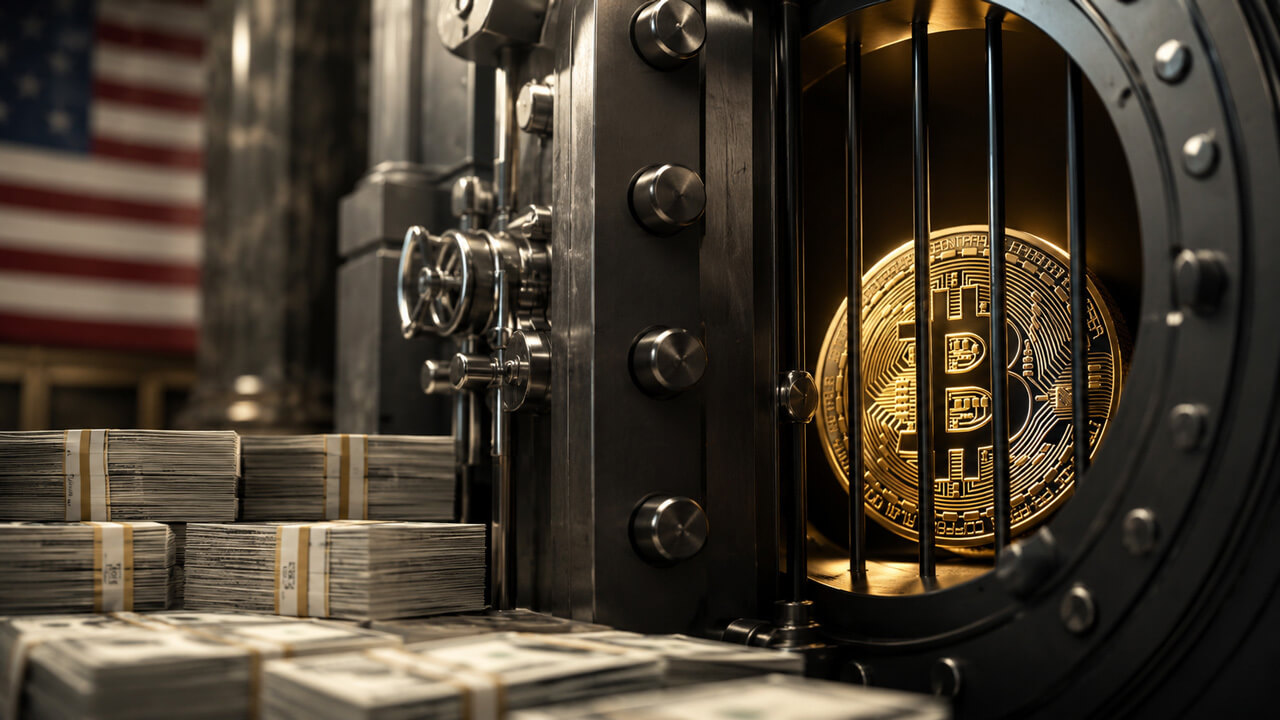
Six Republican senators have fired a warning shot at US bank regulators over a capital rule that, they argue, effectively locks banks out of Bitcoin. In a May 27 letter to the Federal Reserve, FDIC, and OCC, the senators urged a new capital framework for digital asset activities, targeting Basel's 1,250% risk weight for assets like Bitcoin as a de facto ban. The letter, spearheaded by Senators Cynthia Lummis and Bill Hagerty, highlights that while Congress moves to provide regulatory clarity for digital assets, the existing capital rules make it economically impossible for banks to hold Bitcoin on their balance sheets.
The math is punishing: a 1,250% risk weight multiplied by the 8% minimum capital requirement equals a 100% capital allocation. A bank holding $100 million in Bitcoin needs at least $100 million in capital against it. For banks with a 12% internal CET1 target, the burden climbs to $150 million, requiring roughly $18 million in annual net profit to clear a 12% ROE hurdle. Normal custody, trading, or client-service economics rarely generate returns at that threshold, leaving banks legally authorized but financially unable to justify holding Bitcoin. In practice, this has led to a near-total absence of bank-held Bitcoin in the US, with most institutional exposure flowing through ETFs or offshore entities.

“The 1,250% rule turns a legal permission slip into a financial straitjacket that no bank can afford to wear.”
On-Chain Data

- Risk Weight: 1,250% under Basel, the highest possible for volatile assets like Bitcoin. This weight applies to unsecured exposures not covered by preferential treatments, such as sovereign or corporate debt.
- Capital Requirement: 100% of exposure in minimum capital; 150% if targeting a 12% CET1 ratio. For a bank with $100M in Bitcoin, required capital ranges from $100M to $150M, depending on the capital buffer.
- Opportunity Cost: For $100M exposure, the bank needs $18M annual net profit to achieve a 12% ROE. This implies an 18% return on allocated capital, which is difficult to achieve with low-margin activities like custody.
- Custody Margins: Typical crypto custody fees (0.5%-1% annually) do not cover the capital cost. For example, custodizing $100M in Bitcoin generates $500K to $1M in annual revenue, far below the $18M needed.
- Legislative Progress: The CLARITY Act advanced out of the Senate Banking Committee on May 14 by a 15-9 vote. This bill aims to provide a clear regulatory framework for digital assets, including defining which agency has jurisdiction over which asset type.

Market Impact
The senators' letter lands at a pivotal moment. All three regulators have moved toward crypto permissiveness since early 2025: the OCC reaffirmed custody and stablecoin activities in March 2025; the FDIC rescinded its notification requirement the same month; and the Fed withdrew its crypto guidance in April 2025. Yet none have addressed the capital treatment for on-balance-sheet Bitcoin. This regulatory asymmetry creates an environment where banks can offer crypto services to clients but cannot take direct exposure without a prohibitive capital charge.
The senators' sharpest argument comes from a March 2026 interagency FAQ on tokenized securities. There, the Fed, FDIC, and OCC held that eligible tokenized securities should receive the same capital treatment as their non-tokenized equivalents, and that the technology used should not determine capital allocation. If a tokenized Treasury is treated like a Treasury because the underlying risk profile governs, the logic should extend to Bitcoin. The asset's volatility and operational risks are measurable and could support a lower risk weight. Indeed, the FAQ suggests regulators are willing to consider the underlying risk rather than the form of the asset, opening the door to a revision of Bitcoin's treatment.
Your Alpha

- 1Watch the CLARITY Act: If it passes the Senate floor, pressure on regulators to adjust capital rules will intensify. Banks with crypto exposure could see a revaluation of their holdings. Additionally, the bill may include provisions requiring regulators to propose new capital rules within a set timeframe.
- 2Track the tokenization FAQ: The treatment of tokenized securities sets a precedent. If regulators apply the same logic to Bitcoin, the risk weight could drop sharply, opening the door to bank adoption. Pay attention to any additional statements from the Fed, FDIC, or OCC extending this principle to other digital assets.
- 3Assess capital costs: As long as the 1,250% rule stands, banks cannot economically justify holding Bitcoin on balance sheet. This keeps institutional demand limited to off-balance-sheet vehicles like ETFs or indirect custody. However, banks may explore hybrid structures, such as issuing structured notes linked to Bitcoin, which do not require direct capital allocation.

Next Catalyst
The Senate floor vote on the CLARITY Act is expected in the coming weeks. If passed, regulators will face renewed pressure to propose a new capital framework for digital assets. Additionally, the March 2026 tokenization FAQ could serve as a blueprint for a broader review. The current administration, which has shown a favorable stance toward cryptocurrencies, is expected to push for changes to Basel rules internationally.
Meanwhile, the Federal Reserve, FDIC, and OCC could issue a joint proposed rule before year-end. Any signal of a reduced risk weight for Bitcoin would be a bullish catalyst for the market, unlocking direct bank demand. Investors should monitor statements from regulatory officials at conferences and hearings, as well as public comments on the proposed rule.
The Bottom Line

The 1,250% rule is a regulatory wall that keeps banks out of Bitcoin despite legal permissiveness. Until regulators align capital treatment with the logic applied to tokenized securities, banks will hold a permission slip they cannot use. Investors should watch legislative and regulatory moves closely: any change to this rule could redefine the role of traditional finance in crypto.
The path to bank adoption of Bitcoin runs not just through law, but through capital arithmetic. And today, that arithmetic doesn't add up. However, with political pressure and regulatory precedents in place, the stage is set for a shift that could transform the landscape of crypto banking in the United States.